IPR
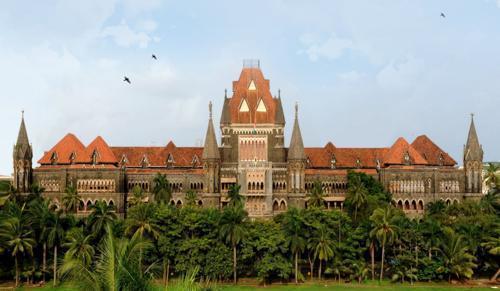
Unreasoned Rejection of Patent Application Cannot be Sustained, Rules Bombay High Court
The Bombay High Court quashed an order of the Department of Atomic Energy (DAE) rejecting a patent application filed by US-based Huntington Alloys Corporation for an “Ultra Supercritical Boiler Header Alloy and Method of Preparation.”
The Court held that the DAE’s communication merely stating that the invention “relates to atomic energy” without giving any reasons was legally unsustainable.
Emphasising that reasoned orders are essential for fairness and judicial review, the Court observed that the applicant was entitled to know the basis of rejection and seek appropriate remedies.
It accordingly set aside the impugned order and directed fresh consideration in accordance with law.
[Huntington Alloys Corporation v. UOI & Ors.]
S PavithraBookmark
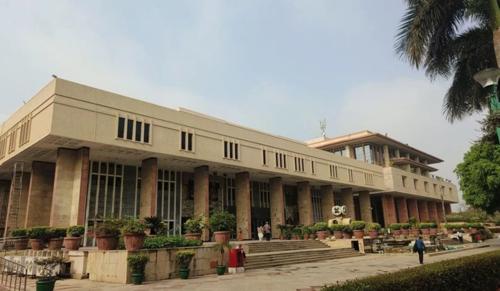
Delhi High Court Temporarily Restrains ‘POSITIVE MIND’ Mark Over Alleged Trademark Infringement
The Delhi High Court granted an ex parte interim injunction restraining the use of the mark “POSITIVE MIND” for sexual wellness products after finding a prima facie case of trademark infringement and passing off.
The Court held that the defendant’s products and branding appeared deceptively similar to the plaintiff’s registered marks and were likely to confuse consumers.
Observing that counterfeit products could harm both goodwill and public interest, the Court directed intermediaries including Meesho and Meta to remove listings, disable accounts, and take down advertisements linked to the impugned products.
It also ordered disclosure of relevant seller and transaction details.
[PstGems Pvt Ltd v. Dharmesh Mohanbhai Kalsariya Trading as M/S Positive Mind & Ors.]
S PavithraBookmark
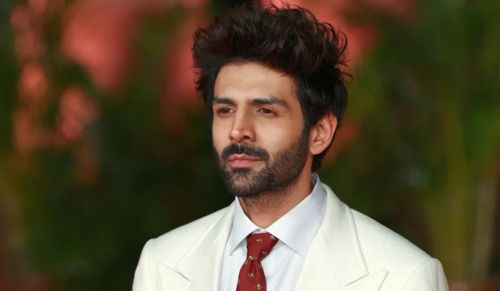
Bombay High Court Grants Interim Relief to Kartik Aaryan, Protecting Personality Rights
The Bombay High Court has granted interim relief to actor Kartik Aaryan, protecting his personality rights against unauthorized digital exploitation.
The Court restrained various platforms from using actor’s name, image, and voice without consent, specifically targeting AI-generated deepfakes and chatbots mimicking his persona.
The Court observed that such content is "prima facie prejudicial" to his reputation and creates a false association that dupes the public. Intermediaries were ordered to delist objectionable material within 36 hours of notification.
This ruling reinforces that a celebrity's likeness has exclusive commercial value, which must be protected from AI-driven misappropriation to prevent brand dilution and privacy violations.
[Kartik Aaryan v. Vinsm Globe Pvt. Ltd. & Ors.]
AnvishaaBookmark
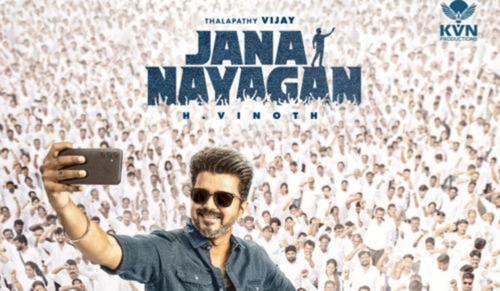
Madras High Court Restrains Illegal Broadcast of ‘Jana Nayagan’ , Orders Blocking of Pirated Content
The Madras High Court granted an interim injunction restraining internet service providers and cable operators from illegally broadcasting or streaming the film Jana Nayagan.
The plea was filed by the production company after the movie was allegedly leaked online even before certification. The Court directed authorities to block websites and platforms hosting pirated content related to the film and prevent further infringement.
It recognised the urgency of protecting intellectual property and preventing financial losses to the producers.
The interim order will remain in force pending further hearing, with the Court closely monitoring compliance.
[KVN Productions v. Bharat Sanchar Nigam Ltd & Ors.]
S PavithraBookmark
Delhi High Court Fines Parle Agro ₹10 Lakh for Non-Disclosure in PepsiCo Trademark Case
The Delhi High Court imposed a ₹10 lakh fine on Parle Agro for failing to comply with its earlier directions to periodically disclose sales revenue in an ongoing trademark dispute with PepsiCo.
The case relates to the use of the tagline “For The Bold” on Parle Agro’s B Fizz product.
The Court observed that although the non-disclosure may not have been wilful, it was a clear and serious violation of its orders, especially as no proper explanation or apology was provided.
Emphasising the importance of transparency during litigation, the Court imposed costs for non-compliance.
[Parle Agro Pvt. Ltd. v. Pepsico Inc. & Anr.]
S PavithraBookmark
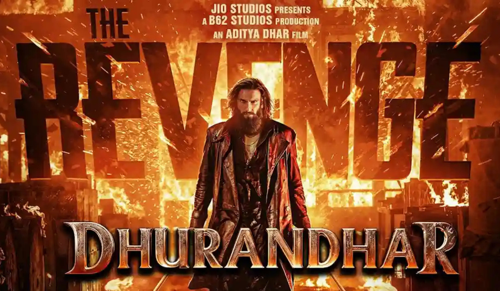
Dhurandhar 2 Song Dispute: Rajeev Rai Assures Delhi HC He Will Not Make Public Statements During Mediation
The Delhi High Court recorded an undertaking from filmmaker Rajeev Rai, owner of Trimurti Films, stating he will not speak to the media regarding the Dhurandhar 2 song dispute while mediation is pending.
The Court noted that Rai had made several public comments on the case's merits despite the matter being referred to mediation.
Emphasizing that litigants must exercise restraint on sub judice issues to avoid derailing the resolution process.
The dispute involves allegations that the song Rang De Lal in Dhurandhar 2 unauthorizedly uses the musical composition of Tirchi Topiwala from the film Tridev.
[Trimurti Films Pvt. Ltd. v. Super Cassettes Industries Pvt. Ltd. & Ors.]
AnvishaaBookmark
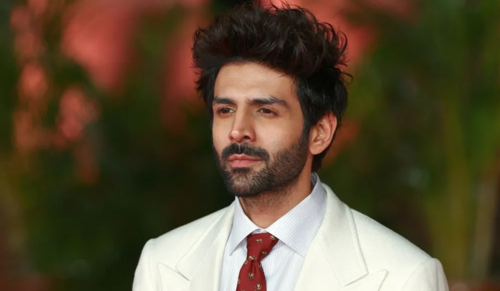
Bombay High Court to Order Takedown of Content Infringing Actor Kartik Aaryan’s Personality Rights
The Bombay High Court announced it will order the removal of online content infringing the personality rights of actor Kartik Aaryan, including unauthorized commercial exploitation of his name and image.
Justice Sharmila Deshmukh noted that the actor’s persona was being misused to sell merchandise and through AI-generated videos, some of which were described as scandalous.
Aaryan’s lawsuit against various e-commerce and social media platforms sought a permanent injunction against the use of his likeness, voice, and trademarked name without consent.
The Court indicated it would grant relief allowing the actor to point out infringing content for immediate takedown by intermediaries.
[Kartik Aaryan v. Vinsm Globe Pvt. Ltd. & Ors.]
AnvishaaBookmark
Delhi High Court Set to Grant Interim Protection to Crocs’ Designs, Trademarks and Jibbitz Patent
The Delhi High Court indicated it will pass interim orders in favour of Crocs Inc. in a suit alleging large-scale intellectual property infringement.
Crocs claimed that the defendant copied its registered designs, trademarks, and patented “Jibbitz” charm system used in its footwear.
The Court noted submissions showing side-by-side similarities, including replication of the hole-and-plug mechanism and overall product design.
The matter is now listed for further proceedings, with the Court set to decide on granting interim protection against the alleged infringing products.
[Crocs Inc. & Anr. v. Summersalt Lifestyle Pvt. Ltd.]
14 days ago
S PavithraBookmark
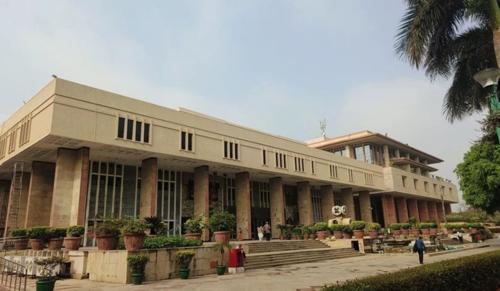
Delhi High Court Protects ‘SOCIAL’ Brand, Bars Use of Similar Names in Trademark Dispute
The Delhi High Court ruled in favour of the popular ‘SOCIAL’ chain of pubs, holding that the brand has acquired strong distinctiveness and reputation due to its long and widespread use.
The Court found that use of similar names like “Social House” or “The Shake Social” amounted to trademark infringement and passing off, as it could confuse consumers and dilute the brand’s identity.
Recognising the goodwill built by the plaintiff, the Court restrained the defendants from using deceptively similar marks and reinforced that established brands deserve strong legal protection.
S PavithraBookmark
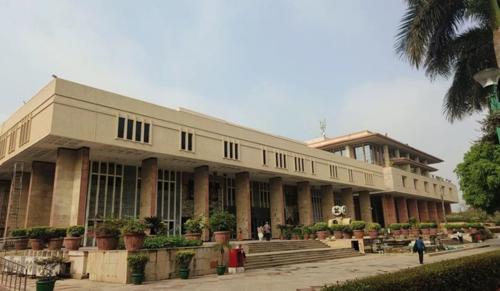
Delhi High Court Directs Copyright Office to Decide AI Artwork Copyright Plea Within 8 Weeks
The Delhi High Court directed the Copyright Office to decide within eight weeks the application filed by AI researcher Stephen Thaler seeking copyright registration for artwork generated by an artificial intelligence system.
Thaler has sought recognition of the AI system as the author of the work.
The Court did not examine the merits of the claim but instructed the authority to pass a reasoned order in accordance with law.
The matter arises after the Copyright Office had earlier refused registration, leading to the present proceedings before the High Court.
[Stephen Thaler v. UOI]
18 days ago
S PavithraBookmark
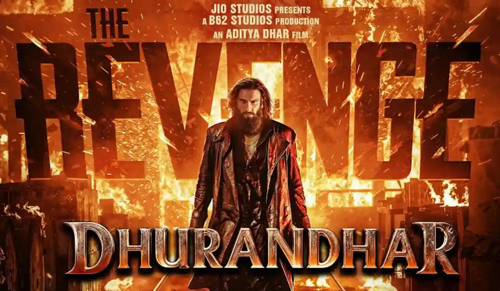
Trimurti Films Sues Aditya Dhar’s B62 Studios Over Copyright Infringement in Dhurandhar 2
Trimurti Films has sued Aditya Dhar’s B62 Studios in the Delhi High Court for allegedly using the songs "Rang De Lal" and "Hum Pyar Karne Wale" without permission in Dhurandhar 2.
The production house owns the rights to the 1989 film Tridev, claims that the unauthorized use of these tracks constitutes copyright infringement.
While the film has crossed ₹1,600 crore in box office, it now faces a potential injunction that could restrict its further distribution.
This case highlights the growing complexity of music licensing in Bollywood,especially when modern blockbusters recreate classic hits to capitalize on nostalgia.
[Trimurti Films Pvt Ltd v. B62 Studios & Ors.]
AnvishaaBookmark
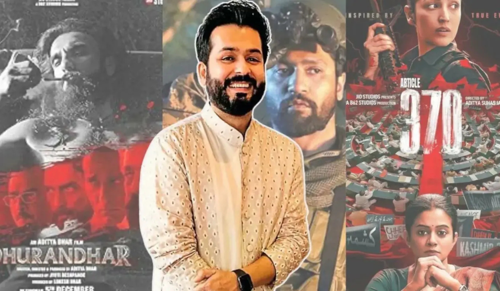
Bombay High Court Restrains Filmmaker from Making Plagiarism Allegations Against Aditya Dhar
The Bombay High Court has restrained filmmaker Santosh Kumar from making further allegations that director Aditya Dhar plagiarized the script for Dhurandhar.
The Court issued the interim stay after Dhar filed a defamation suit, arguing that Kumar's public claims were baseless and prejudicial.
The Court noted that while Kumar is free to pursue legal remedies for copyright infringement, he cannot continue making defamatory remarks in the interim. This order emphasizes that public accusations of intellectual property theft, if unsubstantiated, can attract injunctions to protect a creator's reputation.
The restraint remains in effect until the next hearing scheduled for April 16, 2026.
[Aditya Dhar v. Santosh Kumar RS & Ors.]
AnvishaaBookmark
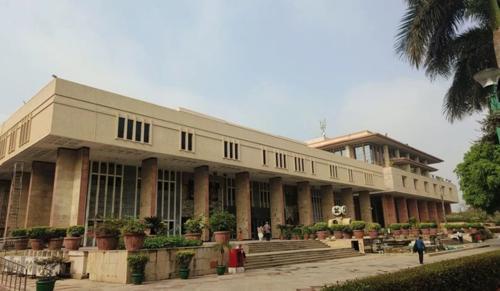
Delhi High Court Awards ₹152 Crore Damages to CCA in Antenna Patent Infringement Suit
The Delhi High Court awarded over ₹152 crore in damages to Communication Components Antenna (CCA) after finding the Rosenberger Group guilty of infringing a patent related to asymmetrical beam antenna technology.
Justice Prathiba M Singh issued a permanent injunction against the German-based group, restraining them from selling or promoting infringing antennas used in 4G LTE networks.
The Court found that Rosenberger’s products, marketed to providers like Reliance Jio, near-identically matched CCA’s proprietary beam patterns designed to increase network capacity.
Additionally, the Court upheld the validity of Indian Patent No. 240893, directing the registry to issue a formal certificate of validity.
[Communication Components Antenna v. Rosenberger]
AnvishaaBookmark
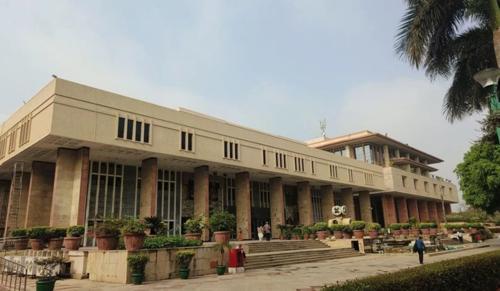
Delhi High Court Orders Fresh Review of Harvard’s Patent on Lab-Engineered Insulin Cells
The Delhi High Court directed a re-examination of Harvard University’s patent application concerning lab-engineered insulin-producing cells, setting aside the earlier rejection by the Patent Controller.
The Court noted that the Controller failed to adequately consider the amended claims submitted during proceedings, instead relying largely on the original claims.
Observing that these revised claims could materially affect the assessment of patentability, the Court held that such oversight warranted fresh scrutiny.
It thus remanded the matter for reconsideration in accordance with law, highlighting the importance of properly evaluating all claim amendments in patent adjudication.
[President & Fellows of Harvard College v. Controller of Patent]
S PavithraBookmark