Is it Legal to Share Your Streaming Passwords with Family Outside Your House?
Yes, sharing your password with family members does not constitute a criminal offense or digital fraud under Indian cyber laws.
Section 66C of the Information Technology Act, 2000, penalizes the unauthorized use of another person's password, but this applies only to cases of identity theft or fraudulent access without the owner's consent.
Since you are voluntarily sharing your credentials, no criminal liability arises. However, streaming platforms have full contractual authority to enforce their household policies.
Instead of legal prosecution, networks rely on technical countermeasures, using IP addresses, device IDs, and network check-ins to automatically log out out-of-home users or restrict concurrent streams.
18 hours ago
AnvishaaBookmark
Is it Legal for Airlines or Hotels to Use Dynamic Pricing?
Yes, changing prices based on demand is legal, but manipulating algorithms to exploit consumers is not.
While India’s Consumer Protection Act (CPA) 2019 does not prohibit algorithmic "surge pricing," Section 2(47) strictly bars unfair trade practices that exploit market disruptions or information asymmetry.
Airlines and hotels have the contractual autonomy to adjust fares in real time based on seasonal load factors and supply. However, using automated tools to artificially inflate prices during emergency cancellations, natural disasters, or grid failures can draw regulatory action.
The Central Consumer Protection Authority (CCPA) maintains oversight to ensure these automated systems do not cross the line into predatory pricing or coercive market manipulation.
18 hours ago
AnvishaaBookmark
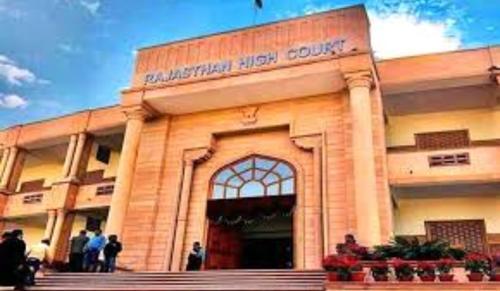
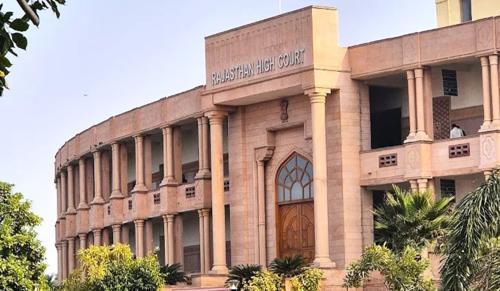
Maintenance Cannot be Used as a Penal Tool Against Husband: Rajasthan High Court
The Rajasthan High Court has ruled that the purpose of granting maintenance is to prevent destitution and starvation of the wife, and not to penalise the husband.
The Court observed that maintenance provisions are intended as a measure of social justice to ensure financial support for a dependent spouse.
It further noted that the amount awarded must be fair, reasonable, and based on the financial circumstances of both parties.
The judgment reiterated that maintenance cannot be treated as a punitive mechanism against the husband and must instead balance the needs of the wife with the paying capacity of the husband.
[Rakesh Sharma v. Manju Devi]
S PavithraBookmark
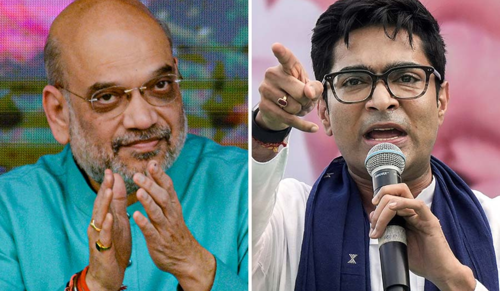
Calcutta High Court Grants Abhishek Banerjee Protection from Coercive Action over "Godfather" Remark
Calcutta High Court restrained the West Bengal Police from taking any coercive action against Trinamool Congress MP Abhishek Banerjee until July 31.
The interim protection stems from an FIR registered under the BNS and the Representation of the People Act over election rally remarks targeting Union Home Minister Amit Shah, where Banerjee asked "which godfather from Delhi" would rescue his opponents.
While granting relief, the court severely admonished the statements, observing that such inflammatory language from a sitting MP "strikes the conscience of the court."
The protection remains conditional on Banerjee fully cooperating with the ongoing investigation.
AnvishaaBookmark
Central Government Opposes New Hydro-Electric Projects in Uttarakhand’s Upper Ganga Basin
The Central Government filed an affidavit in the Supreme Court opposing any new hydro-electric projects in the Alaknanda and Bhagirathi river basins in Uttarakhand.
Prompted by a court order following the 2013 flood disaster, the Union environment, power, and jal shakti ministries unified their stance to protect the region's fragile ecology.
The government stated that only seven ongoing or commissioned projects will be allowed to proceed, noting that four are already operational and three are near completion.
Emphasizing that uniform hydropower development policies cannot apply to this highly sensitive seismic and glaciological zone, which remains prone to frequent natural disasters.
[In Re: Alaknanda and Bhagirathi River Basin Hydro Electric Projects]
AnvishaaBookmark

Madras High Court Issues Notice on PIL Alleging Child Exploitation in Tamil Nadu Polls by CM Vijay
The Madras High Court sought responses from the ECI on a PIL alleging that the newly elected Chief Minister C. Joseph Vijay’s party, Tamilaga Vettri Kazhagam (TVK), used minor children for vote mobilization during the 2026 Assembly polls.
A vacation Bench questioned whether an entire political party could face disqualification under Section 100 of the Representation of the People Act, 1951, as corrupt practices traditionally target individual winning candidates.
The petitioner claims Vijay’s April 21 campaign speech explicitly prompted minors to emotionally pressure parents into voting for TVK, violating strict ECI safety guidelines banning children from active political propaganda.
[Vasuki L v. Election Commission of India & Ors.]
AnvishaaBookmark
Supreme Court Criticizes Banks for Casual Lending to Large Entities and Stringent Scrutiny for Common Man
The Supreme Court observed that commercial banks display casualness when sanctioning massive loans to big companies while subjecting ordinary citizens to tedious procedures bordering on harassment.
The State Bank of India had moved to possess properties of a private firm after it defaulted on the first installment of an Rs 8.09 crore loan.
The Court found clear negligence by SBI officials in assessing the borrower's repayment capacity.
While dismissing the firm's plea due to a six-year default, the bench granted two weeks to approach the Debt Recovery Tribunal and urged the RBI to frame fairer, simpler processes for ordinary borrowers.
[M/S Bhaskar International Pvt. Ltd. & Ors. v. SBI & Ors.]
AnvishaaBookmark
Supreme Court Acquits Sri Lankan National in UAPA Case Due to Mistaken Identity
The Supreme Court acquitted a Sri Lankan national wrongfully convicted under the UAPA, ruling that the prosecution failed to establish his identity as an absconding LTTE-linked accused named "Sri."
The Bench noted that the appellant, Ranjan, had lived openly as a registered refugee in Trichy since 2012.
The Court found that prosecution witnesses only introduced the name "Ranjan" after his 2021 arrest, creating a suspect "material improvement" over their earlier silence.
Furthermore, the investigating agency's complete failure to conduct a Test Identification Parade struck at the root of the case, rendering the identification entirely unreliable.
[Sri v. State Rep. by the Inspector of Police, Q Branch, Ramanathpuram, Tamil Nadu]
AnvishaaBookmark
Supreme Court Rules, Crime Scene Re-Enactment Doesn’t Automatically Violate Right Against Self-Incrimination
The Supreme Court held that crime scene re-enactment involving an accused is not unconstitutional per se.
The protection under Article 20(3) of the Constitution and Sections 25 and 26 of the Evidence Act applies only if an accused is compelled to disclose incriminating facts from personal knowledge.
It does not apply to directed physical demonstrations, like mimicking movements for forensic gait analysis, which merely analyze physical attributes rather than personal testimony.
The Court noted that discarding such scientific techniques entirely would dangerously hinder investigations. The ruling sets aside a Madras HC order that treated a recorded re-enactment as an inadmissible police confession.
[The State of Tamil Nadu v. Ponnusamy & Ors.]
AnvishaaBookmark
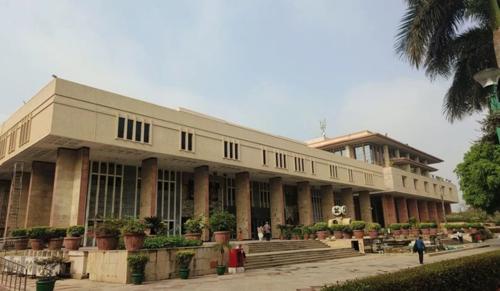
Political Criticism Cannot Automatically Amount to Personality Rights Violation: Delhi High Court
The Delhi High Court has observed that political criticism cannot automatically be treated as a violation of personality rights.
The observation came during hearings in a plea concerning alleged misuse of BJP MP Raghav Chaddha's persona and AI-generated content on social media.
The Court noted that criticism of political decisions or public conduct, by itself, may not amount to infringement of personality rights.
It further remarked that there exists a thin line between legitimate criticism and defamation, particularly in matters involving public figures and political discourse.
S PavithraBookmark
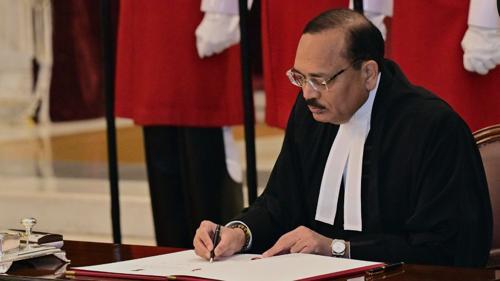
Supreme Court Pushes for Online Hearings Amid West Asia Crisis
Chief Justice of India Surya Kant has emphasized that the shift towards online hearings should remain a voluntary exercise for both the Bar and the Bench.
The CJI stated that he has requested Chief Justices of all High Courts to conduct virtual hearings, particularly on Mondays and Fridays, to reduce avoidable expenditure amid the ongoing West Asia crisis.
He also noted that most High Courts have already implemented the arrangement. The observations came during a hearing seeking directions for online functioning of Delhi courts.
The Supreme Court had earlier resolved to conduct hearings through video conferencing on designated days.
S PavithraBookmark
Poverty Not a Ground to Escape Maintenance Liability, Says Delhi High Court
The Delhi High Court has held that an able-bodied husband cannot avoid his obligation to pay maintenance to his wife merely by pleading poverty or financial hardship.
The Court observed that a physically fit and educated man is presumed capable of earning and maintaining his spouse.
While dismissing the husband’s plea against a maintenance order, the Court noted that the lack of regular income cannot be used as a ground to evade statutory responsibility. It ordered to pay Rs 11,000 per month to the wife and each of the two daughters.
The judgment reiterated that maintenance provisions are intended to secure financial support for dependent spouses and ensure their sustenance.
[Lokesh Kumar Singh v. Neeta Singh]
S PavithraBookmark
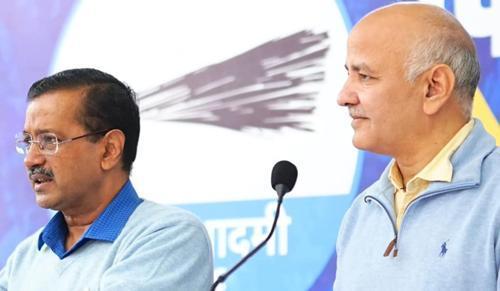
Delhi High Court Refuses to Entertain Plea Seeking Ban on AAP Leaders Contesting Elections
The Delhi High Court refused to entertain a plea seeking directions to de-register the Aam Aadmi Party (AAP) and disqualify Arvind Kejriwal, Manish Sisodia, and Durgesh Pathak from contesting elections.
A Division Bench of Chief Justice Devendra Kumar Upadhyaya and Justice Tejas Karia termed the petition “highly misconceived” and rejected the contention that contempt proceedings against the leaders reflected lack of allegiance to the Constitution.
The Court observed that the Election Commission can de-register a political party only in limited exceptional circumstances and found no material to show that AAP had expressed lack of faith in the Constitution.
S PavithraBookmark
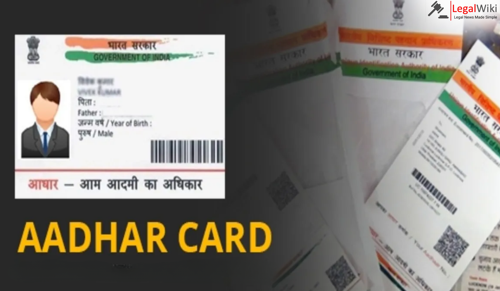
PIL in Supreme Court Seeks Restriction on Aadhaar use Beyond Identity Proof
A Public Interest Litigation has been filed before the Supreme Court seeking directions to ensure that Aadhaar is used strictly as proof of identity and not as proof of citizenship, domicile, address, or date of birth.
The plea challenges the use of Aadhaar as proof of residence and date of birth in Form-6 for voter registration, alleging that it is contrary to provisions of the Aadhaar Act and the Representation of the People Act.
The petition also seeks reforms in verification mechanisms, claiming weak verification processes allow misuse of Aadhaar for obtaining other official documents and electoral registration.
S PavithraBookmark