Trending news
Supreme Court Earmarks SCBA Vice President Post for Women in 2026 Election
In a significant move toward gender inclusivity, the Supreme Court has earmarked the post of Vice President in the 2026 Supreme Court Bar Association (SCBA) elections for women advocates.
A bench led by CJI Surya Kant passed the order as a "progression" from previous years, where the posts of Treasurer and Secretary were reserved for women.
The SCBA, represented by Senior Advocate Vikas Singh, agreed to the measure, noting that the association has never had a woman President.
The Court further directed that the election schedule be notified by July 13, with results declared in August.
[Supreme Court Bar Association v. BD Kaushik]
AnvishaaBookmark
Supreme Court Questions Sexual Assault Charges in Long-Term Live-in Relationship
The Supreme Court questioned how sexual assault charges under the Bharatiya Nyaya Sanhita (BNS) could be sustained in a 15-year live-in relationship involving a child.
The bench was hearing a plea against a Madhya Pradesh High Court order that quashed an FIR against the petitioner’s former partner.
Justice Nagarathna observed that walking out of a consensual relationship without a legal marriage bond does not automatically constitute a criminal offense.
While the petitioner alleged exploitation based on a false promise of marriage, the Court suggested mediation to secure maintenance for the child instead of pursuing criminal prosecution.
AnvishaaBookmark
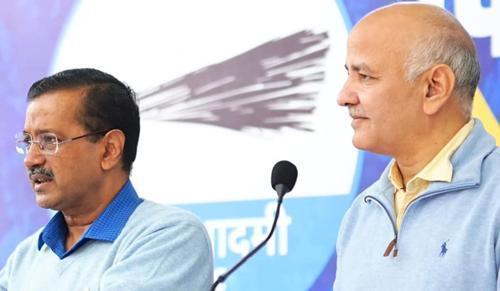
Arvind Kejriwal Boycotts Excise Policy Proceedings Before Justice Swarana Kanta Sharma
Arvind Kejriwal has announced a boycott of the excise policy case proceedings before Justice Swarana Kanta Sharma, citing a loss of confidence in impartial adjudication.
This decision follows the Court’s recent refusal to grant Kejriwal’s recusal application. In a letter to the Judge, Kejriwal invoked Gandhian principles of Satyagraha, stating he is prepared to face the legal consequences of withdrawing his defense.
The Court previously observed that seeking recusal amounted to putting the judiciary on trial.
Kejriwal argued that the language of that dismissal further evidenced a conflict, making participation a "disservice to the judiciary."
[Arvind Kejriwal v. Central Bureau of Investigation]
AnvishaaBookmark
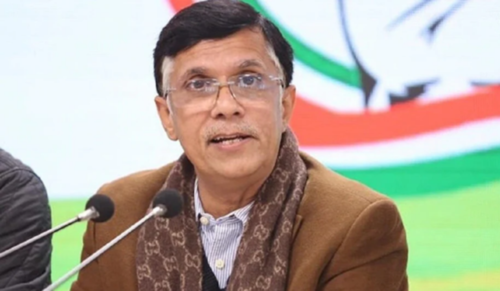
Pawan Khera Moves Supreme Court Following Anticipatory Bail Rejection by Gauhati High Court
Congress leader Pawan Khera has approached the Supreme Court after the Gauhati High Court denied his anticipatory bail plea in a case involving allegations of defamation and forgery.
The case stems from a press conference where Khera alleged that Riniki Bhuyan, wife of Assam CM Himanta Biswa Sarma, holds multiple foreign passports and undisclosed assets.
While Khera argued the proceedings are politically motivated, the High Court observed that custodial interrogation is necessary to identify the source of the allegedly forged documents.
The Court noted that dragging a private citizen into "political rhetoric" justified deeper investigation under the Bharatiya Nyaya Sanhita.
[Pawan Khera v. State of Assam]
AnvishaaBookmark
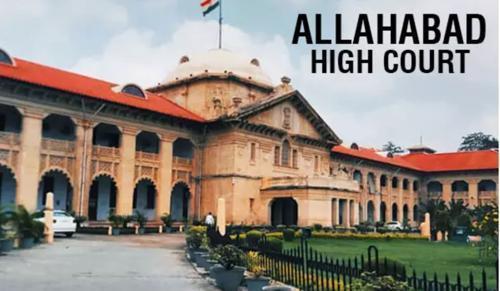
ICC Recommendations Under POSH Act are Mandatory: Allahabad High Court
The Allahabad High Court recently held that the recommendations and reports of the Internal Complaints Committee (ICC) under the POSH Act are mandatory in nature and not merely advisory.
The Court observed that once the ICC finds an employee guilty of sexual harassment, the employer or district officer must treat it as misconduct and proceed under the applicable service rules.
Justice Manish Mathur emphasised that the objective of the POSH Act is to ensure a safe and harmonious workplace, and therefore ICC proceedings must remain fair, transparent and free from external pressure.
The Court also quashed the suspension orders passed against ICC members, noting absence of proper reasoning and application of mind.
[Km. Sunita Devi v. State Of U.P.]
S PavithraBookmark
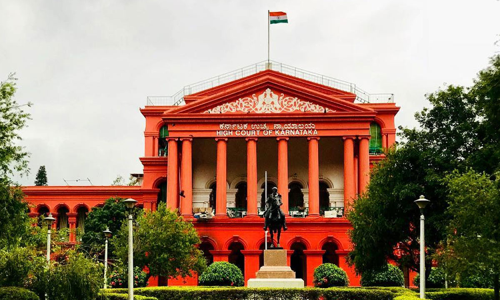
Karnataka High Court Refuses to Quash Case Against ‘Bangalore Metro Chicks’ Page Admin
The Karnataka High Court recently refused to quash criminal proceedings against the man accused of operating the “Bangalore Metro Chicks” Instagram page, which allegedly uploaded secretly recorded videos and images of women commuters without their consent.
Justice M. Nagaprasanna strongly criticised the conduct, observing that women were not being left safe “anywhere.”
The petitioner argued that the content was comparable to CCTV footage and also raised procedural objections regarding the investigation. However, the Court rejected these submissions and held that technicalities could not override the seriousness of such acts.
An FIR had been registered against the accused for offences including voyeurism and violations under the Information Technology Act.
S PavithraBookmark
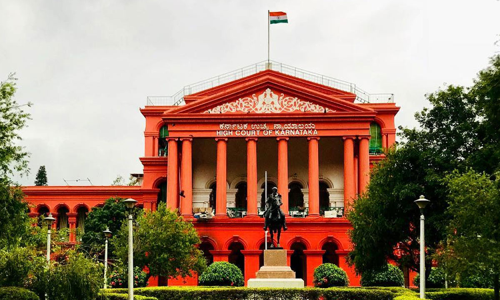
Karnataka High Court Rules Against Mandatory Live GPS Tracking as Bail Condition
The Karnataka High Court held that an accused cannot be forced to share their mobile phone's live GPS location with investigating officers as a condition for bail.
Justice M Nagaprasanna ruled that while standard conditions remain valid, continuous electronic surveillance through location tracking crosses the boundary of permissible legal restrictions.
The ruling came during a plea for the relaxation of bail conditions for an individual accused of extortion. Although the petitioner’s prayer was noted as vague, the Court proactively quashed the requirement to keep mobile location services active.
The Court emphasized that such a mandate is not a sustainable condition for bail.
[Shashi Kumar v. State of Karnataka]
AnvishaaBookmark

Delhi High Court Makes Rapido’s Disability-Friendly Commitment Legally Binding Under RPwD Act
The Delhi High Court made Rapido’s undertaking to maintain a disability-friendly application permanently binding under the Rights of Persons with Disabilities Act, 2016.
The case was filed by visually impaired users who alleged that the app was inaccessible through screen readers and assistive technologies, preventing them from independently accessing core services.
The Court held that digital transport platforms have a statutory obligation under Section 42 of the RPwD Act to ensure accessibility for persons with disabilities.
It directed that Rapido’s commitment to periodic accessibility audits and disability-friendly features would remain enforceable for as long as the platform continues to operate.
[Amar Jain & Anr v. Roppen Transportation Services Pvt Ltd (Rapido) & Ors.]
S PavithraBookmark
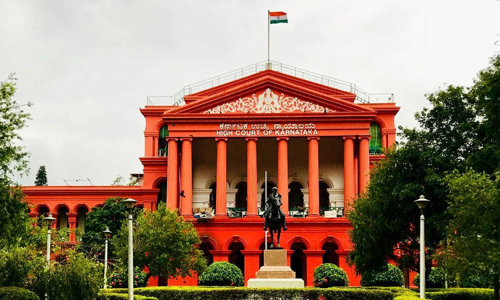
Karnataka HC Disposes Case Against Ranveer Singh Following Apology and Undertaking to Visit Chamundi Hill
Karnataka HC accepted an unconditional apology from actor Ranveer Singh regarding his controversial mimicry of a deity depicted in Kantara.
The Court recorded Singh’s undertaking to visit the Chamundi Hill Temple in Mysore within four weeks as an act of making amends for his remarks made at the International Film Festival of India.
While the actor maintained he had no intention of hurting religious sentiments, the Court emphasized the impact of a celebrity's words and noted it would include an admonishment in its final order to deter similar conduct.
The criminal proceedings under the BNS were disposed of in light of the affidavit.
[Ranveer Singh v. State of Karnataka]
AnvishaaBookmark
Kerala Court Denies Anticipatory Bail to Faculty Member in Nithin Raj Suicide Case
A Thalassery Sessions Court denied anticipatory bail to Dr. MK Ram, department head at Kannur Dental College, accused of subjecting a first-year student to caste-based harassment leading to his suicide.
While the court dismissed Dr. Ram's plea, it granted anticipatory bail to co-accused faculty member Dr. Sangeetha Nambiar.
The two were booked under the Bharatiya Nyaya Sanhita for abetment of suicide and the SC/ST (Prevention of Atrocities) Act following the death of Nithin Raj on April 10.
Dr. Ram contended the student was merely advised on academic performance, but the court declined pre-arrest relief amid ongoing investigations into allegations of criminal intent and discrimination.
[State of Kerala v. Dr. MK Ram & Anr]
AnvishaaBookmark
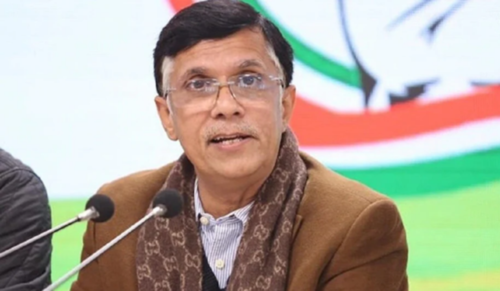
Gauhati HC: "Dragged an Innocent Lady into Controversy", Custodial Interrogation of Pawan Khera Necessary
The Gauhati High Court has rejected the anticipatory bail plea of Congress spokesperson Pawan Khera, citing the necessity of custodial interrogation.
The case involves allegations that Khera used forged documents to claim the wife of Assam’s Chief Minister holds multiple foreign passports and undisclosed overseas assets.
The Court observed that while targeting a political rival may be rhetoric, dragging a private citizen into controversy for political mileage constitutes a serious offence. Emphasizing that interrogation is essential to identify associates involved in providing the allegedly fraudulent materials.
This decision follows the Supreme Court’s direction for Khera to seek relief directly from the Gauhati High Court.
[Pawan Khera v. The State of Assam]
AnvishaaBookmark
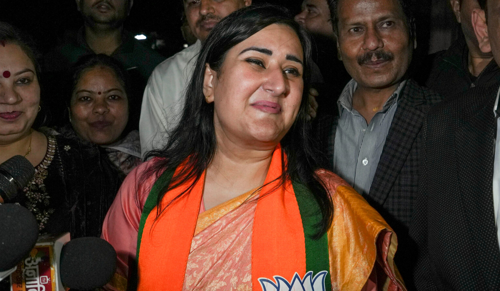
Delhi Court Orders AAP to Remove Defamatory Posts Against BJP MP Bansuri Swaraj
A Delhi court has ordered the Aam Aadmi Party and leaders Saurabh Bharadwaj and Ankush Narang to remove defamatory social media posts targeting BJP MP Bansuri Swaraj.
The Court issued an interim injunction regarding a video titled "BJP Drama Company," which alleged that Swaraj faked her detention during a protest by intentionally holding a police officer's hand.
Swaraj clarified she was holding the hand of Union Minister Raksha Khadse in solidarity. The court ruled that Swaraj established a prima facie case, stating that her reputation would suffer irreparable harm if the edited content remained online.
The matter is listed for further hearing on May 15.
[Bansuri Swaraj v. Saurabh Bharadwaj & Ors.]
AnvishaaBookmark
AIMPLB to Supreme Court: No Restriction on Women Entering Mosques, But Can't Insist on Main Door Entry
The All India Muslim Personal Law Board (AIMPLB) informed the Supreme Court that there is no restriction on women entering mosques to offer namaz.
Senior Advocate MR Shamshad, clarified that while congregational prayer is mandatory for men, it is optional for women. He noted that the Prophet himself instructed not to stop women from visiting mosques.
However, Shamshad argued that the "Essential Religious Practice" (ERP) test has been wrongly applied to Islam by Indian courts, often relying on inaccurate translations.
He highlighted contradictions in previous judgments, such as the ruling that a mosque is not essential to Islam.
AnvishaaBookmark