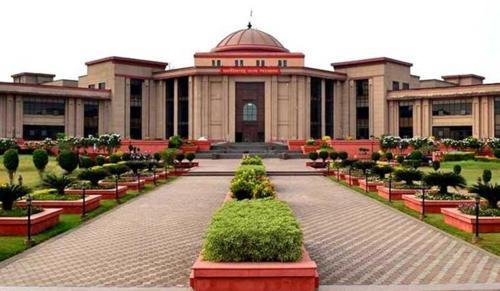
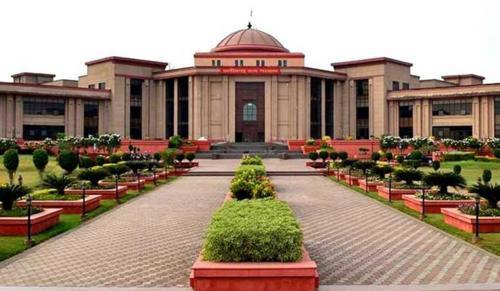
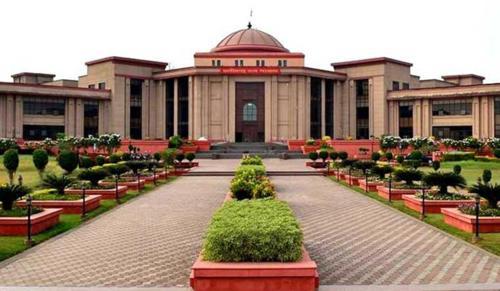
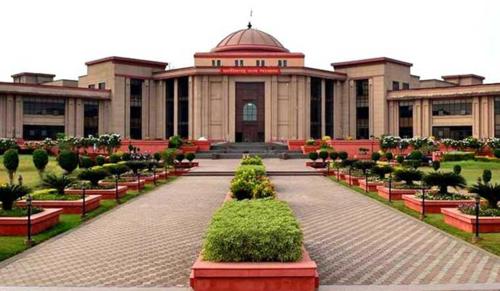
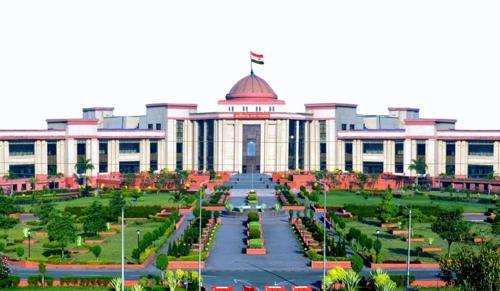
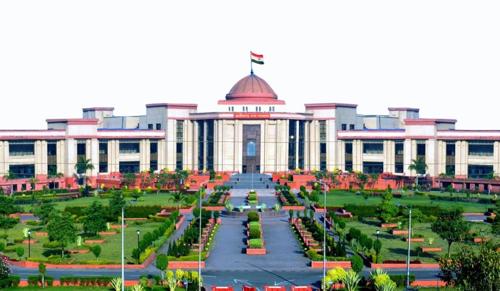
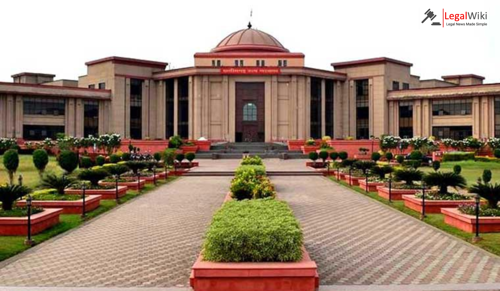
Chattisgarh High Court

Criminal Law Cannot be Used to Vent Personal Grievances: Chhattisgarh HC Quashes Complaint Against Judges

The Chhattisgarh High Court quashed a criminal complaint filed against a former Chief Justice, a sitting High Court judge, and several judicial officers, holding that criminal law cannot be used to settle personal grievances.

A bench led by Justice Ramesh Sinha observed that the complaint lacked material particulars and was based merely on suspicion and conjecture.

The complaint had been filed by the wife of a judicial officer alleging a conspiracy to prevent the filing of a chargesheet in a criminal case.

The Court held that the allegations did not disclose any cognizable offence and that allowing such proceedings would amount to misuse of the criminal justice process.

Read Order / 2 days ago

 S PavithraBookmark

Study Leave for Higher Education Not a Matter of Right: Chhattisgarh High Court

The Chhattisgarh High Court held that study leave for higher education cannot be claimed as a matter of right by government employees.

The Court dismissed the appeal of a mathematics lecturer from a government polytechnic college whose request for study leave to pursue a PhD had been rejected by the authorities.

A Division Bench comprising Justice Ramesh Sinha and Justice Bibhu Datta Guru upheld the earlier decision, observing that granting study leave depends on administrative discretion and institutional requirements.

Since the competent authority had validly rejected the request, the Court found no reason to interfere.

[Chitranjan Lal v. State of Chhattisgarh]

Read Judgement / 2 days ago

 S PavithraBookmark

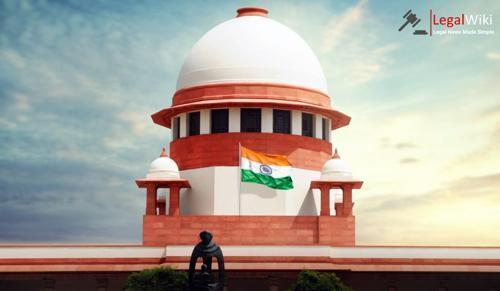
Penalty for Delay in Compensation Must be Paid by Employer, Not Insurance Company: Supreme Court

The Supreme Court ruled that an employer must personally pay the penalty for delaying compensation under the Employees’ Compensation Act, 1923, even if the compensation amount is covered by insurance.

The Court clarified that the penalty under Section 4A(3)(b) arises from the employer’s own default and cannot be shifted to the insurance company.

The case arose after an employee died in a work-related accident and compensation was not paid within the statutory period.

While the insurer may pay compensation and interest, the Court held that the penalty must be borne by the employer to ensure timely payment and maintain the deterrent purpose of the law.

Read Details / 6 days ago

 S PavithraBookmark

Supreme Court Dismisses Appeals in Actress Prathyusha Death Case, Upholds Abetment Conviction

The Supreme Court of India has dismissed appeals in the 23-year-old death case of Telugu/Tamil actress Prathyusha, ruling out allegations of murder and rape.

A Bench of Justices Rajesh Bindal and Manmohan held that consistent eyewitness accounts and medical evidence established death by poisoning. The Court noted that Prathyusha and her boyfriend, Gudipalli Siddhartha Reddy, had consumed poison amid opposition to their relationship, though Reddy survived.

Rejecting the defence of accidental intake, the Court found Reddy guilty of abetment to suicide for procuring the poison and directed him to surrender within four weeks.

It also termed the postmortem conducted by Dr. Muni Swamy unprofessional.

[Gudipalli Siddharta Reddy v. State (C.B.I.)]

Read Details / 23 days ago

 VishwaBookmark

Rape Constitutes "Brutal Invasion" of Woman’s Dignity under Article 21: Chhattisgarh High Court

The Chhattisgarh High Court refused to set aside a man’s rape conviction, holding that the offence represents a serious assault on a woman’s dignity and a brutal infringement of the fundamental right to life and personal liberty guaranteed under Article 21 of the Constitution.

The case arose from an appeal against a Sessions Court judgment convicting the accused under Sections 376, 506, 323 and 342 of the IPC.

The Court rejected the defence of consent, relying on the survivor’s consistent testimony, corroborative medical injuries, and the FSL report, and concluded that the prosecution had established the charges beyond reasonable doubt.

Read Details / a month ago

 Thanush SBookmark

Father Living with Second Wife Without Divorce Not Entitled to Child Custody: Chhattisgarh High Court

The Chhattisgarh High Court has held that a father cohabiting with a second woman without obtaining a divorce from his first wife is not entitled to custody of his child.

The Court emphasised that the paramount consideration in custody disputes is the welfare of the child, which outweighs the financial capacity or personal circumstances of the parent.

It noted that the father’s conduct in maintaining a second relationship without legally dissolving the first marriage adversely impacts his moral fitness for custody.

Accordingly, the High Court declined the father’s plea for custody, reinforcing that child welfare is the guiding principle in such matters.

[Laxmikant Joshi v. Lokeshwari @ Parmeshwari & Anr.]

Read Details / a month ago

 MahiraBookmark

RTI Exemption Applies to Judicial Officers’ Service Records: Chhattisgarh High Court

The Chhattisgarh High Court has held that service records of judicial officers, including educational and service certificates, complaints, and details of departmental inquiries, are exempt from disclosure under the Right to Information Act, 2005.

The ruling arose from petitions challenging directions issued by the State Information Commission to disclose such information relating to three judicial officers.

The Court held that the material constituted “personal information” protected under Sections 8(1)(j) and 8(1)(e) of the RTI Act and could not be disclosed in the absence of any overriding public interest.

The Court accordingly quashed the SIC’s directions.

[High Court of Chhattisgarh v. Rajkumar Mishra & Anr.]

Read Details / a month ago

 Thanush SBookmark

Chhattisgarh High Court Denies Anticipatory Bail to Former CM Aide in ₹4,000 Crore Liquor Scam

The Chhattisgarh High Court has refused to grant anticipatory bail to a former aide of the Chief Minister in connection with the alleged ₹4,000 crore liquor scam.

Justice Arvind Kumar Verma held that pre-arrest bail cannot be used to stall or weaken a lawful investigation, especially in serious economic offences involving corruption.

The Court noted that such cases have a wide societal impact and often require custodial interrogation to uncover the larger conspiracy, trace money trails, and collect crucial evidence.

It observed that granting protection at this sensitive stage would interfere with the ongoing probe and therefore declined to extend anticipatory bail.

Read Details / a month ago

 MananBookmark

Chhattisgarh High Court Seeks Justification for BCI’s Decision to Defer State Bar Council Polls

The Chhattisgarh High Court questioned an order issued by the Bar Council of India Chairman deferring elections to the Chhattisgarh State Bar Council, and sought justification for the decision.

The issue arose after elections scheduled for January 9 were postponed by an order dated January 6, citing inputs suggesting possible corrupt practices such as horse-trading. 

The Court observed that elections to statutory bodies form the backbone of democratic governance and cannot be deferred lightly, especially when already overdue.

Finding the allegations to be general and omnibus, it directed the BCI to file a response within 48 hours explaining the basis and material supporting the order. Next hearing will be on January 12.

[Chandra Prakash Jangade v. Bar Council of India & Ors.]

Read Details / a month ago

 Thanush SBookmark

Forced Unnatural Sex by Husband Amounts to Cruelty, Not Rape: MP High Court

The Madhya Pradesh High Court held that forced unnatural sex by a husband amounts to cruelty under Section 498A IPC, but cannot be prosecuted as rape due to the marital exception under Section 375 IPC.

The Court was hearing a husband’s plea seeking quashing of an FIR by the wife alleging physical abuse and non-consensual unnatural sexual acts.

While holding that offences under Sections 376(2)(n) and 377 IPC are barred in view of Exception 2 to Section 375 IPC, the Court clarified that such conduct still constitutes cruelty under Section 498A IPC.

Accordingly, charges under Sections 376(2)(n) and 377 IPC were quashed, while proceedings under Sections 498A, 323 and 294 IPC were allowed to continue.

[SM v. State]

Read Order / 2 months ago

 Thanush SBookmark

POSH Committee Functional in Chhattisgarh High Court Amid Supreme Court Scrutiny

The Chhattisgarh High Court informed that its Internal Complaints Committee constituted under the Sexual Harassment of Women at Workplace (Prevention, Prohibition and Redressal) Act, 2013 is functional, amid scrutiny by the Supreme Court on implementation of workplace sexual harassment redressal mechanisms.

The Court stated that the ICC was reconstituted by order of the Chief Justice in May 2025 in line with statutory requirements and judicial directions.

It was informed that the committee has examined complaints received so far, all of which were rejected for lack of evidence.

The disclosure was made while responding to queries on compliance with the Vishakha guidelines.

Read Details / 2 months ago

 MahiraBookmark

Chaitanya Baghel Granted Bail by Chhattisgarh High Court in ₹4,000 Crore Excise Scam Probe

The Chhattisgarh High Court granted bail to Chaitanya Baghel in two connected MCRC cases arising from an FIR by Anti-Corruption Bureau (ACB)/ Economic Offence Wing (EOW) alleging a liquor syndicate scam causing a ₹4,000-crore loss to the State exchequer due to unauthorised liquor sales, forged holograms, and commission staking. 

The ED registered an Enforcement Case Information Report (ECIR) under the PMLA to probe alleged laundering of proceeds through real estate and shell entities. 

Bail was opposed citing witness influence risks; the applicant cited parity and investigative delay. The Court allowed bail and rejected further custody.

[Chaitanya Baghel v. Directorate of Enforcement & Chaitanya Baghel v. State of Chhattisgarh]

Read Details / 2 months ago

 Thanush SBookmark

Chhattisgarh High Court Dismisses Misconceived Review Petition, Imposes ₹50,000 Costs for Abuse of Process

The Chhattisgarh High Court dismissed a review petition filed by a government employee. It imposed a cost of ₹50,000, holding that the plea was misconceived and amounted to an abuse of the judicial process.

The review sought reconsideration of an order dismissing a writ appeal arising from disciplinary proceedings imposing stoppage of four annual increments with cumulative effect.

The Court found no apparent error on the face of the record and observed that the petitioner was attempting to reargue the case on its merits.

It also noted that the review was filed through a new counsel after the matter had already attained finality up to the Supreme Court.

[Sanjeev Kumar Yadav v. State of Chhattisgarh]

Read Details / 2 months ago

 Thanush SBookmark

Chhattisgarh HC Takes Suo Motu Cognizance of Incident Where 4-Year-Old Was Allegedly Hung From Tree

The Chhattisgarh High Court has taken suo motu cognizance of a case where a four-year-old child was allegedly tied with a rope and hung from a tree by teachers over incomplete homework, treating it as a serious violation of child rights.

The Division Bench acted on a newspaper report highlighting the incident at a private school in Narayanpur village, Surajpur district.

The court initiated proceedings based on media reports, emphasizing the need to protect students from such harsh disciplinary measures and to ensure their dignity in educational environments.

The Bench also directed the Secretary, State School Education Department to file personal affidavit despite the Additional Advocate General stating that action was taken.

[Suo Moto Public Interest Litigation v. State of Chhattisgarh]

Read Details / 3 months ago

 YashashviBookmark

Chhattisgarh High Court Directs Father To Provide Maintenance And Marriage Expenses to Unmarried Daughter

The Chhattisgarh High Court held that a father is legally and morally obliged to provide maintenance and marriage expenses to his unmarried adult daughter. 

The Division Bench dismissed an appeal against a Family Court order directing the father, a government teacher earning ₹44,642/month, to pay ₹2,500 per month as maintenance and ₹5,00,000 towards marriage expenses. 

Relying on Sections 3(b)(ii) and 20(3) of the Hindu Adoptions and Maintenance Act, 1956, the Court reaffirmed that an unmarried daughter unable to maintain herself has an absolute right to maintenance and financial support for marriage, enforceable against her father.

[Raj Kumar Sonwani v. Kumari Purnima]

3 months ago

 MananBookmark