Gauhati High Court

Newly Created Posts Cannot be Merged with Ongoing Recruitment Process, Clarifies Gauhati High Court
The Gauhati High Court quashed a notification that clubbed a newly created post with an ongoing recruitment process in the Mizoram Judicial Service.
The Court held that posts created after the issuance of an advertisement cannot be treated as “existing” or “anticipated” vacancies and must instead be classified as “future vacancies.”
It emphasised that including such posts mid-process would distort the recruitment framework and applicable quota calculations.
Accordingly, the Court directed that the ongoing selection be limited to the originally notified vacancy, reinforcing that recruitment must strictly follow the rules in force at the time of advertisement.
[Ms. Lalhriatpuii & Ors. v. The Gauhati High Court & Ors.]
S PavithraBookmark

Gauhati High Court: Discharge from Air Force for Unsuitability is Not Punishment
The Gauhati High Court held that discharging an airman from service due to “cumulative unsuitability” is not a punishment.
The petitioner argued that his discharge was unfair and should be treated as a penalty. However, the Court explained that under Air Force Rules, discharge is different from punishment.
It is used when a person’s overall performance or conduct shows they are not fit to continue in service.
The Court also noted that giving a good character certificate supports that it was not punitive. Therefore, the discharge was valid and lawful.
[Dwipjyoti Talukdar v. UOI & Ors.]
S PavithraBookmark
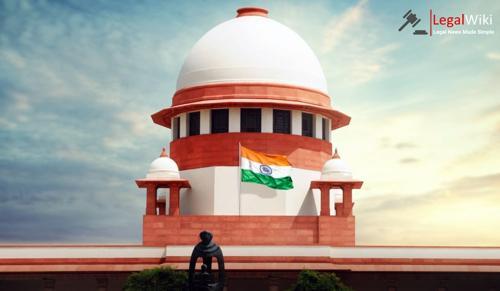
Penalty for Delay in Compensation Must be Paid by Employer, Not Insurance Company: Supreme Court
The Supreme Court ruled that an employer must personally pay the penalty for delaying compensation under the Employees’ Compensation Act, 1923, even if the compensation amount is covered by insurance.
The Court clarified that the penalty under Section 4A(3)(b) arises from the employer’s own default and cannot be shifted to the insurance company.
The case arose after an employee died in a work-related accident and compensation was not paid within the statutory period.
While the insurer may pay compensation and interest, the Court held that the penalty must be borne by the employer to ensure timely payment and maintain the deterrent purpose of the law.
S PavithraBookmark
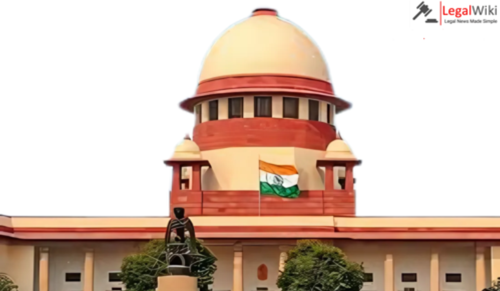
Supreme Court Dismisses Appeals in Actress Prathyusha Death Case, Upholds Abetment Conviction
The Supreme Court of India has dismissed appeals in the 23-year-old death case of Telugu/Tamil actress Prathyusha, ruling out allegations of murder and rape.
A Bench of Justices Rajesh Bindal and Manmohan held that consistent eyewitness accounts and medical evidence established death by poisoning. The Court noted that Prathyusha and her boyfriend, Gudipalli Siddhartha Reddy, had consumed poison amid opposition to their relationship, though Reddy survived.
Rejecting the defence of accidental intake, the Court found Reddy guilty of abetment to suicide for procuring the poison and directed him to surrender within four weeks.
It also termed the postmortem conducted by Dr. Muni Swamy unprofessional.
[Gudipalli Siddharta Reddy v. State (C.B.I.)]
VishwaBookmark

Gauhati High Court Quashes Case Against Influencer over ‘Goat’ Remark on Assamese Women
The Gauhati High Court has quashed criminal proceedings against financial influencer Abhishek Kar, who was accused of making derogatory remarks about Assamese women during a YouTube podcast.
An FIR registered in January 2025 invoked provisions of the Bharatiya Nyaya Sanhita, the IT Act, and the Assam Witch Hunting Act.
Justice Pranjal Das held that none of the penal provisions were attracted. The Court ruled that Kar’s statement did not promote enmity under Sections 196 or 197 BNS, was not obscene under Section 67 of the IT Act, and did not meet the definition of “witch” under the 2015 Act.
Finding no legal basis for prosecution, the Court quashed the FIR and chargesheet.
[Abhishek Kar v. The State of Assam]
MananBookmark

Mere Touching Does Not Amount to Offence under IPC Section 354: Gauhati High Court
The Gauhati High Court held that mere physical contact, without the use of criminal force, does not attract the offence of outraging a woman’s modesty under Section 354 IPC.
The Court was hearing a petition seeking quashing of criminal proceedings against an IIT professor accused of holding the complainant’s hand during a car journey.
Interpreting the definition of “force” under Section 349 IPC, the Court observed that the provision requires movement, restraint, or control over a person’s body, which was not alleged in the present case. The Court also noted that similar allegations had earlier been found baseless in a departmental inquiry.
The Court quashed the FIR, charge sheet and pending trial.
[VK v. State of Assam & Anr.]
Thanush SBookmark

No Pre-Cognizance Notice Required in Cheque Bounce Cases: Gauhati High Court
The Gauhati High Court held that a Magistrate is not required to issue a pre-cognizance notice to the accused in complaints under Section 138 of the Negotiable Instruments Act.
The Court clarified that invoking Section 223 of the BNSS at the pre-cognizance stage is legally unsustainable, as the NI Act is a special law.
The Court set aside the trial court’s direction issuing notice and directed fresh consideration on cognizance and issuance of process.
[PD Savera LLP v. Galacon Infrastructure and Projects Pvt. Ltd. & Ors.]
MananBookmark

Counsel Cannot Settle Cases in Lok Adalat Without Written Authority: Gauhati High Court
The Gauhati High Court has held that a settlement recorded in a Lok Adalat must be arrived at with the free consent of the parties, and that counsel cannot enter into a compromise without written authorisation.
The case arose from a challenge to a settlement recorded in a National Lok Adalat in an appeal pending before the Assam State Consumer Disputes Redressal Commission.
The Court found that no authorised representative of the company was present and no authority letter was produced.
Holding that such a settlement defeats the object of the Legal Services Authorities Act, 1987, it set aside the Lok Adalat order and directed the Commission to decide the appeal on merits.
[Mahindra & Mahindra Financial Services Ltd v. Hakim Uddin]
Thanush SBookmark

Renewed Plea Seeks Gauhati High Court Bench in Barak Valley to Improve Access to Justice
A renewed representation has been submitted seeking the establishment of a circuit or permanent bench of the Gauhati High Court in the Barak Valley.
Senior advocate Dharmananda Deb highlighted that Silchar is nearly 350 km from Guwahati, with frequent disruptions in connectivity due to floods and landslides, making access to the High Court difficult and expensive for litigants.
The plea noted that the absence of a bench has curtailed writ petitions and urgent constitutional matters, undermining affordable justice.
Citing statutory provisions and precedents of decentralised High Court benches, the representation urged authorities to reconsider the proposal.
MahiraBookmark

Gauhati High Court Upholds ART Age Limit Under Section 21(g) Citing Mother–Child Welfare
The Gauhati High Court upheld Section 21(g) of the Assisted Reproductive Technology (Regulation) Act, 2021, confirming the policy-based upper age limit for couples seeking ART services.
The case arose from a writ plea filed under Article 226 by a married couple after a hospital declined IVF treatment, citing age eligibility.
The Court held that the age criteria applies equally to all couples, is grounded in medical and ethical policy, has a direct link to the welfare of the mother and child, and does not violate Articles 14 or 21 of the Constitution of India.
The petition was dismissed as being devoid of merit.
Thanush SBookmark
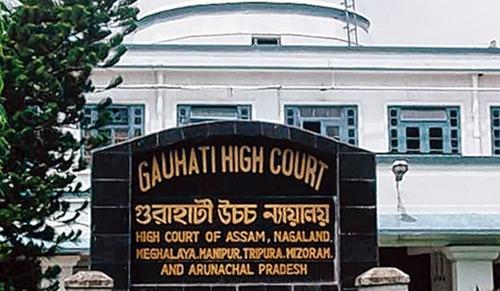
Gauhati High Court Defines Limits of Inspection and Seizure Under Assam Cattle Preservation Act
The Gauhati High Court held that officers authorised under Section 11 of the Assam Cattle Preservation Act, 2021 may enter, inspect, search, seize and detain evidence linked to alleged offences, but the Act does not grant power to seal premises.
The decision came in a petition challenging the sealing of a meat shop in Algapur Bazar by state officials.
The Court noted that statutory silence on sealing authority cannot imply such power and that even a Circle Officer, though authorised by the State Government under Section 11, is bound by the statute’s limits.
Declaring the sealing action ultra vires and illegal, the Court directed authorities to remove the seal and restore the shop to its original condition.
Thanush SBookmark

Gauhati High Court Grants Bail After Illegal 1 AM Arrest in Violation of CrPC Safeguards
The Gauhati High Court granted bail to Dr Sangeeta Dutta, who has been in custody since May 2023 in a case concerning the alleged abuse of a three-year-old foster child.
The Court held that her 1 AM arrest was illegal as it violated Section 46(4) CrPC, which mandates prior written permission from a Judicial Magistrate for arresting a woman at night.
It also noted breaches of Sections 50, 50A, 41B(b)(i), and 60A CrPC, including failure to properly inform grounds of arrest, notify relatives, and prepare a valid arrest memo.
Considering her long custody, slow trial progress and parity with a co-accused who is already granted bail, the Court ordered her release with conditions.
[Dr Sangeeta Dutta v. State of Assam & Anr.]
Thanush SBookmark

Gauhati High Court Allows GST Registration Revival After Revocation Period Expiry
The Gauhati High Court held that a Goods and Services Tax (GST) registration may be restored even after the statutory revocation period expires, provided the taxpayer complies with the conditions under Rule 22(4) of the Central Goods and Services Tax Rules, 2017.
The petitioner’s registration had been cancelled for non-filing of returns for over six months, but was later regularised through payment of dues and filing of pending returns.
The Court noted that cancellation entails severe civil consequences and directed that authorities must reconsider restoration when statutory compliance is achieved.
[Dhirghat Hardware Stores & Anr v Union of India & Ors]
5 months ago
MamiraBookmark
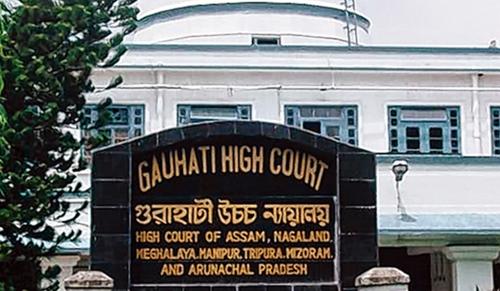
FIR Against CNN-News18 Anchor Over Kamakhya Remark Quashed : Gauhati High Court
The Gauhati High Court quashed the FIR against CNN-News18 anchor Akanksha Swarup, filed over her televised remark suggesting human sacrifice at the Maa Kamakhya Temple.
The FIR, registered under Sections 153A, 295A, and 505(2) IPC, accused her of promoting religious enmity. Justice Shamima Jahan found that the comment was general, lacked intent to insult, and was not made in a religious context.
The Court held that the statement did not meet the legal criteria for the alleged offences, adding that allowing the case to continue would be an abuse of process.
[Akansha Swarup v State of Assam and Another].
MamiraBookmark
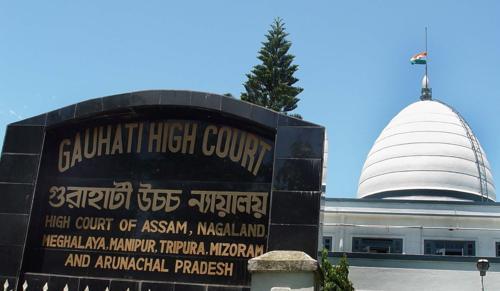
Gauhati HC Acquits Man Convicted of Rape After DNA Test Exonerates Him
The Gauhati High Court acquitted Sudip Biswas, who was earlier convicted of rape by a trial court in 2022, after a DNA test proved he was not the father of the victim’s child.
Despite initially refusing the test, the Court ordered it to establish the truth over individual privacy concerns.
The Court also scrutinised the victim’s testimony, finding inconsistencies regarding the identity of her assailant.
The bench of Justices Michael Zothankhuma and Anjan Moni Kalita ruled that the prosecution’s case lacked foundation, leading to Biswas’ immediate release from custody.
[Sudip Biswas @ Bura v. The State of Assam and Anr]
MalavikaBookmark