Meghalaya High Court
Meghalaya High Court: POCSO Cases in Consensual Adolescent Ties May be Quashed
The Meghalaya High Court has held that POCSO proceedings arising from consensual adolescent relationships may be quashed to prevent "manifest injustice."
The Bench observed that while the statutory age of consent is 18, courts must consider "ground realities," including age proximity and voluntariness.
The Court noted that rigid application in the 16–18 age group often leads to disproportionately punitive outcomes, disrupting the education of young boys.
Emphasizing Meghalaya’s unique matrilineal socio-cultural context, the Bench affirmed its inherent powers under Section 528 of the BNSS to quash cases where continuing prosecution would defeat the ends of justice.
[Shalenbor Wahlang v. State of Meghalaya]
AnvishaaBookmark
Penalty for Delay in Compensation Must be Paid by Employer, Not Insurance Company: Supreme Court
The Supreme Court ruled that an employer must personally pay the penalty for delaying compensation under the Employees’ Compensation Act, 1923, even if the compensation amount is covered by insurance.
The Court clarified that the penalty under Section 4A(3)(b) arises from the employer’s own default and cannot be shifted to the insurance company.
The case arose after an employee died in a work-related accident and compensation was not paid within the statutory period.
While the insurer may pay compensation and interest, the Court held that the penalty must be borne by the employer to ensure timely payment and maintain the deterrent purpose of the law.
S PavithraBookmark
Supreme Court Dismisses Appeals in Actress Prathyusha Death Case, Upholds Abetment Conviction
The Supreme Court of India has dismissed appeals in the 23-year-old death case of Telugu/Tamil actress Prathyusha, ruling out allegations of murder and rape.
A Bench of Justices Rajesh Bindal and Manmohan held that consistent eyewitness accounts and medical evidence established death by poisoning. The Court noted that Prathyusha and her boyfriend, Gudipalli Siddhartha Reddy, had consumed poison amid opposition to their relationship, though Reddy survived.
Rejecting the defence of accidental intake, the Court found Reddy guilty of abetment to suicide for procuring the poison and directed him to surrender within four weeks.
It also termed the postmortem conducted by Dr. Muni Swamy unprofessional.
[Gudipalli Siddharta Reddy v. State (C.B.I.)]
VishwaBookmark
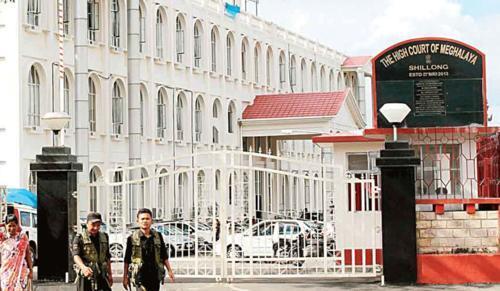
Meghalaya High Court Orders Arrests in Illegal Coal Mining Case After Jaintia Hills Blast
The Meghalaya High Court has directed the immediate arrest of those involved in alleged illegal coal mining following a mine blast in East Jaintia Hills that claimed at least 18 lives. The Court also summoned the district Superintendent of Police and Deputy Commissioner to appear before it.
The directions were issued in a suo motu case initiated after media reports on the explosion at an illegal coal mine in the Thangsku area.
The Bench ordered authorities to identify and arrest mine owners and operators, seize incriminating materials, and ensure medical assistance to affected persons.
Senior officials have been asked to file an action-taken report and remain personally present before the Court on February 9.
Thanush SBookmark
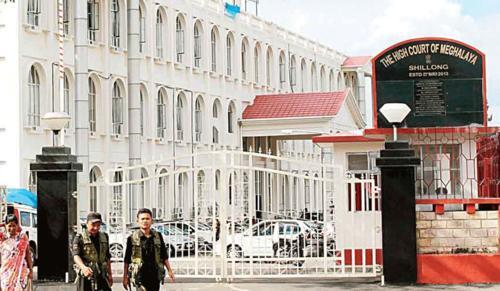
Meghalaya Govt Seeks Court’s Clearance to Review White Ink Scam Teacher Cases
The Meghalaya government has sought permission from the Meghalaya High Court to undertake a fresh review of cases involving teachers labelled as “tainted” in the White Ink Scam, which relates to alleged manipulation and corruption in the recruitment of lower primary school teachers during 2008-09.
The move follows the High Court’s decision to quash criminal proceedings against former Education Minister Ampareen Lyngdoh and other officials, after finding no prima facie case.
Chief Minister Conrad K Sangma said the government would proceed only with judicial clearance due to legal complexities.
He noted that earlier court-mandated reviews had led to the reinstatement of over 140 teachers, with a few more reinstated subsequently, and that options for further review and rehabilitation are being examined.
Thanush SBookmark
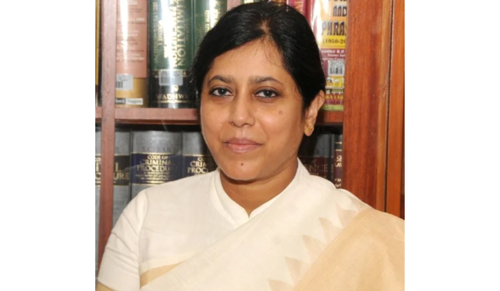
Centre Notifies Justice Revati Mohite Dere as Chief Justice of Meghalaya High Court
The Central Government, on January 1, issued a notification appointing Justice Revati Mohite Dere, a judge of the Bombay High Court, as the Chief Justice of the Meghalaya High Court.
Justice Revati Mohite Dere was the second senior-most judge of the Bombay High Court. Justice Revati Mohite Dere was appointed an Additional Judge of the Bombay High Court on 21 June 2013 and was made a permanent judge on 2 March 2016.
Her appointment will take effect from the date she assumes charge, following the transfer of the incumbent Chief Justice of Meghalaya High Court.
The move comes on the basis of a recommendation by the Supreme Court Collegium on December 18, 2025.
Thanush SBookmark
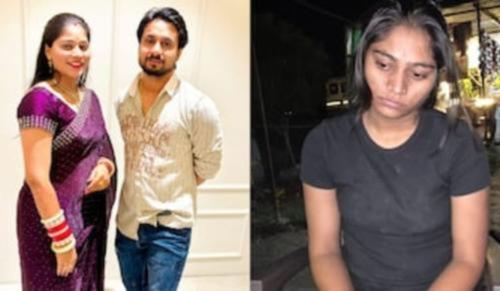
Meghalaya Honeymoon Murder Case: Shillong Court Denies Bail to Prime Accused Sonam Raghuvanshi
A court in Shillong has denied bail to Sonam Raghuvanshi, the prime accused in the alleged murder of her husband, Raja Raghuvanshi, during their honeymoon in Meghalaya in May 2025.
Raja, an Indore-based businessman, was allegedly killed in a premeditated manner. The prosecution claims that the crime was planned by Sonam along with her alleged lover, Raj Singh Kushwaha.
The State police have filed a chargesheet running over 700 pages detailing the alleged conspiracy and sequence of events.
Rejecting the bail plea, the court cited the gravity of the allegations and the stage of the proceedings, holding that the case was not fit for grant of bail at this stage.
[State of Meghalaya v. Sonam Raghuvanshi]
3 months ago
MahiraBookmark
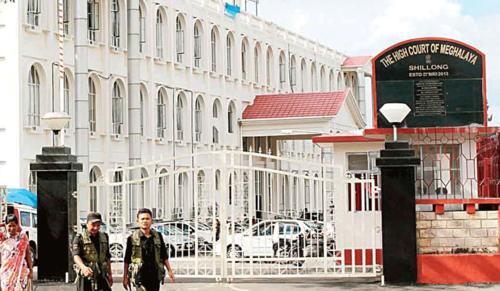
Meghalaya High Court Holds Non-Signatory, Non-Existent LLP Cannot Invoke Arbitration Protection
The Meghalaya High Court dismissed an appeal by Suraksha Salvia LLP challenging the State Government’s termination of a PPP agreement for a diagnostic centre in Shillong.
The Court held that the LLP was not in existence when the agreement was executed and therefore could not invoke Section 9 of the Arbitration and Conciliation Act.
It said a non-signatory that did not exist on the date of contract execution cannot rely on the group-of-companies doctrine to seek interim protection.
The Court upheld the Single Judge’s order and refused to interfere with the termination.
[Suraksha Salvia LLP v. State of Meghalaya]
3 months ago
MahiraBookmark

Aadhaar Card Not Mandatory for SC/ST Students to Avail Post-Matric Scholarships: Meghalaya High Court
The Meghalaya High Court has restrained the State government from insisting on the production of an Aadhaar card as a precondition for students belonging to the Scheduled Castes and the Scheduled Tribes to claim post-matric scholarships or other forms of financial assistance.
The Court clarified that any other valid proof of identity and residence shall suffice for availing such benefits. Referring to Sections 7 and 8 of the Aadhaar (Targeted Delivery of Financial and Other Subsidies, Benefits and Services) Act, 2016,
The Court noted that no individual, particularly a child, can be denied welfare benefits for lack of an Aadhaar number.
[Greneth M. Sangma v Union of India & Ors.]
KhushaliBookmark

Meghalaya High Court Recalls Order Asking Supreme Court Nod To Continue Stray Dogs PIL
The Meghalaya High Court has withdrawn its earlier order directing the Registrar General to seek permission from the Supreme Court to continue hearing a Public Interest Litigation (PIL) relating to stray dogs.
A Bench of Acting Chief Justice H.S. Thangkhiew and Justice W. Diengdoh recalled the order on September 26 following a request from the State Government.
The Court has directed the Registry to transmit the PIL records to the Supreme Court in compliance with the Apex Court’s August 22 transfer order, which mandated transfer of stray dog–related cases from all High Courts. The matter will now be heard by the Supreme Court for consolidated consideration.
[The State of Meghalaya v Kaustav Paul & Ors]
SoumyaBookmark
Justice Soumen Sen Appointed Chief Justice of Meghalaya High Court
The Central Government has appointed Justice Soumen Sen of the Calcutta High Court as the Chief Justice of the Meghalaya High Court, effective from his assumption of office.
The Supreme Court Collegium recommended his appointment earlier this month.
Justice Sen enrolled as an advocate in 1991 and practised extensively at the Calcutta High Court for over 20 years, handling civil, constitutional, banking, and arbitration matters.
He represented key statutory authorities, including RBI, SEBI, and SIDBI, as a Senior Central Government Advocate. Justice Sen was elevated to the Calcutta High Court bench on April 13, 2011.
Read Notification / 6 months ago
MalavikaBookmark
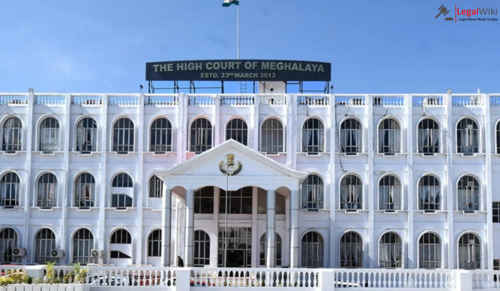
Meghalaya High Court Seeks Supreme Court Approval to Continue Hearing Stray Dog PIL
The Meghalaya High Court has directed its Registrar General to seek Supreme Court approval to continue hearing a public interest litigation on stray dogs.
A Bench of Chief Justice IP Mukerji and Justice W Diengdoh said the problem in Meghalaya has “peculiar and distinctive” features, with reports of vicious dogs attacking people in public places.
The Court recalled earlier directions requiring such dogs to be captured, vaccinated and kept in shelters before release.
On August 22, the Supreme Court had ordered the transfer of all pending stray dog cases from High Courts to itself for consolidated hearing.
[Kaustav Paul v The State of Meghalaya]
UjjwalBookmark
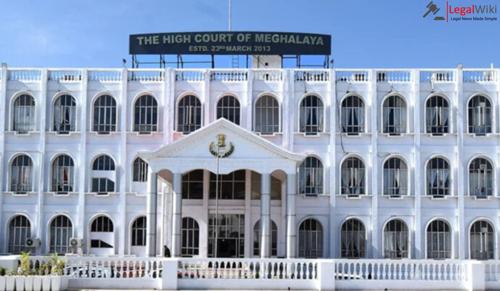
Meghalaya HC Orders Defense Ministry to Justify Massive Rent Hike for Shillong Cantonment Lessees
The Meghalaya High Court has directed the Defence Ministry to explain a drastic rent increase from ₹3 to ₹13,000 per month for approximately 3,000 leaseholders on Shillong cantonment land.
The hike, instituted in April 2022 under the ministry’s Standard Rent Determination policy, prompted residents to receive arrear notices of up to ₹4.7 lakh.
The court held that while public authorities may revise rent, they must do so transparently and fairly, adhering to the principles of Article 14.
Until formal demands are issued, tenants must pay 40% of rent arrears by December 2025. The ministry has six weeks to provide detailed valuations and grant hearings.
AsleshaBookmark
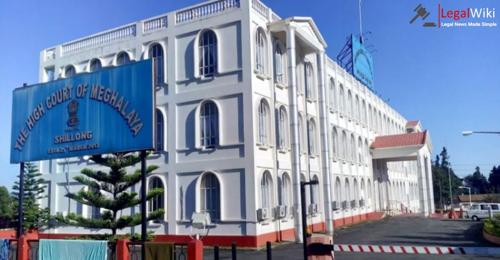
SC Collegium Recommends Meghalaya HC’s Justice Biswadeep Bhattacharjee for Permanent Judge Post
The Supreme Court Collegium has recommended the elevation of Justice Biswadeep Bhattacharjee, currently serving as an additional judge of the Meghalaya High Court, to the position of permanent judge.
The decision was taken during the Collegium's meeting held on July 1, 2025, under the leadership of Chief Justice of India BR Gavai, along with Justices Surya Kant and Vikram Nath.
The recommendation involves converting the existing post of additional judge into that of a permanent judge.
This move underscores the Collegium’s ongoing efforts to strengthen the judiciary through timely appointments and confirmations.
Official Statement / 9 months ago
SakshmitBookmark
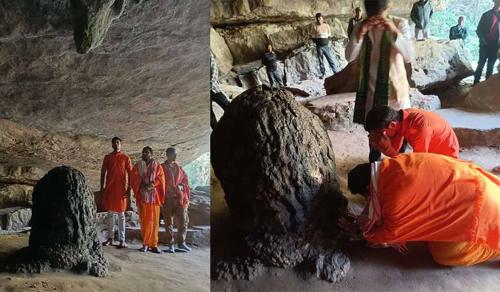
Meghalaya High Court Seeks Amicable Settlement in Mawjymbuin Cave Dispute
The Meghalaya High Court referred a PIL concerning a stone formation in Mawjymbuin cave, believed by some to be a "Shiva Linga," to a single-judge bench overseeing a related writ (WP(C) No. 275/2024).
Observing the site's religious significance to both Hindu devotees and Khasi tribes, the Court urged mediation between stakeholders.
The court directed that if mediation fails, the single judge may refer the matter to the District Council Court, considering its jurisdiction over Scheduled Tribe land matters.
Until the writ concludes, no interim orders may be passed without the single judge’s permission.
UjjwalBookmark