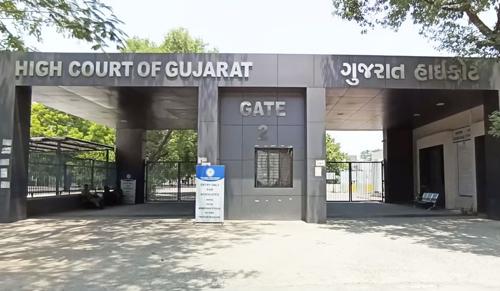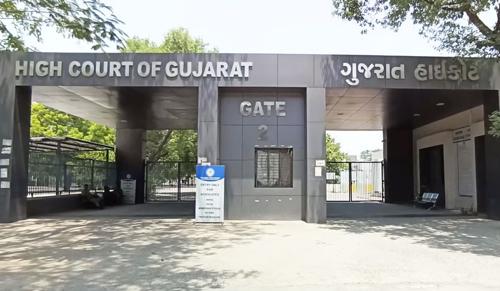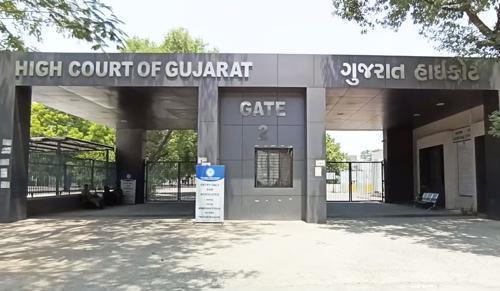

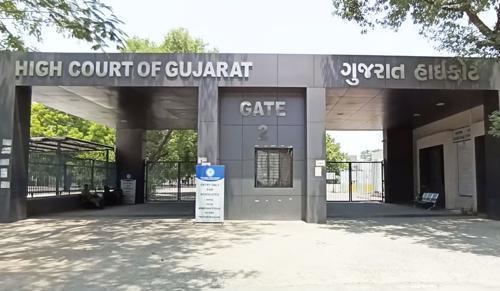
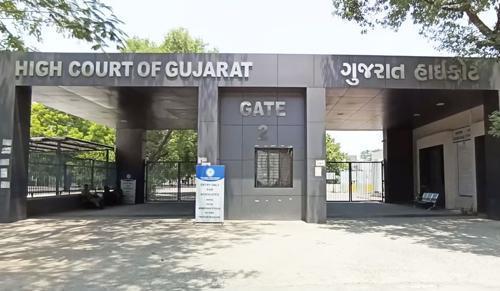
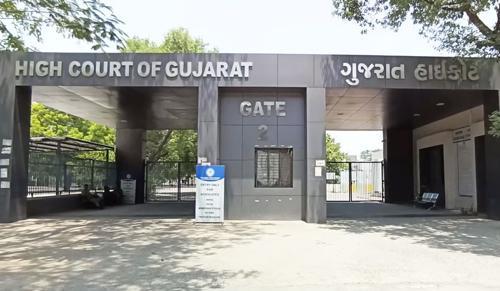
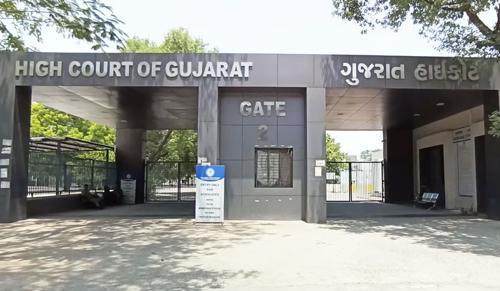
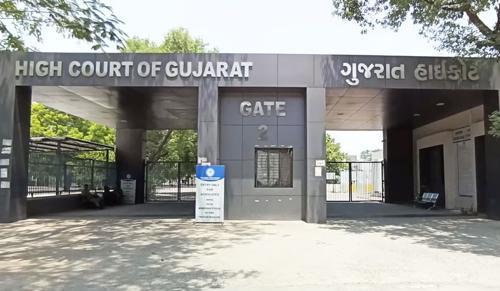
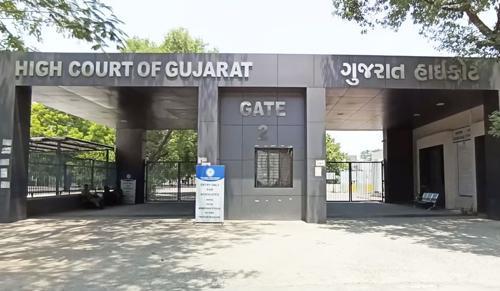
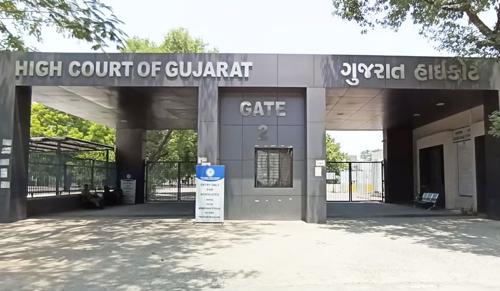
Gujarat High Court

Gujarat High Court Upholds 660-Day Jail Term for Failure to Pay Maintenance

The Gujarat High Court upheld a family court order sentencing a man to 660 days of imprisonment for failing to pay maintenance of about ₹3.97 lakh to his wife and children.

The Court found no error in imposing 10 days’ jail for each month of default, which extended over 66 months.

It noted that the husband had admitted his liability and inability to pay, and had even surrendered before the court.

Holding that maintenance is a legal obligation, the Court ruled that the sentence was not disproportionate and dismissed the challenge to the family court’s order.

[Jitendrakumar Ambalal Kondi v. State Of Gujarat & Ors.]

Read Judgement / 13 hours ago

 S PavithraBookmark

Gujarat High Court Bans Use of AI in Judicial Decision-Making

The Gujarat High Court has implemented a strict policy prohibiting judges and court staff from using Artificial Intelligence for drafting orders, preparing judgments, or any substantive judicial reasoning.

Framed under Articles 225 and 227 of the Constitution, the policy fastens personal liability on judicial officers for any AI-assisted outputs, ensuring that technology does not replace human conscience.

While AI use is barred from evaluative tasks like assessing evidence credibility, it remains permissible for limited assistive purposes such as legal research and administrative automation, provided all results are verified against authoritative primary sources.

The policy further mandates strict data privacy, banning the entry of sensitive personal information into public AI tools.

Read Details / 5 days ago

 AnvishaaBookmark

Gujarat High Court Upholds Life Term for Husband, Rejects Suicide Claim in Wife’s Death

The Gujarat High Court upheld the life sentence of a husband for murdering his wife by strangulation and trying to present it as suicide.

The Court found that medical and forensic evidence clearly showed homicidal strangulation, not hanging. It noted that the prosecution had proved a complete chain of circumstances, including the accused’s presence at the scene and prior disputes.

The Court held that once these facts are established, the burden shifts to the accused to explain the death, which he failed to do.

His false claim of suicide and evasive behaviour were treated as strong circumstances confirming his guilt.

[Pareshbhai Shankerbhai Taviyad v. State of Gujarat]

Read Details / 10 days ago

 S PavithraBookmark

Gujarat High Court Slams Family Court for Ordering Toddler's 6-Hour Weekly Court Visit

The Gujarat High Court recently set aside a Family Court order that required a two-and-a-half-year-old child to spend six hours every Thursday on court premises for visitation with his paternal grandfather.

Justice JC Doshi termed the lower court’s approach "unfathomable" and "inhuman," emphasizing that a toddler should not be a victim of rigid litigation.

The Court held that family courts must act as parens patriae, prioritizing a child's emotional and physical welfare over the legal claims of the fighting parties.

Observing that forcing such young children into a court environment for extended periods lacks the necessary sensitivity and empathy required in custody disputes.

[Mansiben v. Keshavjibhai Damjibhai Ghetiya]

Read Judgement / 14 days ago

 AnvishaaBookmark

Gujarat High Court Pulls Up State Over Delay in Glue Trap Ban

The Gujarat High Court questioned the State’s prolonged inaction on a proposal to ban glue traps, used for catching animals and widely criticised for causing severe suffering to the animals. 

Hearing a PIL, the Court noted that the proposal had remained stuck at the stage of inter-departmental discussions for over seven months without progress.

Expressing concern over continued animal cruelty due to this delay, the Bench directed the Principal Secretary of the Home Department to file a personal affidavit explaining the inaction and steps taken.

The matter is listed for further hearing on March 27.

20 days ago

 S PavithraBookmark

Mere Disability Certificate Not Proof of Actual Disability in Accident Claims: Gujarat High Court

The Gujarat High Court held that mere production of a disability certificate is not sufficient proof of actual or functional disability in motor accident compensation claims.

The Court observed that tribunals must carefully scrutinise medical evidence rather than mechanically relying on such certificates.

In the case, a claimant produced a certificate showing 90% disability, but the issuing doctor later stated that the disability could be around 55% permanent disability of the whole body, raising doubts.

The Court ruled that the Motor Accident Claims Tribunal should allow reassessment by a competent Medical Board and permit parties to challenge the authenticity or accuracy of disability certificates.

[Tata AIG General Insurance Co. Ltd. v. Sunil Ishwarbhai Panchal & Ors.]

Read Judgement / 30 days ago

 S PavithraBookmark

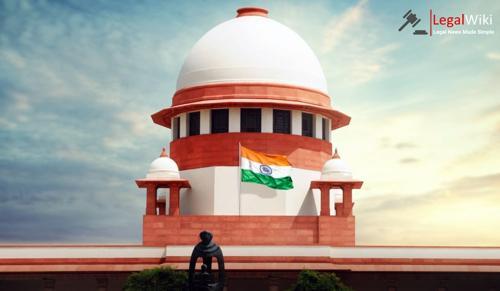
Penalty for Delay in Compensation Must be Paid by Employer, Not Insurance Company: Supreme Court

The Supreme Court ruled that an employer must personally pay the penalty for delaying compensation under the Employees’ Compensation Act, 1923, even if the compensation amount is covered by insurance.

The Court clarified that the penalty under Section 4A(3)(b) arises from the employer’s own default and cannot be shifted to the insurance company.

The case arose after an employee died in a work-related accident and compensation was not paid within the statutory period.

While the insurer may pay compensation and interest, the Court held that the penalty must be borne by the employer to ensure timely payment and maintain the deterrent purpose of the law.

Read Details / a month ago

 S PavithraBookmark

Gujarat High Court Flags AI Deepfakes Targeting Constitutional Authorities, Seeks Government Response

The Gujarat High Court recently issued notices to the Central and State governments on a Public Interest Litigation (PIL) raising alarms over the misuse of AI-generated deepfakes targeting constitutional authorities.

A Bench of Chief Justice Sunita Agarwal and Justice DN Ray directed the Gujarat Director General of Police (DGP) to detail existing enforcement frameworks.

The petitioner highlighted that despite 2025-2026 amendments to the IT Act, procedural gaps persist in real-time police support and coordination with platforms like Meta and Google.

The Court will consider issuing notices to intermediaries after reviewing the government responses on March 20.

[Vikas Vijay Nair v. State of Gujarat]

Read Details / a month ago

 AnvishaaBookmark

Gujarat High Court: Separation Deed Cannot Override Mother’s Child Custody Rights up to Age 5

The Gujarat HC ruled that a Hindu mother’s right to custody of her child up to five years old cannot be defeated by a settlement deed between parents.

The case involved a mother whose daughter had lived with her since the couple’s separation. The father later took the child without formal consent, prompting the mother’s habeas corpus petition. 

The HC held that the father’s unilateral action was unjustified. For granting custody of young children, child welfare and continuity of care should be prioritised over informal agreements.

The court ordered that the minor be restored to the mother’s custody, allowing the father to pursue formal custody orders in the appropriate court.

[Kinjal D/O Hareshkumar Panchal v. State Of Gujarat & Ors.]

Read Details / a month ago

 S PavithraBookmark

Gujarat High Court: Denial of Job to Unmarried Woman on Marriage Assumption Violates Articles 14, 16

The Gujarat High Court held that denying appointment to an unmarried woman on the assumption that she may marry and relocate is arbitrary and violative of Articles 14 and 16 of the Constitution.

Justice Maulik J. Shelat described the case as a “classic example of outright favouritism.”

The Court partly allowed a plea by Sangada Hansaben Malabhai, who challenged the 2018 appointment of a less meritorious candidate as Administrator-cum-Cook in Dahod district. Finding manipulation in the merit list prepared by the Mamlatdar, Taluka Jhalod, the Court quashed the appointment.

It directed authorities to verify the petitioner’s degree certificate and, if genuine, appoint her strictly on merit within one month.

Read Details / a month ago

 VishwaBookmark

Gujarat High Court: Homeopathy Graduates Admitted Under Court Protection Entitled to Recognition, Licences

The Gujarat High Court held that students who completed their Homeopathy course under court protection cannot be denied degree recognition or practice licences due to pending disputes between colleges and regulators.

Justice Nirzar S Desai said students should not suffer even if the main petitions fail later. The Court was hearing pleas by Parul University against the Ministry of AYUSH over refusal to extend approval for 2016-17 despite favourable inspections.

Noting interim orders in 2016 and 2019 had permitted admissions, the Court directed authorities to issue Letters of Permission and licences as if granted earlier.

It imposed ₹25,000 costs on each petitioner to the High Court Legal Services Committee, clarifying relief is limited to students.
[Parul University v. UOI & Ors.]

Read Details / a month ago

 VishwaBookmark

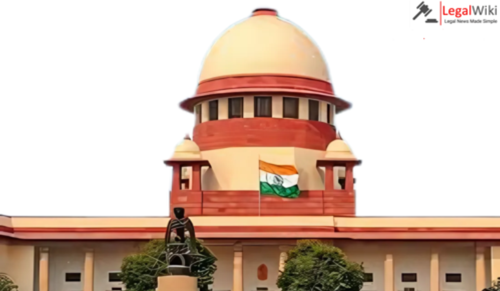
Supreme Court Dismisses Appeals in Actress Prathyusha Death Case, Upholds Abetment Conviction

The Supreme Court of India has dismissed appeals in the 23-year-old death case of Telugu/Tamil actress Prathyusha, ruling out allegations of murder and rape.

A Bench of Justices Rajesh Bindal and Manmohan held that consistent eyewitness accounts and medical evidence established death by poisoning. The Court noted that Prathyusha and her boyfriend, Gudipalli Siddhartha Reddy, had consumed poison amid opposition to their relationship, though Reddy survived.

Rejecting the defence of accidental intake, the Court found Reddy guilty of abetment to suicide for procuring the poison and directed him to surrender within four weeks.

It also termed the postmortem conducted by Dr. Muni Swamy unprofessional.

[Gudipalli Siddharta Reddy v. State (C.B.I.)]

Read Details / a month ago

 VishwaBookmark

Gujarat High Court Quashes Human Rights Commission Proceedings in Private Property Dispute

The Gujarat High Court quashed proceedings initiated by the State Human Rights Commission in a family property dispute over agricultural land in Gandhinagar.

The Court held that a claim for a share in property cannot be treated as a human rights violation under the Protection of Human Rights Act, 1993.

It observed that the dispute was already pending before a civil court and involved private parties, and that the Commission had exceeded its jurisdiction by issuing summons and warrants.

The Court also laid down guidelines to prevent jurisdictional overreach and parallel proceedings in civil matters.

[Mahendra Shanabhai Patel & Ors. v. The District Magistrate & Ors.]

Read Judgment / a month ago

 MahiraBookmark

Gujarat HC Upholds Reinstatement of Assistant Librarian, Says UGC Norms Don’t Apply to Non-Teaching Posts

The Gujarat High Court dismissed Gujarat Vidhyapith’s appeal against a Single Judge order setting aside the termination of an Assistant Librarian after nearly 18 years of service.

The Court held that UGC regulations do not apply to non-teaching posts and said the University could not rely on the lack of UGC approval to justify termination. 

It observed that the employee had fulfilled the prescribed qualifications at the time of appointment and that raising objections after 17-18 years was unsustainable.

The Court upheld directions to grant back wages and retiral benefits.

[Gujarat Vidhyapith v. Raxaben Anilkumar Patel & Anr.]

Read Details / a month ago

 MahiraBookmark

Gujarat High Court: No Concept of Ancestral Property or Birthright Under Muslim Law

The Gujarat High Court rejected a Muslim woman’s plea for a share in her father’s ancestral estate, holding that the concept of ancestral property and right by birth is wholly alien to Muslim law.

The plaintiff had sought a declaration and injunction over ancestral property, claiming entitlement under general inheritance principles.

The Court observed that under Muslim law, ancestral or coparcenary rights do not exist and succession is governed by fixed shares as per religious law.

It held that mere birth in a family does not confer a right to ancestral property in Muslim law and dismissed the suit.

[Yusufbhai Walibhai Patel & Ors. v. Zubedaben Abbasbhai Patel & Ors.]

Read Judgment / a month ago

 MahiraBookmark