Punjab & Haryana High Court
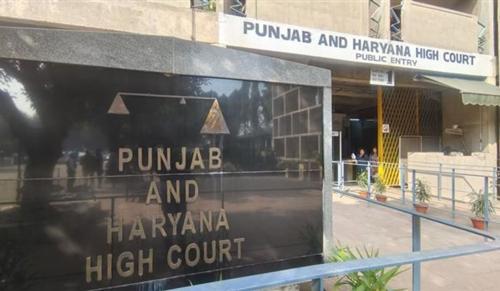
Punjab & Haryana High Court Grants Bail in ‘Operation Sindoor’ Espionage Case Over Lack of Evidence
The Punjab & Haryana High Court granted bail to a man accused of spying for Pakistan during “Operation Sindoor.”
The Court noted that the prosecution failed to produce concrete material showing that the accused had actually shared sensitive Army-related information with any person in Pakistan.
It also observed that the case was largely based on disclosure statements, with no independent corroboration. Additionally, sanction under the Official Secrets Act was still pending, preventing the trial from commencing.
Considering the lack of evidence and delay in proceedings, the Court held that continued custody was not justified and granted bail.
[Davender Singh v. State of Haryana]
S PavithraBookmark
No Locus for Whistleblowers in Service Disputes Unless Directly Affected: Punjab & Haryana High Court
The Punjab & Haryana High Court held that whistleblowers or third parties do not have locus standi in service matters unless they are directly and substantially aggrieved.
The Court observed that service disputes are personal in nature and can only be challenged by individuals whose legal rights are affected.
It rejected a plea by a complainant seeking to be impleaded in proceedings arising from disciplinary action, noting that a whistleblower remains a stranger to the employer-employee dispute.
The Court clarified that such persons may assist as witnesses but cannot participate as litigants in service-related cases.
[Satbir Singh & Anr. v. State of Haryana & Ors. & connected cases]
S PavithraBookmark
Invalid Rules Cannot Confer Retirement Benefits: P&H High Court Dismisses Petitions
The Punjab and Haryana High Court held that employees of cooperative societies cannot claim retiral benefits as a matter of right under the Punjab State Cooperative Agricultural Service Societies Service Rules, 1997, declaring these rules ultra vires and unenforceable.
The Court noted that the rules were framed by the Registrar without authority under the Punjab Cooperative Societies Act, 1961, and therefore lacked statutory force.
It further held that cooperative societies are independent entities governed by their own bye-laws and financial capacity, and cannot be compelled to provide benefits on par with government employees.
Consequently, writ petitions seeking enforcement of such benefits were held to be non-maintainable.
[Samarjit Singh v. State of Punjab & Ors. & connected matters]
S PavithraBookmark
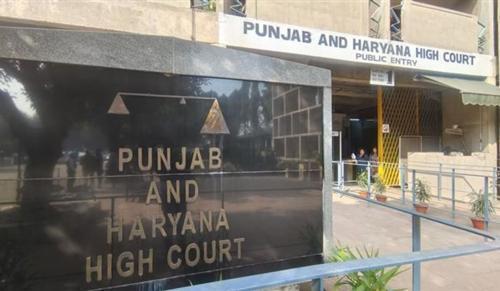
Right to Travel Abroad a Basic Human Right: Punjab & Haryana High Court Allows Convicted Cop to Visit Europe
The Punjab and Haryana High Court permitted former Punjab Police DSP Raka Ghirra, convicted in a 2011 bribery case, to travel to Spain, Switzerland, and Czechia for one month.
Justice Aman Chaudhary observed that the right to travel abroad is a "basic human right," citing the Supreme Court’s landmark Maneka Gandhi ruling.
Ghirra, sentenced to six years of rigorous imprisonment in 2024, was granted permission despite CBI opposition, provided she fulfills stringent conditions.
These include furnishing bail bonds and securities worth ₹40 lakh, submitting a detailed itinerary, and surrendering her passport within three days of her return on May 10.
[Raka Ghirra v. CBI]
AnvishaaBookmark
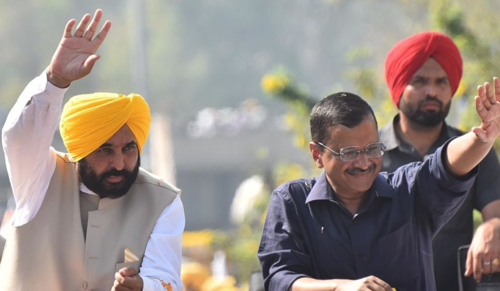
Journalist Moves Punjab & Haryana High Court Over Facebook Copyright Strikes by AAP
The Punjab and Haryana High Court issued notice to the Union of India, Meta, and the Aam Aadmi Party (AAP) regarding a plea filed by a journalist.
The journalist challenged the removal of his Facebook pages, which had over 3.24 lakh followers, following multiple copyright strikes initiated by AAP.
He alleged that the party used intellectual property claims, including those over the Chief Minister’s public photos, to silence critical reporting.
The Bench noted the contention that a public official's image should not be treated as private property to restrict press freedom. The Court has scheduled the next hearing for July 27.
[Rattandeep Singh Dhaliwal v. UOI]
AnvishaaBookmark
Right to Promotion is a Fundamental Right, Rules Punjab & Haryana High Court
The Punjab and Haryana High Court recently held that the right to be considered for promotion is a fundamental right under Articles 14 and 16(1) of the Constitution.
Justice Harpreet Singh Brar observed that delays in convening Departmental Promotion Committee (DPC) meetings not only cause financial loss but also stifle future career advancement.
The Court directed the State to hold DPC meetings quarterly to ensure timely progression for government employees.
In this case, a Junior Engineer was granted notional promotion after the Court rejected the State's technical objections regarding his diploma, noting that rules protected existing employees.
[Kulwant Singh v. State of Punjab]
AnvishaaBookmark
Consensual Relationship Cannot be Termed Rape on Grounds of Misconception: P&H High Court
The Punjab and Haryana High Court quashed an FIR alleging rape, holding that a prolonged consensual relationship between two adults cannot be termed as arising from “misconception of fact.”
The case involved allegations by a husband that a man had coerced his wife into a physical relationship.
However, the Court found that the woman, being a mature and educated individual, had voluntarily continued the relationship over time.
It also noted the absence of evidence of blackmail or coercion. Concluding that the essential ingredients of rape were not made out, the Court set aside the FIR and related proceedings.
[Anil Sharma v. State of U.T., Chandigarh & Ors.]
S PavithraBookmark
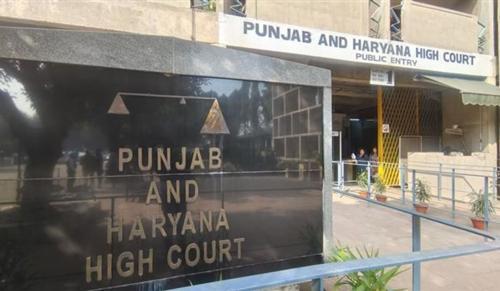
P&H High Court Awards ₹60 Lakh to Accident Victim Despite Job Resumption
The Punjab & Haryana HC has enhanced the accident compensation for a 45-year-old man to ₹60 lakh, ruling that resuming work in an "accommodated capacity" does not equate to a restoration of pre-accident earning capacity.
The Court observed that the claimant’s 65% functional disability significantly impaired his efficiency and cognitive health, despite his return to employment.
The Court further clarified that a delay in filing an FIR cannot defeat a genuine claim, as the immediate priority after a crash is seeking medical aid.
The Court rectified a lower tribunal's error by removing a 50% deduction for personal expenses, which is impermissible in injury cases.
[S.K. v. Insurance Company & Ors.]
AnvishaaBookmark
Punjab & Haryana High Court Issues Notice to SBI Over Appointment of Legal Head
The Punjab and Haryana High Court issued a notice to the State Bank of India (SBI) regarding the post-retirement contractual appointment of its Legal Head.
The Court passed the order in a petition alleging that the appointment violates Ministry of Finance guidelines and constitutional principles of fairness.
The petitioner contends that the post is a "public office" under Article 12 and should be filled through a regular selection process.
The plea highlights that the officer, who retired in 2018, received extensions up to 2026 with compensation exceeding ₹2 crore annually, which allegedly blocked career progression for eligible serving employees.
[Raj Kumar Sharma v. UOI & Ors.]
AnvishaaBookmark
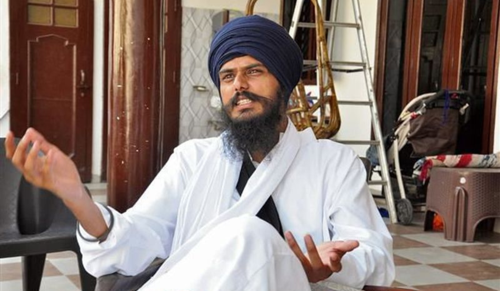
Punjab & Haryana High Court Rejects MP Amritpal Singh’s Plea to Attend Parliament
The Punjab and Haryana High Court dismissed Khadoor Sahib MP Amritpal Singh’s plea for temporary release to attend the Budget session.
Amritpal Singh, detained under the National Security Act since 2023, challenged the government’s refusal of parole.
The Bench ruled that "national interests are paramount when compared with personal interests." The Court held that an elected representative does not possess a higher right to liberty than an ordinary citizen under Article 105 of the Constitution.
Emphasizing that even a minor doubt regarding a potential breach of public order makes individual liberty subservient to the sovereignty and security of the State.
[Amritpal Singh v. State of Punjab & Ors.]
AnvishaaBookmark
Supreme Court Urges P&H High Court to Relax 45% Cut-off for SC Judicial Candidates
The Supreme Court has requested the Punjab and Haryana High Court to "sympathetically consider" relaxing the 45% minimum mark requirement for Scheduled Caste (SC) candidates in the 2024 Civil Judge recruitment.
The Court noted that 30 out of 39 reserved vacancies remain unfilled. The petitioner, Diksha Kalson, missed the qualifying mark by just 1.9 points.
While the Court found no legal fault with the recruitment rules barring re-evaluation, it granted liberty to the petitioner to represent her case administratively.
The Court emphasized that such relaxation should be considered to address the significant vacancy gap in the reserved category.
[Diksha Kalson v. State of Haryana & Ors.]
AnvishaaBookmark
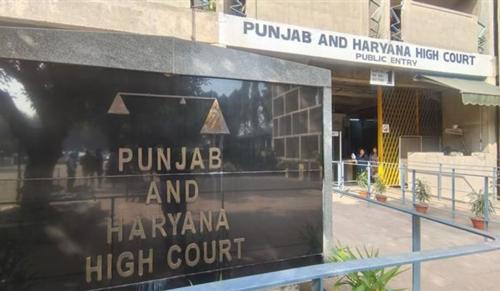
Sec 498A Conviction Not Automatically Moral Turpitude, Requires Case-by-Case Analysis: P&H High Court
The Punjab and Haryana High Court held that a conviction under Section 498A IPC does not automatically amount to an offence involving moral turpitude and must be assessed based on the facts of each case.
The Court set aside the termination of a bank manager, observing that authorities cannot act mechanically on the mere existence of a conviction. It emphasised that moral turpitude depends on the nature, gravity, and context of the conduct, and not all matrimonial disputes reflect moral depravity.
The Court called for a fact-sensitive inquiry, clarifying that only cases involving serious cruelty or moral wrongdoing would justify such classification.
[Brahmjeet Kaushal v. UOI & Ors.]
S PavithraBookmark

Punjab & Haryana High Court Stays Proceedings Against Guru Randhawa Over 'Sirra' Lyrics
The Punjab and Haryana High Court stayed criminal proceedings against singer Guru Randhawa for allegedly defaming the Jatt-Sikh community in his song "Sirra."
A complaint filed alleged that the lyric "Jammeya nu gudti ch mildi afeem aa" insulted the sacred Sikh ritual of "Gurthi" by suggesting newborns are given opium.
Court observed that the trial court issued notice to Randhawa without recording preliminary evidence, violating Section 223 of the BNSS. Randhawa argued the term was used in a cultural, metaphorical sense without religious intent.
The High Court has stayed the trial until next hearing on July 16.
[Gursharanjot Singh Randhawa @ Guru Randhawa v. Rajdeep Singh Mann & Ors.]
AnvishaaBookmark

P&H High Court Disposes Badshah’s Plea After LOC Withdrawal in ‘Tateeree’ Song Case
The Punjab and Haryana High Court disposed of a petition filed by rapper Badshah, also known as Aditya Prateek Singh Sisodia, challenging directions issued by the Haryana State Commission for Women regarding his song 'Tateeree'.
The Court closed the matter after Haryana Police confirmed that the Look Out Circular (LOC) against the artist had been withdrawn as he had joined the investigation.
While an FIR remains registered under the Indecent Representation of Women (Prohibition) Act and the Bharatiya Nyaya Sanhita, the State assured the Court that no further coercive action would be taken based on the Commission's initial order for his arrest.
[Badshah v. State of Haryana & Ors.]
AnvishaaBookmark
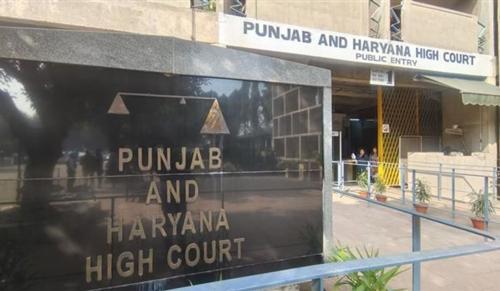
Punjab & Haryana High Court: Litigants Cannot Backtrack and Blame Counsel After Case Withdrawal
The Punjab and Haryana High Court ruled that litigants who withdraw their cases cannot later backtrack by blaming their lawyers for "lack of instructions."
The Court termed such claims "procedural heresy," emphasizing that a counsel is an officer of the court and not a mere mechanical agent.
Noting that statements made by advocates at the Bar are presumed to reflect the true intent of the litigant under the authority of a Vaqalatnama.
Dismissing a recall application in a murder case with costs of ₹20,000, the Bench held that allowing such pleas would make judicial orders vulnerable and turn courts into "laboratories for experimental litigation."
[Ankit Rawal v. State of Haryana]
AnvishaaBookmark