Andhra Pradesh High Court
AP High Court Rules State GST Authorities Lack Jurisdiction to Assess IGST on Imported Goods
The Andhra Pradesh High Court held that State GST authorities have no jurisdiction to assess or recover Integrated GST (IGST) on imported goods, as such powers lie exclusively with customs authorities under the Customs Act.
The case arose from a show-cause notice issued to Avanti Feeds Ltd., which the Court quashed for lack of jurisdiction.
It clarified that IGST on imports is levied and collected along with customs duty at the point of import, making customs authorities the competent forum for assessment and recovery.
The Court also rejected reliance on cross-empowerment provisions, holding they do not apply in such cases.
[Avanti Feeds Ltd. v. Deputy Commissioner of State Tax]
S PavithraBookmark
Husband has No Share in Wife’s Inherited Parental Property: Andhra Pradesh High Court
The Andhra Pradesh High Court has clarified that under Section 15(2)(a) of the Hindu Succession Act, 1956, property inherited by a female Hindu from her parents devolves back to the heirs of her father if she dies intestate and childless.
The court held that in such cases, the husband or his heirs possess no legal right over the property.
The ruling arose from a dispute where a grandmother revoked a gift to her deceased, childless granddaughter and bequeathed to another.
The Court ruled the husband could not challenge this as he derived no title under the Act.
[Chikkala Devika Manasa v. The State of Andhra Pradesh]
AnvishaaBookmark
Andhra Pradesh High Court: Client Shouldn’t Suffer for Lawyer’s Lapse, Restores Dismissed Appeal
The Andhra Pradesh High Court ruled that clients should not suffer due to mistakes or negligence by their lawyers. The case arose when a civil appeal was dismissed for non-prosecution because both the petitioner and counsel were absent.
The petitioner later sought restoration of the appeal and condonation of delay, but the lower court rejected the applications, stating that the lawyer could not file affidavits on behalf of the client.
The High Court held that an advocate holding a valid vakalatnama is authorised to file affidavits and applications for the client.
Emphasising substantive justice over procedural technicalities, the Court restored the appeal and directed the lower court to decide the case on merits.
[Rajana Anthonamma v. Gandreti Mariakumar]
S PavithraBookmark

Penalty for Delay in Compensation Must be Paid by Employer, Not Insurance Company: Supreme Court
The Supreme Court ruled that an employer must personally pay the penalty for delaying compensation under the Employees’ Compensation Act, 1923, even if the compensation amount is covered by insurance.
The Court clarified that the penalty under Section 4A(3)(b) arises from the employer’s own default and cannot be shifted to the insurance company.
The case arose after an employee died in a work-related accident and compensation was not paid within the statutory period.
While the insurer may pay compensation and interest, the Court held that the penalty must be borne by the employer to ensure timely payment and maintain the deterrent purpose of the law.
S PavithraBookmark
Andhra Pradesh High Court Flags Mechanical Issuance of LOCs in 498A Cases
The Andhra Pradesh High Court has cautioned police authorities against routinely issuing Look Out Circulars (LOCs) in matrimonial cruelty cases under Section 498A IPC.
Justice K. Sreenivasa Reddy observed that LOCs, which restrict a person’s right to travel abroad, should be issued only in grave offences affecting national interest, financial integrity, or society at large.
Mechanical issuance without assessing cooperation or flight risk violates Article 21 of the Constitution. The Court quashed an LOC against a Dubai-based technician booked under Section 85 of the Bharatiya Nyaya Sanhita, noting that he was cooperating with the investigation.
It held that unjustified travel restrictions can cause irreparable professional and personal harm.
[A v. The UOI & Anr.]
MananBookmark
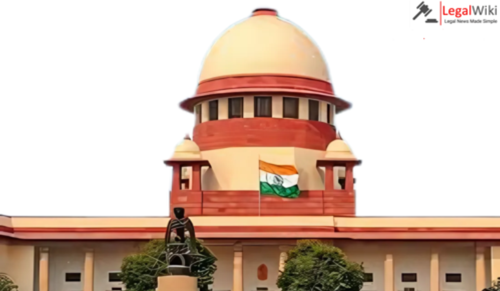
Supreme Court Dismisses Appeals in Actress Prathyusha Death Case, Upholds Abetment Conviction
The Supreme Court of India has dismissed appeals in the 23-year-old death case of Telugu/Tamil actress Prathyusha, ruling out allegations of murder and rape.
A Bench of Justices Rajesh Bindal and Manmohan held that consistent eyewitness accounts and medical evidence established death by poisoning. The Court noted that Prathyusha and her boyfriend, Gudipalli Siddhartha Reddy, had consumed poison amid opposition to their relationship, though Reddy survived.
Rejecting the defence of accidental intake, the Court found Reddy guilty of abetment to suicide for procuring the poison and directed him to surrender within four weeks.
It also termed the postmortem conducted by Dr. Muni Swamy unprofessional.
[Gudipalli Siddharta Reddy v. State (C.B.I.)]
VishwaBookmark
AP High Court Declines Compensation to Occupants of Government Land
The Andhra Pradesh High Court dismissed compensation claims raised by persons occupying government land, holding that continuous possession, even extending over several decades or more than a hundred years, does not convert an illegal encroachment into a lawful right.
The case arose from petitions filed by residents of Gunadala, Vijayawada, whose structures were impacted by the construction of a railway overbridge and who sought compensation by asserting long-standing occupation.
The Court held that without title, patta, or regularisation, such occupants cannot be treated as landowners under the Right to Fair Compensation and Transparency in Land Acquisition, Rehabilitation and Resettlement Act, 2013, and are therefore not entitled to compensation.
Thanush SBookmark

Andhra Pradesh High Court Restricts Monopoly Over APSRTC Commercial Spaces
The Andhra Pradesh High Court ruled that public resources cannot be concentrated in the hands of a single individual and such monopolisation is contrary to public interest.
The case arose from writ petitions filed by a licensee challenging the cancellation of his licences and the issuance of a new tender for commercial spaces at a bus stand.
The Court found that APSRTC had improperly allotted multiple open spaces to one person, allowing illegal sub-leasing for profit while failing to pay licence fees. It noted violations of tender conditions and suppression of material facts.
The Court directed APSRTC to implement a “One Person–One Open Space” policy for future tenders and upheld the cancellation of licences.
Thanush SBookmark
Order Not Invalid if Legal Reasoning is Sound Despite Fake AI Citations: AP High Court
The Andhra Pradesh High Court held that a judicial order is not invalid merely because it relies on non-existent citations generated by artificial intelligence, if the legal principles applied are correct.
The Court examined a challenge to a Trial Court order that had upheld an Advocate Commissioner’s report in a property dispute.
Although the Trial Court had referred to case laws that were later found to be fake and AI-generated, the High Court said the substantive legal reasoning was in line with settled law. The Court observed that the incorrect citations did not vitiate the order.
It also cautioned courts against unverified use of AI, stating that actual intelligence should be preferred over artificial intelligence.
Thanush SBookmark
Andhra Pradesh High Court Upholds NGT Order Keeping Mining Clearance in Abeyance
The Andhra Pradesh High Court upheld a National Green Tribunal order keeping a mining company’s environmental clearance in abeyance and stressed that natural resources must be preserved for future generations.
The Court said protecting forests and the environment is a duty of both the State and citizens, and polluting industries cannot operate unchecked.
It observed that environmental protection and sustainable development must be balanced and applied together.
The Court found no jurisdictional error in the NGT’s decision, holding that the tribunal rightly intervened due to procedural lapses and inadequate environmental assessment in granting clearance to the silica sand mining project.
MahiraBookmark
Andhra Pradesh High Court Asks State to Consider Alternative Jobs for Medically Retired RTC Staff
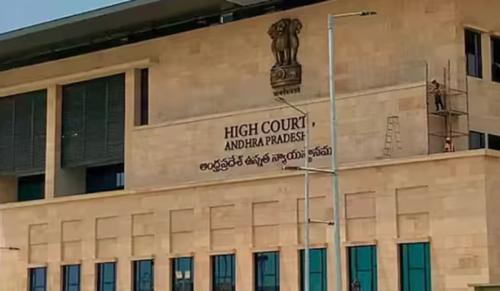
The Andhra Pradesh High Court directed the State government to consider representations of APSRTC employees retired on medical grounds for alternative employment or enhanced compensation.
The Court held that forced retirement without offering alternative jobs or adequate compensation may violate the Rights of Persons with Disabilities Act, 2016.
Noting that hundreds of such claims remain pending after APSRTC’s merger with the State, the Court recorded the government’s decision to revive monetary compensation through a Government Order.
It directed the authorities to decide the employees’ representations within eight weeks and release compensation within three months thereafter.
[RTC Employees v. State of Andhra Pradesh]
MahiraBookmark

‘State Is Like a Parent’: Andhra Pradesh High Court Warns Against Impulsive Defamation Cases
The Andhra Pradesh High Court quashed criminal defamation proceedings against a local media house, observing that the State must act with “patience and maturity” when faced with criticism.
Drawing a parental analogy, the Court observed that governments cannot claim defamation unless specific officials or departments are targeted with false and malicious imputations.
Justice Y. Lakshmana Rao emphasised that fair reporting done in good faith is protected under Article 19(1)(a) of the Constitution.
He cautioned that impulsive criminal prosecutions by the State against the media risk creating a chilling effect on free speech and undermine democratic values.
MananBookmark

Hundi Collections Involve Devotees’ Faith, Not Just Accounting: Andhra Pradesh High Court Flags Lapses At TTD
The Andhra Pradesh High Court examined serious lapses in the management of hundi collections at the Tirumala Tirupati Devasthanams (TTD) following a theft reported at the Parakamani Complex in April 2023.
The Court said the issue goes beyond accounting and directly affects the religious faith of devotees. It observed that outdated and manpower-heavy procedures make the system vulnerable to pilferage and misappropriation.
Emphasising that offerings are infused with intangible religious sentiment, the Court directed TTD to place on record an immediate reform plan along with a long-term strategy involving mechanisation, digitalisation, and the use of Artificial Intelligence.
The matter has been listed for further compliance.
[M Sreenivasulu v. The State of Andhra Pradesh & Ors.]
MahiraBookmark

Andhra Pradesh High Court Orders Reservation for Transgender Persons in Six Months
The Andhra Pradesh High Court directed the State Government to grant reservation for transgender persons in public employment within six months, recognising them as one of the most socially and economically marginalised communities.
Justice Nyapathy Vijay held that their exclusion from family, social, and political life justified affirmative action under Articles 16(4) and 16(4A) of the Constitution.
The Court ordered the government to frame comprehensive policies that ensure equality, representation, and the protection of transgender persons across all public sectors. It emphasised that inclusion and dignity must replace discrimination and invisibility in governance and employment.
[Katru Rekha v State of Andhra Pradesh]
MamiraBookmark
Denial of Terminal Benefits to Retired Employees Violates Article 21: Andhra Pradesh High Court
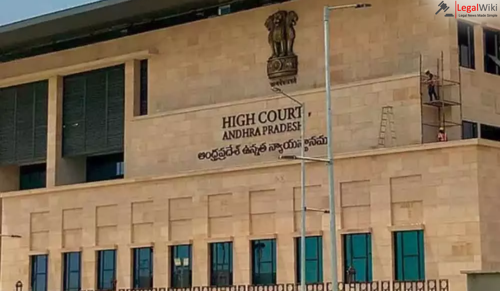
The Andhra Pradesh High Court ruled that the state government’s failure to release terminal benefits to retired employees amounted to a violation of their fundamental right to life and dignity under Article 21 of the Constitution.
The Court observed that the erosion of traditional values of respect toward senior citizens was a distressing trend in modern society.
The Court emphasised that timely disbursal of pensions and retirement dues is vital for the survival of senior citizens and directed the state to clear all pending benefits with interest, treating delayed payment as a form of deprivation.
[Chittiboyina Bharata Rao v The Krishna District Cooperative Central Bank Ltd]
YashashviBookmark