Is It Legal?

Is it Legal to Not Respond to a Job Offer?
Under the 2026 Labor Code updates, companies are pushing for "Notice Period Parity" to curb sudden exits.
While failing to respond after signing is not a criminal offense, it carries severe professional consequences. Legally, an appointment letter is a civil contract.
While courts rarely force "specific performance", firms can theoretically sue for recruitment costs or liquidated damages if mentioned in the agreement. More practically, top firms now share "Negative Candidate Lists" via unified HR tech platforms.
While you won't face jail time, you risk being "digitally blacklisted," making you virtually unemployable within the same industry sector.
7 days ago
AnvishaaBookmark

Is it Legal to Use Office WiFi for Personal Trading?
While trading crypto or stocks is legal in India, doing so on office WiFi often violates your "Employee IT Asset Agreement."
Most contracts treat company bandwidth as a tool for work-related tasks only. Under the Digital Personal Data Protection (DPDP) Act 2023 and IT Rules 2026, employers have the legal right to monitor network traffic for security and productivity.
High-frequency trading or using unauthorized crypto wallets on office systems can be classified as "misconduct" or a "breach of security protocols."
If your personal trading activity leads to a malware infection or data breach, the company could hold you strictly liable for damages, potentially leading to immediate termination and legal recovery of losses.
7 days ago
AnvishaaBookmark

Is it Legal for an Employer to Demand Access to Your Private Social Media?
Current Indian laws generally prohibit employers from forcing employees to provide access to private social media handles.
Under the Digital Personal Data Protection Act (DPDPA), 2023, any data collection must be for a "specified purpose" and based on "free and informed consent."
Coercing an employee to share private passwords violates these principles. Furthermore, the Supreme Court’s landmark privacy judgment established that individuals have a fundamental right to control their digital footprint.
While employers can legally monitor public posts, demanding access to private content without a clear, lawful justification constitutes judicial overreach into personal liberty. Employers may only intervene if private posts leak confidential company data or explicitly violate signed non-disparagement contracts.
18 days ago
AnvishaaBookmark

Is it Legal for a Housing Society to Ban Pets in Elevators?
No, housing societies cannot legally ban pets from using elevators.
According to the Animal Welfare Board of India (AWBI), any resolution passed by a Residents' Welfare Association (RWA) to restrict pets from common facilities like lifts, parks, or lobbies is illegal and arbitrary.
Courts have consistently held that pets are "members of the family," and denying them elevator access constitutes a "deficiency in service" since owners pay maintenance for common areas.
While societies can implement reasonable safety regulations, such as requiring leashes or designating specific service lifts, a blanket ban is considered a violation of the fundamental duty to show compassion toward living creatures under Article 51A(g).
18 days ago
AnvishaaBookmark

Is it Legal for Travel Websites to Auto-Add Insurance to Your Cart?
No, travel websites cannot legally add insurance or any paid add-ons to your cart automatically.
Under the Consumer Protection Act, 2019, and the CCPA Guidelines for Prevention of Dark Patterns (2023), this practice is classified as "Basket Sneaking" and an unfair trade practice. Regulations strictly prohibit pre-ticked boxes, requiring consumers to actively "opt-in" rather than "opt-out" of insurance.
The Insurance Regulatory and Development Authority (IRDAI) further mandates that insurance must be a conscious choice. If a platform forces a purchase or conceals charges in the final bill, it violates transparency norms.
Consumers can report such deceptive digital tactics to the National Consumer Helpline for redressal.
18 days ago
AnvishaaBookmark

Is it Legal to Withdraw Life Support for a Patient in a Vegetative State?
Under the landmark Supreme Court ruling in Harish Rana v. Union of India (March 2026), passive euthanasia is legal for patients in a permanent vegetative state.
The Court redefined Clinically Assisted Nutrition and Hydration (CANH), such as feeding tubes, as "medical treatment" rather than basic care.
This allows doctors to withdraw support if it no longer serves the patient’s "best interest" and merely prolongs an undignified existence. To proceed, a two-tier medical board (Primary and Secondary) must certify the condition as irreversible.
This shift under Article 21 ensures the "Right to Die with Dignity" is a practical reality for families facing long-term, futile medical interventions.
20 days ago
AnvishaaBookmark
Is it legal to deny Maternity Leave?
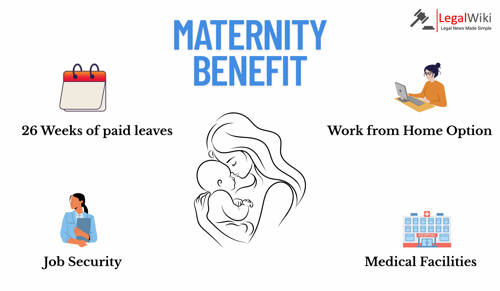
No. Denying maternity leave is illegal under Indian law. The Maternity Benefit Act, 1961 (as amended in 2017) entitles eligible women employees to 26 weeks of paid maternity leave for the first two children (12 weeks thereafter).
Under Section 5, employers are bound to provide this benefit, subject to the employee having worked at least 80 days in the preceding 12 months. Further, Section 12 prohibits dismissal or disadvantage during maternity absence.
Non-compliance can attract penalties under Section 21, including fines and imprisonment.
The law applies to establishments employing 10 or more persons, ensuring protection of women’s employment and maternity rights.
25 days ago
S PavithraBookmark
Is it Legal to Record a Spouse’s Phone Conversation for Evidence?
Under the Bharatiya Sakshya Adhiniyam (BSA), 2023, the legality of secret recordings has shifted.
While Section 122 of The Indian Evidence Act (now Section 128 BSA) traditionally protected "spousal privilege," a landmark Supreme Court ruling in July 2025 (Vibhor Garg v. Neha) clarified that this privilege does not apply to litigation between spouses.
The Court held that the "Right to a Fair Trial" outweighs "Privacy" in broken marriages, making such recordings admissible to prove cruelty or adultery.
However, they must be authenticated with a mandatory electronic certificate under Section 63 BSA to ensure the audio is untampered and original.
26 days ago
AnvishaaBookmark

Is it Legal for a Hospital to Refuse "Cashless" Treatment to Road Accident Victims?
Under the PM-RAHAT Scheme and S. 162 of the Motor Vehicles Act, it is illegal for hospitals to refuse "cashless" stabilization to road accident victims. The law mandates immediate care during the "Golden Hour" regardless of a victim's ability to pay.
Licensed establishments must provide up to ₹1.5 lakh in cashless treatment for seven days, ensuring medical aid precedes financial formalities.
This statutory duty, rooted in the Right to Health (Article 21), means stabilization is non-negotiable. Demanding upfront deposits violates these 2026 guidelines, as costs are reimbursed via the Motor Vehicle Accident Fund to prevent life-threatening administrative delays.
Furthermore, under S. 200 of the BNS, refusing emergency treatment is a criminal offence. Hospital heads can face up to one year in prison or heavy fines for "non-treatment of victims."
26 days ago
AnvishaaBookmark

Is it Legal to Use AI to Clone a Celebrity’s Voice?
As per the Delhi High Court’s February 2026 rulings, using AI to clone or "translate" a celebrity's voice without consent is illegal.
The court established that an individual holds a "copyright" over their own personality, including their unique voice and speech patterns.
Even for non-commercial "fan edits," replicating a persona using generative AI violates the fundamental Right to Privacy and Dignity (Article 21).
Furthermore, the 2026 IT Rules now mandate that any "Synthetically Generated Information" must be clearly labeled, and deepfakes impersonating real individuals are strictly prohibited, regardless of the creator's intent.
26 days ago
AnvishaaBookmark

Is it legal to Forward Fake News or Controversial Content on Social Media?
Under the Bharatiya Nyaya Sanhita (BNS) and the IT Amendment Rules, 2026, the legality of a "forward" depends entirely on Intent (Mens Rea) and your Public Stature.
In the recent Konatham Dhilip Kumar case, the Telangana High Court ruled that mere forwarding is not an offence under Section 353 BNS unless there is a specific intent to incite mischief or hatred. The court clarified that without "criminal intent," a user cannot be held liable for content they didn't create.
However, a conflicting precedent from the Madras High Court warns that forwarding a message is akin to "acknowledging and approving" its contents.
For individuals with high social standing or many followers, courts expect a higher degree of caution.
28 days ago
AnvishaaBookmark

Is it legal for an employer to fire an employee without notice?
30 days ago
S PavithraBookmark

Is it legal to keep an 'Exotic Pet' in India?
Yes. While the Wildlife Protection Act, 1972, strictly prohibits possessing native Indian species like the Star Tortoise, it does not ban "exotic" animals not indigenous to India.
Consequently, keeping an Iguana or Macaw is legal, provided the owner complies with recent mandatory registration and documentation.
Following the Wildlife (Protection) Amendment Act, 2022, and the 2024 Registration Rules, any person possessing exotic species listed under CITES Appendices must register them on the PARIVESH 2.0 portal.
Failure to report these animals or possessing smuggled species can lead to seizure and prosecution under the Customs Act, 1962. Legality is defined by digital registration and proof of legal import, not just the species.
a month ago
AnvishaaBookmark
Is it legal to smoke in public places in India?
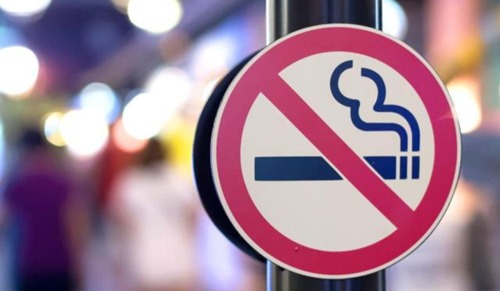
No. Smoking in public places is strictly prohibited under Section 4 of the Cigarettes and Other Tobacco Products Act (COTPA), 2003. The law aims to protect non-smokers from the harmful effects of passive smoking.
"Public places" include hospitals, educational institutions, public offices, court buildings, libraries, railway stations, bus stops, and shopping malls.
While "open spaces" like certain roads or parks are often debated, the Supreme Court in Murli S. Deora v. Union of India emphasized a broad ban to protect public health. Violation of this law attracts a spot fine of up to ₹200.
However, smoking is permitted in designated smoking areas within hotels (with 30+ rooms), restaurants (30+ seating capacity), and airports, provided these areas are physically separated and equipped with independent ventilation systems.
a month ago
AnvishaaBookmark

Is it legal to use AI to generate a legal contract?
Yes. Under the Indian Contract Act, 1872, an agreement is legally binding as long as it contains the essential elements. The law does not restrict AI-generated text so long as both parties agree to it.
However, the 2026 IT Amendment Rules and the Bharatiya Nyaya Sanhita (BNS), 2023, establish strict guardrails for digital transparency and liability. If an AI-drafted document is shared on a digital platform, it is classified as Synthetically Generated Information (SGI).
This requires the document to be prominently labeled as "AI-generated" and include traceable metadata to verify its origin.
While AI can act as a drafting assistant, human oversight is a legal necessity to manage professional liability and ensure the contract remains enforceable in a court of law.
a month ago
AnvishaaBookmark