Banking & Insurance

Insurance Company Can’t Deny Claim Due to Delay in Policy Issuance: Kerala High Court
The Kerala High Court set aside an award passed by the Permanent Lok Adalat which had rejected an insurance claim on the basis that the insured died within the 90-day waiting period under the policy.
The Court observed that the insurer had already accepted the premium before issuing the policy certificate and therefore could not rely on a later commencement date to deny the claim.
It held that administrative delay on the part of the insurance company cannot prejudice the insured.
Finding the Lok Adalat’s decision legally unsustainable, the Court directed the insurer to disburse the insurance benefits to the petitioner within six weeks.
[Star Health & Allied Insurance Company Ltd. v. Balakrishnan K.M. & Anr.]
S PavithraBookmark
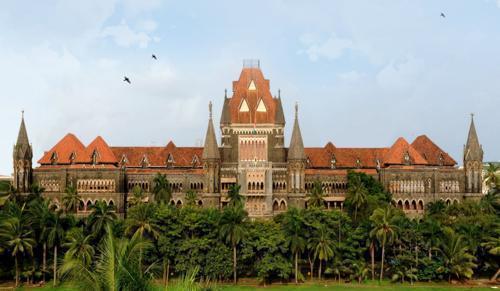
Bombay High Court Slams NBFCs for Masking Unilateral Arbitrator Appointments
The Bombay High Court has criticized a growing trend among banks and NBFCs, specifically naming IIFL Finance, for unilaterally appointing arbitrators via algorithms or private institutions.
Justice Somasekhar Sundaresan observed that routing appointments through these platforms is a "modus operandi" designed to "magically cleanse" the inherent illegality of unilateral selection.
The Court noted that lenders often withdraw these proceedings only when challenged, relying on the hope that most parties will simply settle.
Reaffirming that arbitrators must be appointed through mutual consent or Section 11 petitions, the Bench ordered the judgment to be placed before IIFL’s Board to ensure legal compliance.
[DS Textiles v. IIFL Finance Ltd.]
AnvishaaBookmark
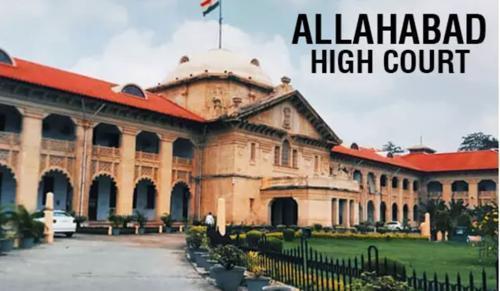
“Banks are Not Investigative Agencies”: Allahabad High Court on Freezing of Accounts
The Allahabad High Court criticised banks for arbitrarily freezing customer accounts, holding that they cannot act as investigative agencies.
The case involved a company whose account was frozen after receiving ₹23 lakh via RTGS, with the bank citing suspicion based on mismatch with declared income.
Rejecting this, the Court held that banks cannot independently determine the source of funds or take such action without directions from competent authorities like police or enforcement agencies. It noted that the freeze was not triggered by any official investigation.
The Court also expressed concern over the growing trend of such actions, observing that they disrupt business operations and harm financial stability.
S PavithraBookmark
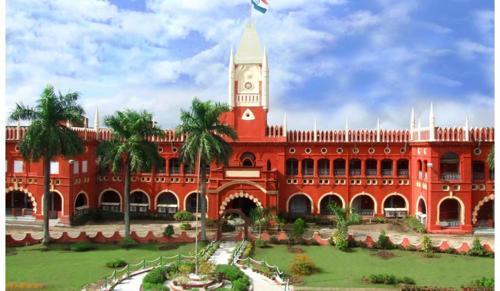
Public Service Employees Cannot Refuse Transfers to Stay at One Place: Orissa High Court
The Orissa High Court dismissed the appeal of a former Bank of Baroda officer who was removed from service for remaining absent after refusing a transfer from Bhubaneswar to Godhra.
The Court emphasised that employees in all-India public services are expected to comply with transfer orders and observed that defiance disrupts banking administration.
Rejecting the employee’s plea that she stayed back to care for her aged parents, the Bench noted that she had suppressed facts regarding her siblings.
The Court also held that allegations of violation of natural justice must show actual prejudice and cannot be raised as empty formalities.
[Itishree Nath v. Bank of Baroda & Ors.]
S PavithraBookmark
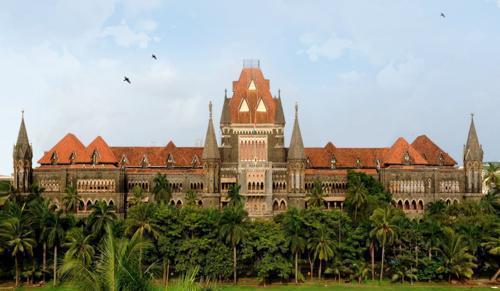
‘Procedural Delay Cannot Defeat Genuine Claims’: Bombay High Court on Health Insurance
The Bombay High Court recently held that insurance companies cannot reject genuine health insurance claims merely because the claim was filed beyond the time limit prescribed in the policy.
A Division Bench of Justices Bharati Dangre and Manjusha Deshpande observed that such “time-bar” clauses restricting a policyholder’s right to claim benefits are hit by Section 28 of the Indian Contract Act, 1872.
The Court directed United India Insurance Company to reimburse the claimant’s hospitalisation expenses along with 6% interest, holding that procedural technicalities cannot override substantive rights under an insurance contract.
[C.P. Ravindranath Menon v. United India Insurance Company]
S PavithraBookmark
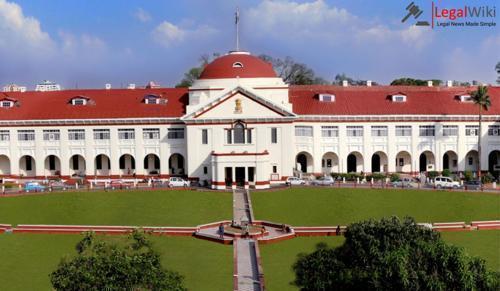
DRAT Not a Mere Adjudicatory Body, Can Recall Orders: Patna High Court
The Patna High Court recently held that the Debts Recovery Appellate Tribunal (DRAT) is not merely an adjudicatory body with limited powers and can recall or restore appeals dismissed for procedural non-compliance.
The Court observed that dismissal of an appeal for failure to comply with the mandatory pre-deposit requirement under Section 21 of the Recovery of Debts and Bankruptcy Act, 1993, is procedural in nature and does not extinguish the statutory right to appeal.
The Division Bench further clarified that DRAT has powers similar to a civil court under Section 22(2) of the Act, enabling it to set aside default orders to ensure matters are decided on merits and complete justice is done.
[M/s Tirupati Storage & Allied Pvt. Ltd. v. UCO Bank]
S PavithraBookmark
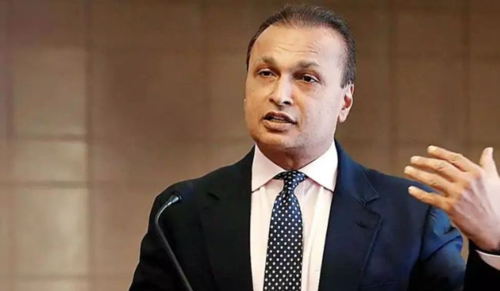
Supreme Court Refuses Relief to Anil Ambani in Bank Fraud Classification Case
The Supreme Court refused to grant relief to Anil Ambani in his challenge against the classification of certain loan accounts as “fraud” by banks.
It declined to interfere with the Bombay High Court’s order allowing banks to proceed with such classification.
The Court observed that the dispute involves serious allegations of fund diversion and held that these issues should be examined in pending civil proceedings rather than through interim intervention.
It permitted Ambani to pursue remedies before the appropriate forum and urged expeditious disposal of the case, while making it clear that it would not stay the ongoing process.
[Anil D Ambani v. Bank of Baroda]
S PavithraBookmark
Insurer Not Limited to Section 149 Defences When Made a Party, Rules Supreme Court
The Supreme Court held that an insurance company, when impleaded as a party in a motor accident claim, can contest the case on all available grounds, including the quantum of compensation.
It clarified that such a right is not limited to the defences under Section 149(2) of the Motor Vehicles Act, which apply when the insurer is only a noticee.
The Court set aside a Bombay High Court decision that had restricted the insurer’s arguments and remitted the matter back for fresh consideration on compensation, directing the High Court to decide the issue expeditiously.
[National Insurance Company Ltd. v. Gauri Gurudas Gaonkar & Ors.]
S PavithraBookmark
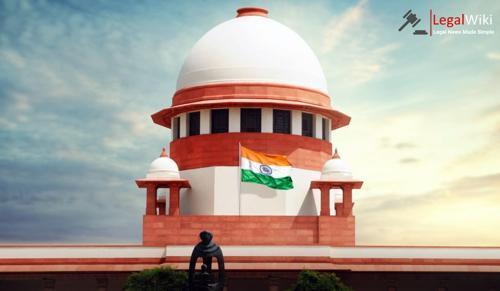
Borrowers Denied Right to Personal Hearing Before "Fraud" Classification: Supreme Court
The Supreme Court has ruled that borrowers do not have an inherent right to a personal hearing before banks classify their accounts as "fraud."
The Court held that a written representation suffices to meet the principles of natural justice. While oral hearings are not mandatory, but preferred to avoid paralyzing banking operations, as transparency is essential.
Banks are now strictly required to furnish the complete Forensic Audit Report to borrowers, rather than mere summaries.
This balanced approach ensures that while administrative actions remain swift, borrowers have the necessary material to contest findings effectively through written submissions before a final reasoned order is passed.
[State Bank of India v. Amit Iron Pvt. Ltd & Ors.]
AnvishaaBookmark
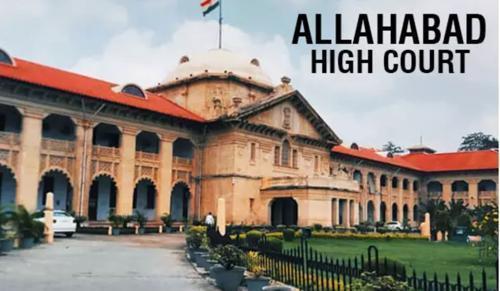
Only NCLT Has Jurisdiction Over Premature Loan Recovery Issues Under RBI Act: Allahabad High Court
The Allahabad High Court held that disputes relating to premature repayment of loans fall exclusively within the jurisdiction of the NCLT under Section 45QA of the RBI Act, read with Section 430 of the Companies Act, 2013.
The case arose from a dispute between two NBFCs, where a civil suit was filed to restrain the recovery of a loan before its tenure ended.
The Court upheld rejection of the plaint, observing that civil courts lack jurisdiction in matters assigned to the NCLT.
It also noted that such suits cannot be used to pre-empt statutory proceedings before competent forums.
[Shivam Traders & Hire Purchase Pvt. Ltd. v. Madhusudan Vehicles Pvt. Ltd.]
S PavithraBookmark
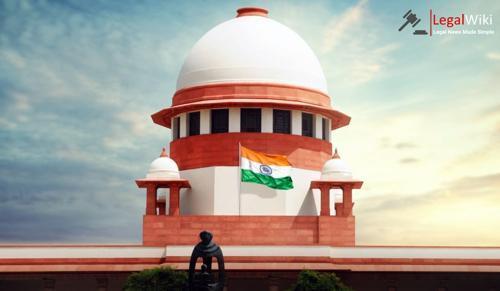
No Equal Penalty for Unequal Responsibility, Rules Supreme Court in Bank Misconduct Case
The Supreme Court restored the dismissal of a bank manager involved in misappropriation of customer funds, holding that higher-ranking officials cannot claim parity in punishment with subordinates.
The case involved three employees: a manager, an officer, and a gunman, who were penalised differently based on their roles.
The Delhi High Court had reduced the manager’s punishment on grounds of equality, but the Supreme Court set aside this view. It emphasised that greater authority entails higher responsibility and accountability, justifying stricter punishment.
The Court also reiterated that judicial interference in disciplinary matters is limited unless the penalty is shockingly disproportionate.
S PavithraBookmark
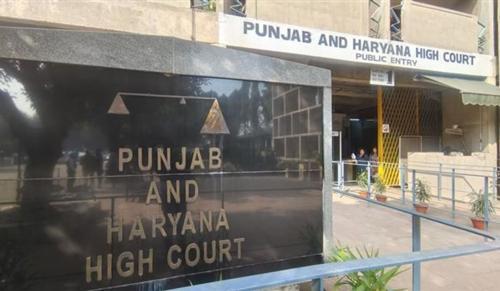
P&H High Court Awards ₹60 Lakh to Accident Victim Despite Job Resumption
The Punjab & Haryana HC has enhanced the accident compensation for a 45-year-old man to ₹60 lakh, ruling that resuming work in an "accommodated capacity" does not equate to a restoration of pre-accident earning capacity.
The Court observed that the claimant’s 65% functional disability significantly impaired his efficiency and cognitive health, despite his return to employment.
The Court further clarified that a delay in filing an FIR cannot defeat a genuine claim, as the immediate priority after a crash is seeking medical aid.
The Court rectified a lower tribunal's error by removing a 50% deduction for personal expenses, which is impermissible in injury cases.
[S.K. v. Insurance Company & Ors.]
AnvishaaBookmark
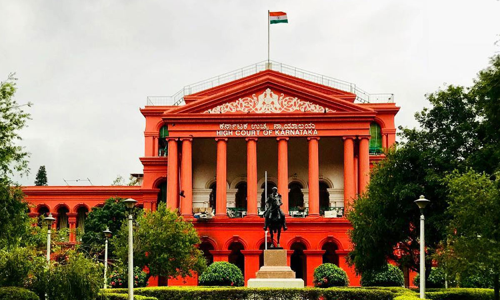
DRT Cannot Condone Delay Beyond 45 Days Under SARFAESI Act: Karnataka High Court
The Karnataka High Court held that the Debt Recovery Tribunal (DRT) cannot condone delay beyond the 45-day time limit prescribed under Section 17 of the SARFAESI Act.
The case involved a borrower who challenged recovery measures after the expiry of this period and sought condonation of the delay.
The Court noted that the law provides a strict 45-day deadline to ensure speedy recovery of debts, and there is no provision allowing the DRT to extend this period.
It emphasised that tribunals do not have inherent powers like courts to relax limitation unless expressly permitted by law, and therefore such delayed applications cannot be entertained.
[V. Thulsiram & Anr. v. Authorised Officer, Canara Bank & Anr.]
S PavithraBookmark
Supreme Court: Consumer Forums Cannot Decide Banking Disputes Involving Fraud or Forgery
The Supreme Court ruled that consumer forums lack jurisdiction to adjudicate banking disputes involving allegations of fraud, forgery, or unauthorized pledges.
The Bench held that while a company can be a "consumer," complex factual disputes requiring detailed evidence must be tried in civil or criminal courts.
The Court noted that proceedings under the Consumer Protection Act are summary in nature and ill-equipped for cases involving criminal wrongdoing.
Although the court clarified that parking surplus funds for interest does not automatically make a transaction "commercial," the serious nature of the fraud allegations in this case necessitated dismissal of the consumer complaint.
[Sant Rohidas Leather Industries v. Vijaya Bank]
AnvishaaBookmark