Corporate Law
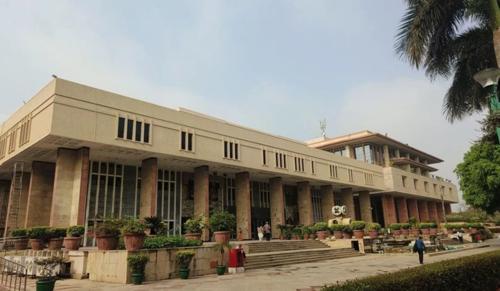
Delhi High Court Restrains CCI from Giving Final Orders in Apple Probe
The Delhi High Court has directed the Competition Commission of India not to pass final orders in its ongoing investigation into Apple’s alleged anti-competitive practices regarding the App Store.
The Bench noted that final orders at this stage could create "complications," as Apple has a pending challenge against the law allowing penalties based on global turnover.
The Court allowed the CCI to proceed with its hearings, but emphasized that no final decision should be rendered until the legal challenge regarding retrospective global turnover penalties is adjudicated.
Apple has consistently argued that such penalty provisions exceed the scope of the Competition Act and conflict with established precedents.
[Apple Inc. v CCI & Ors.]
AnvishaaBookmark

Mere Running Account Statements Don’t Save Limitation Period: NCLT Mumbai
The Mumbai Bench of the NCLT dismissed an insolvency plea filed by Tricon Infra Buildtech Private Limited against Pony Infrastructures and Contractors Limited, holding that mere entries in a running account are insufficient to extend the limitation period.
The Tribunal observed that the creditor relied on ledger accounts and running account statements to argue that the debt remained acknowledged.
However, it found that there was no acknowledgment from the corporate debtor to support this claim.
Since the application was filed beyond the prescribed limitation period and no valid acknowledgment was shown, the NCLT rejected the plea as time-barred.
[Tricon Infra Buildtech Pvt. Ltd. v. Pony Infrastructures & Contractors Ltd.]
S PavithraBookmark
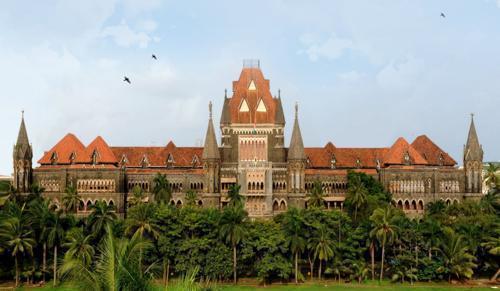
New York Case: Bombay High Court Bars Rolta Founder Kamal Singh from Selling Assets
The Bombay High Court has restrained Kamal K. Singh, founder of Rolta India, from alienating or creating third-party rights in any assets he owns or controls globally.
Court passed the order in a suit filed by Pinpoint Multi-strategy Master Fund to enforce a New York contempt judgment involving approximately $188 million.
The foreign ruling held Singh liable for obstructing the recovery of offshore bond defaults. Since the U.S. is not a "reciprocating territory," the fund filed a fresh civil suit in India.
The Court directed Singh to disclose all domestic and international assets within four weeks.
[Pinpoint Multi-strategy Master Fund v. Kamal K. Singh & Ors.]
AnvishaaBookmark
Supreme Court Lifts Corporate Veil to Revive Stalled Housing Projects
The Supreme Court granted significant relief to homebuyers by holding that, in exceptional circumstances, the corporate veil may be lifted during insolvency proceedings to include assets of subsidiary companies in the CIRP of a holding company.
The case arose from stalled real estate projects where homebuyers were left stranded after the developer structured projects through multiple subsidiaries.
Setting aside the NCLAT’s view, the Court held that such corporate structures cannot be used to defeat legitimate claims of homebuyers or frustrate project completion.
The ruling strengthens consumer protection within the insolvency framework and broadens the scope of equitable relief under the IBC.
[Alpha Corp Development Pvt. Ltd. v. Greater Noida Industrial Development Authority (GNIDA)]
S PavithraBookmark
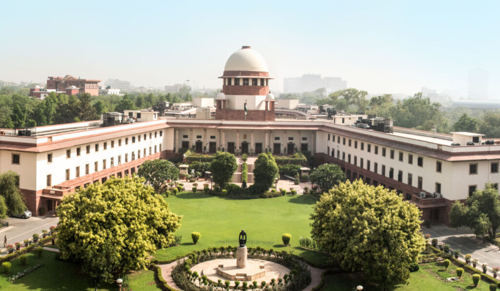
Supreme Court Affirms Deemed Membership in Oppression Cases, Register Entry Not Decisive
The Supreme Court of India held that entry of a person’s name in the register of members is not mandatory to claim “membership” for initiating oppression and mismanagement proceedings under the Companies Act.
The case arose from a dispute where an investor, despite contributing funds and being treated as a stakeholder, was denied membership due to the absence of formal entry in the register.
The Court emphasised that such proceedings are equitable in nature and that membership can be established through conduct, investment, and recognition by the company.
It upheld the concept of “deemed membership” and dismissed the company’s appeal.
[Dr. Bais Surgical & Medical Institute Pvt. Ltd. & Ors. v. Dhananjay Pande]
S PavithraBookmark

NCLAT Chennai: High Courts Should Not Entertain Writs When Statutory Appellate Remedy Exists
The Chennai Bench of the National Company Law Appellate Tribunal held that High Courts should not ordinarily exercise writ jurisdiction under Article 226 when a statutory appellate remedy is available against orders of the NCLT.
The Tribunal emphasised that litigants cannot bypass the prescribed appellate mechanism under company law and insolvency frameworks.
It further ruled that relief under Section 14 of the Limitation Act cannot be granted where a party approaches the wrong forum without bona fide intent.
Finding significant delay and lack of good faith, the NCLAT dismissed the appeal as time-barred.
[Mr. Rajeev Vidhyadharan @ Rajeev Anchal & Anr. v. P.J Mathews & Ors.]
S PavithraBookmark

Supreme Court Refuses to Interfere in Byju’s Insolvency Row, Calls NCLAT Order ‘Perfect’
The Supreme Court of India dismissed an appeal by Byju Raveendran challenging the restoration of the original Committee of Creditors (CoC) in the insolvency proceedings of Think & Learn Private Limited.
Upholding the order of the National Company Law Appellate Tribunal, the Court termed it a “perfect order” and refused to interfere, observing that the litigation had gone “too far.”
It also allowed the inquiry against the Resolution Professional to proceed in accordance with law, reinforcing the primacy of creditors in the CIRP process.
[Byju Raveendran v. Adtiya Birla Finance Ltd. & Ors.]
S PavithraBookmark
NCLT Delhi Upholds Demand Notice Sent to Unregistered Email Used in Prior Business Dealings
The National Company Law Tribunal (NCLT), New Delhi, held that a demand notice under the Insolvency and Bankruptcy Code was validly served even though it was sent to an unregistered email ID.
The Tribunal observed that the same email address had been consistently used in prior business dealings between the parties for sharing invoices and communications, and this fact was not disputed by the corporate debtor.
Rejecting objections regarding defective service, the NCLT admitted the insolvency plea filed by Mangal Sales Corporation against Prolific Papers Pvt. Ltd., holding that operational debt and default were clearly established and no pre-existing dispute existed.
[Mangal Sales Corporation v. M/s Prolific Papers Pvt. Ltd. & Ors.]
S PavithraBookmark
Corporate Guarantee Liability is "Financial Debt" Under IBC: Supreme Court
The Supreme Court ruled that liabilities from corporate guarantees qualify as "financial debt" under Section 5(8) of the Insolvency and Bankruptcy Code (IBC).
The bench set aside tribunal orders that excluded an SBI-led consortium from the Committee of Creditors in the Reliance Infratel case.
The Court clarified that guarantees securing loans involve the "time value of money," making lenders eligible as financial creditors.
Crucially, the bench held that a creditor’s claim cannot be defeated simply because a guarantee was omitted from financial statements or was insufficiently stamped, as such technical defects are curable.
[State Bank of India v. Doha Bank Q.P.S.C.]
AnvishaaBookmark

NCLT Bengaluru Dismisses Kingfisher Employees’ Plea, Says Karnataka High Court is Proper Forum
The NCLT Bengaluru dismissed a plea filed by former Kingfisher Airlines employees seeking payment of pending salary dues, holding that it was not the appropriate forum.
The Tribunal noted that the company’s winding-up proceedings are being supervised by the Karnataka High Court, which continues to oversee asset distribution and payments.
Since the employees’ claims had already been determined by the official liquidator in those proceedings, the relief sought was directly connected to the High Court’s jurisdiction.
Observing that the applicants had repeatedly approached incorrect forums, the Tribunal dismissed the plea while granting liberty to approach the Karnataka High Court.
[M/s Capt. Praveen Sharma & Ors v. M/s Official Liquidator, Kingfisher Airlines (under Liquidation) & Ors.]
S PavithraBookmark
CCI Dismisses Abuse of Dominance Allegations Against Adani Group
The Competition Commission of India (CCI) closed a case alleging bid-rigging and abuse of market dominance by Adani Group in solar power project awards.
The informant alleged that a 2019 tender favored large players and cited bribery claims from a US indictment.
However, the CCI found these allegations unsubstantiated, noting a lack of evidence regarding manipulated bidding. The Commission held that Adani is not a dominant player in the Indian power market, citing competition from entities like NTPC and Tata Power.
Further clarifying that corruption allegations fall outside the scope of competition law. Finding no prima facie violation, the matter was closed.
[Ravi Sharma v. Adani Enterprises]
AnvishaaBookmark

Zoho Files ₹10 Crore Defamation Suit Against Flexype Over Alleged LinkedIn Disparagement
Zoho Corporation has filed a commercial suit in the Madras High Court seeking ₹10 crore in damages and an injunction against Flexype Technologies and its co-founder, Azeem Hussain.
The dispute stems from LinkedIn posts alleging discrepancies in Zoho Books, where Hussain claimed failed transactions were recorded as successful.
Zoho contends these statements are false, asserting the issue was caused by a third-party payment gateway, not its software. Court raised jurisdictional concerns, noting that the plaint did not sufficiently detail the business impact in Chennai.
The Court has permitted Zoho to file an additional affidavit to substantiate jurisdiction before the next hearing on April 17.
[Zoho Corporation v. Flexype Technologies Pvt. Ltd. & Ors.]
AnvishaaBookmark
Service Deemed Complete Once Notice Sent to Last Known Address: NCLT Hyderabad
The NCLT Hyderabad held that dispatch of a demand notice to the guarantor’s last known address constitutes valid service, even if the notice is returned unserved.
Relying on Section 27 of the General Clauses Act,1897 and the terms of the guarantee agreement, the Tribunal observed that once the notice is properly addressed, stamped, and sent, a legal presumption of service arises.
It noted that clauses in guarantee deeds often provide that notices shall be deemed served in the ordinary course of post, regardless of actual receipt.
Accordingly, non-delivery or return of the notice cannot invalidate insolvency proceedings against the guarantor.
[Punjab National Bank v. Kotim Reddy Anitha]
S PavithraBookmark
NCLT Amravati: Fraudulent Trading Under IBC Cannot be Determined Mechanically, Needs Clear Proof
The NCLT Amaravati Bench held that liability for fraudulent trading under Section 66 of the IBC cannot be determined in a mechanical or routine manner.
It emphasised that allegations of fraud require a high standard of proof, including clear evidence of dishonest intent.
The Tribunal noted that financial transactions must be carefully examined through detailed reconciliation of inflows and outflows, rather than selective or incomplete data.
It also observed that merely pointing to certain transactions is not enough to establish fraud unless supported by proper records and analysis, highlighting the need for a thorough factual assessment before fixing liability.
[Indian Renewable Energy Development Agency Ltd. v. Saradambika Power Plant Pvt. Ltd.]
S PavithraBookmark