Property Law

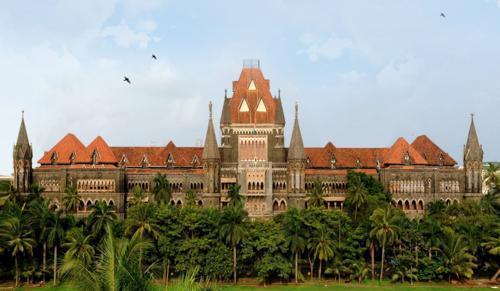
Bombay High Court Slams BMC for High-Handed Demolition; Warns of Restoration Order
The Bombay High Court pulled up the Municipal Corporation of Greater Mumbai for the "alarming alacrity" shown in demolishing a structure in Malad.
The Court observed that the entire process, from notice to demolition, was completed in just 13 days, violating the Corporation’s own circular requiring a 15-day notice period.
The Court noted that the petitioner claimed the structure had existed for five decades, yet the civic body proceeded with demolition shortly after passing a speaking order.
Warning that the Corporation cannot "take the law into its own hands," the Court directed the Deputy Municipal Commissioner to file an explanatory affidavit.
[Ashok Mahadev Kule v. Municipal Corporation of Greater Mumbai]
AnvishaaBookmark
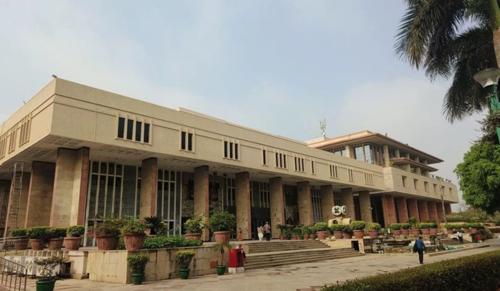
Staying in Relative’s Property for Years Gives No Legal Title, Rules Delhi High Court
The Delhi High Court held that long-term permissive use of a property by a family member does not create any ownership or legal right over the property.
Justice Neena Bansal Krishna dismissed an appeal filed by a woman and her husband who refused to vacate a flat owned by her brother, claiming it was purchased through joint family funds.
The Court noted that the registered sale deed clearly established the brother’s exclusive ownership and that merely residing in the property with family permission could not confer legal entitlement.
It further held that no ownership claim could succeed without specifically challenging the validity of the sale deed.
[Ms. Anju Chadha & Anr. v. Bhavesh Madan & Ors.]
S PavithraBookmark
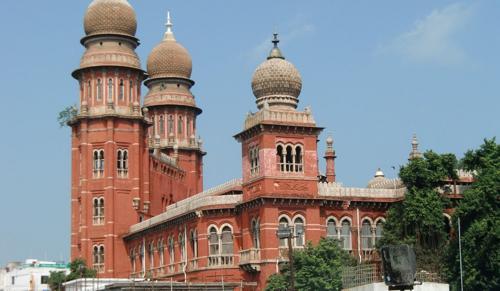
Madras High Court Rejects “Vexatious” Property Suit Against Boney Kapoor & Daughters
The Madras High Court dismissed a civil suit filed against filmmaker Boney Kapoor and his daughters Janhvi Kapoor and Khushi Kapoor over a property purchased by late actor Sridevi on Chennai’s East Coast Road.
Justice T.V. Thamilselvi termed the claim “vexatious” and held that the cause of action raised by the plaintiffs was unsustainable in law. The dispute related to nearly 4.77 acres of land allegedly purchased by Sridevi in 1988.
The Kapoor family had approached the High Court after a lower court refused to reject the plaint.
The High Court observed that the suit appeared to be an abuse of legal process aimed at grabbing the property.
[Boney Kapoor & Ors v. MC Sivakami & Ors.]
S PavithraBookmark
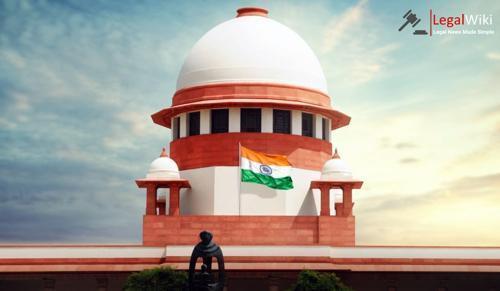
Supreme Court Orders DDA to Refund ₹164.91 Crore to Reliance with Interest
Supreme Court directed the Delhi Development Authority (DDA) to refund ₹164.91 crore to Reliance Eminent Trading & Commercial Private Limited for a commercial plot in Jasola.
The Bench held that since the original land acquisition was declared lapsed by the Delhi High Court in 2018, the DDA lost its title and the subsequent auction became ineffective.
The Court rejected DDA's argument that refunding the amount was contingent on the return of possession, noting that the land title had legally reverted to the original owners.
Consequently, the DDA must pay the principal amount along with 7.5% interest calculated from July 21, 2007.
[Reliance Eminent Trading & Commercial Pvt Ltd v. DDA]
AnvishaaBookmark
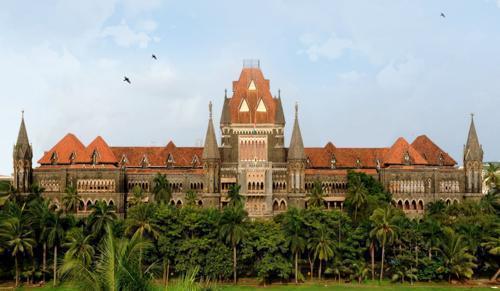
Bombay High Court Orders Probe into Illegal Land Allotments in Temghar Dam Project
The Bombay High Court directed a probe into alleged illegal land allotments in the Temghar Dam project, highlighting serious irregularities in the rehabilitation process for project-affected persons.
The Court observed that alternate land had been allotted without proper verification of eligibility and supporting records.
A division bench of Justices A.S. Gadkari and Kamal Khata ordered the State authorities to conduct a detailed investigation and take action against officials responsible for the lapses.
Emphasising accountability, the Court noted that such irregular allotments undermine the integrity of rehabilitation schemes meant for displaced persons.
[Late Mahadev Dhondiba Marne v. State of Maharashtra & Ors.]
S PavithraBookmark
Supreme Court Issues Nine-Point Guidelines on Summary Judgments, Orders DDA to Refund ₹164.91 Crores
The Supreme Court has directed the Delhi Development Authority (DDA) to refund ₹164.91 crore with 7.5% interest to Reliance Eminent Trading.
The ruling clarifies Order XIII-A of the CPC, which allows for "Summary Judgments" in commercial suits without a full trial.
The Bench issued nine guidelines, emphasizing that courts must "grasp the nettle" (tackle difficult issues decisively) on legal points and distinguish between real and "fanciful" defenses. The Court rejected DDA's technical objections regarding possession, noting that the land acquisition had already lapsed.
Exercising powers under Article 142, the Court ensured restitution by canceling the invalid conveyance deed.
[Reliance Eminent Trading & Commercial Pvt. Ltd. v. Delhi Development Authority]
AnvishaaBookmark
Supreme Court Seeks Centre’s Response on Plea for Legally Trained Officers to Decide Land Disputes
The Supreme Court issued notice to the Centre, State Governments, and the Law Commission on a PIL seeking that land disputes be decided only by legally trained professionals instead of revenue officers lacking formal legal education.
The petition sought creation of a dedicated Revenue Judicial Service and uniform legal qualifications for officials adjudicating disputes relating to title, succession, inheritance, and possession of land.
During the hearing, the Bench of CJI Surya Kant and Justice Joymalya Bagchi acknowledged the importance of the issue while noting that aspects of the matter may fall within the legislative domain.
The Court sought responses from the authorities within four weeks.
[Ashwini Kumar Upadhyay v. UOI & Ors.]
S PavithraBookmark

Supreme Court Upholds Eviction of L&T from Bandra Property
The Supreme Court has dismissed an appeal by Larsen & Toubro Limited (L&T), effectively ending a decades-long tenancy dispute over a prime bungalow in Pali Hill, Bandra.
The bench upheld a Bombay High Court judgment mandating the company's eviction. L&T had occupied the property since 1958 under a lease that expired in 1970.
The company attempted to bypass eviction proceedings by purchasing a 29.5% undivided share in the property, claiming status as a co-owner.
However, the Court affirmed that such acquisitions, intended to frustrate eviction, do not invalidate a suit filed by other co-owners.
[L&T Ltd. v. Kantilal Champalal Kothari]
AnvishaaBookmark
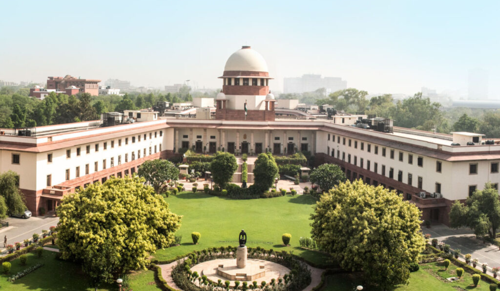
Buyer Not Criminally Liable if Property Linked to Forged Will: Supreme Court
The Supreme Court quashed a 20-year-old forgery case against a property purchaser, ruling that a buyer cannot be prosecuted for cheating or forgery simply because a property is later linked to a disputed Will.
A bench of Justices Vikram Nath and Sandeep Mehta found no evidence that the appellant participated in or knew about the alleged fabrication of the 1988 Will.
The Court observed that if a Will is forged, the purchasers are the affected parties whose rights become uncertain.
The Court held that continuing criminal proceedings without proof of deceptive intent would constitute an abuse of the legal process.
[S. Anand v. State of Tamil Nadu & Anr.]
AnvishaaBookmark
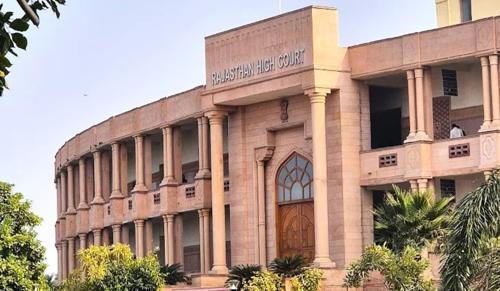
Oral Statements Cannot Revoke Written Power of Attorney: Rajasthan High Court
The Rajasthan High Court recently reiterated that a written Power of Attorney (POA) cannot be revoked, altered or substituted merely through oral statements. The Court observed that any modification or cancellation of a POA must also be made through a proper written instrument.
The dispute arose after the respondent claimed that the POA granted in favour of the petitioner had been orally cancelled in 2022 and later replaced through another written document.
However, the Court noted that a written legal document cannot be overridden by verbal assertions alone.
The High Court emphasised that legal certainty and validity of documents require formal written revocation or alteration, especially in matters involving property and authority.
[Smt. Champa Devi v. Jogaram & Anr.]
S PavithraBookmark
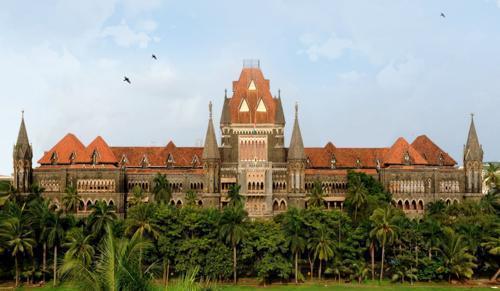
Brother Cannot Claim Deceased Woman’s Estate Over Husband’s Heirs, Rules Bombay High Court
The Bombay High Court held that Section 15(1) of the Hindu Succession Act, 1956 continues to govern succession to the property of a Hindu woman dying intestate and has not been declared unconstitutional by any binding judicial precedent.
The Court rejected a plea by the deceased woman’s brother claiming priority over the heirs of her husband in inheriting her estate.
It observed that unless the provision is struck down by a competent constitutional court or amended legislatively, courts are bound to apply the existing statutory scheme.
While acknowledging ongoing constitutional debates around gender disparity in succession law, the Court held that such concerns cannot override the plain language of the statute.
[Santsaran Gursaran Advani @ Papan Advani v. Nina H. Bhalla & Ors.]
S PavithraBookmark
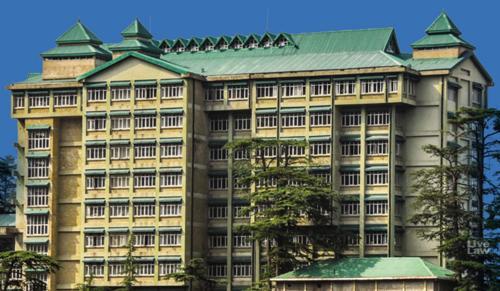
Municipal Inclusion Doesn't End Agricultural Status, Rules Himachal Pradesh High Court
The Himachal Pradesh High Court has ruled that land does not lose its agricultural status solely because it has been included within municipal limits.
The Court held that if actual farming activities continue on the land, the owner retains their legal status and the benefits associated with being an agriculturist.
Justice Vivek Singh Thakur observed that administrative reclassification for urban governance does not override the physical utilization of the land.
The judgment establishes that the character of the land must be determined by its current use rather than its administrative designation.
[Ravi Chand v. State of H.P. & Ors.]
S PavithraBookmark
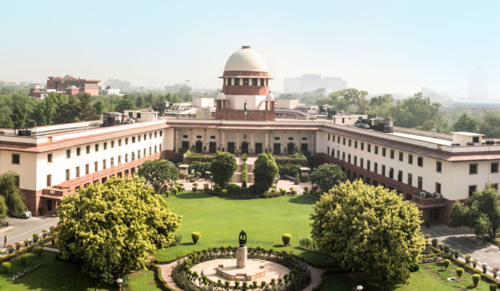
"Mere Entry" in Records Doesn't Grant Property Ownership to Govt, Rules Supreme Court
The Supreme Court ruled that a mere entry in municipal records does not establish government ownership of property.
The case involved land in Delhi that was de-reserved from public use but later claimed by the Municipal Corporation.
The Court noted that previous civil court rulings in favor of the private owners had already attained finality and could not be bypassed.
Emphasizing that title must be proven through valid legal means rather than internal lists, the Bench ordered the Corporation to reconsider the owners' application for land use, upholding the sanctity of private property rights.
[Pawan Garg & Ors. v. South Delhi Municipal Corporation]
S PavithraBookmark
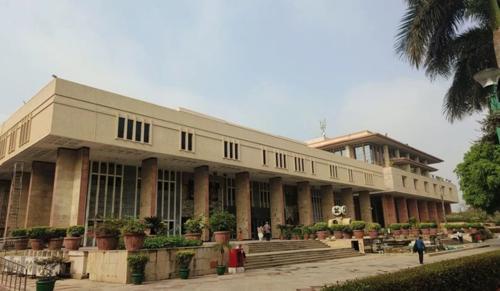
Delhi High Court Revives ₹1,063 Crore Demand Against Lalit Hotel Operator
The Delhi High Court has upheld the New Delhi Municipal Council's (NDMC) decision to terminate the licence deed for the land housing The LaLit Hotel and revived a ₹1,063 crore recovery demand.
The Division Bench ruled that Bharat Hotels breached its agreement by unauthorizedly transferring shop and office spaces to third parties.
The court highlighted that such commercial exploitation of scarce public land, resulting in massive losses to the municipal body, unfairly burdens taxpayers.
Consequently, the court set aside a previous single-judge order that had protected the hotel group from the termination and financial penalty.
[New Delhi Municipal Council v. Bharat Hotels Ltd & Anr.]
S PavithraBookmark