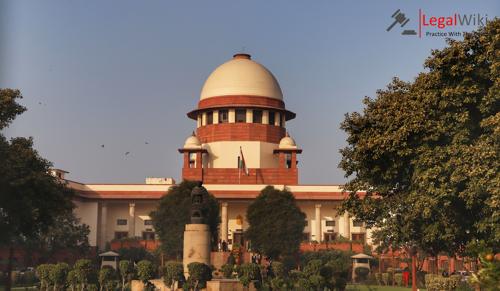
Supreme Court: ‘Last Seen’ Theory Alone Can’t Prove Murder Conviction Without Strong Evidence
- Case Name: Padman Bibhar v. State of Odisha
The Supreme Court set aside a conviction under Section 302 IPC, emphasizing that the "last seen together" theory alone is insufficient to sustain a murder conviction unless supported by strong corroborative evidence.
The Court highlighted that in cases based on circumstantial evidence, each circumstance must form a complete chain conclusively pointing to the accused's guilt.
Noting the unclear time gap between the last sighting and death, the lack of forensic linkage to the alleged weapon, and the absence of an established motive.
The Supreme Court held that mere suspicion cannot replace proof beyond a reasonable doubt. Consequently, due to these evidentiary shortcomings, the accused was acquitted.
MansiBookmark