What is the Doctrine of Eclipse?
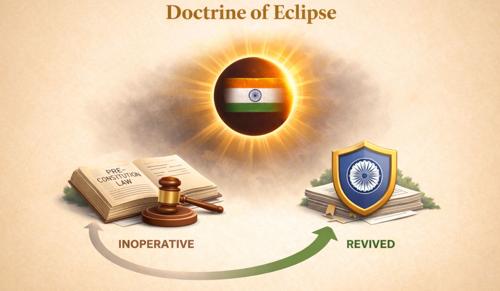
The Doctrine of Eclipse is a constitutional principle in Indian law that applies to pre-Constitution laws. It states that if a law enacted before the Constitution came into force is inconsistent with Fundamental Rights, the law does not become void permanently. Instead, it becomes inoperative or “eclipsed” to the extent of such inconsistency.
The law continues to exist but remains unenforceable as long as the conflict with Fundamental Rights continues.
If the relevant Fundamental Right is amended or removed, the eclipsed law automatically becomes operative again without fresh legislation.
This doctrine was explained by the Supreme Court in Bhikaji Narain Dhakras v. State of Madhya Pradesh (1955) and helps balance constitutional supremacy with legislative continuity.
2 months ago
MahiraBookmark