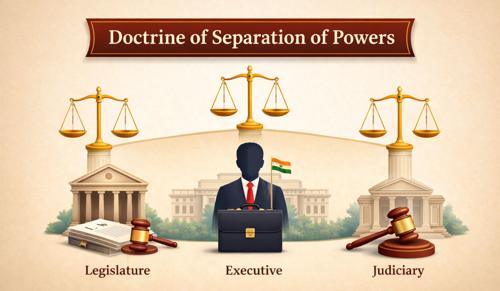
What is the Doctrine of Separation of Powers?
The Doctrine of Separation of Powers is a constitutional principle that divides the powers of the State among three independent organs - the Legislature, the Executive, and the Judiciary. Its main purpose is to prevent the concentration of power in a single authority and to safeguard individual liberty.
Under this doctrine, the Legislature makes laws, the Executive implements them, and the Judiciary interprets and enforces the law.
While the Indian Constitution does not provide for a strict separation of powers, it follows this principle through a system of checks and balances.
The Supreme Court has recognised separation of powers as part of the Constitution’s basic structure, ensuring that no organ oversteps its constitutional limits.
a month ago
MahiraBookmark