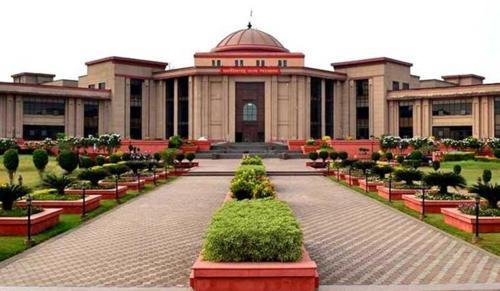
Chhattisgarh High Court Refuses to Quash FIR Against Professor Over Alleged Coercion to Offer Namaz
The Chhattisgarh High Court has refused to quash an FIR against Professor Dilip Jha, an NSS Project Coordinator accused of coercing non-Muslim students to offer namaz during a camp in Bilaspur.
The Bench observed that with the investigation complete and a charge sheet filed, there is sufficient prima facie evidence for trial.
The case involves allegations that during an Eid-ul-Fitr event, students were pressured to join religious prayers under threat of certificate cancellation.
While Jha claimed he was absent and held no operational role, the Court ruled that such factual disputes must be settled via cross-examination during trial.
[Dilip Jha v. State of Chhattisgarh]
AnvishaaBookmark
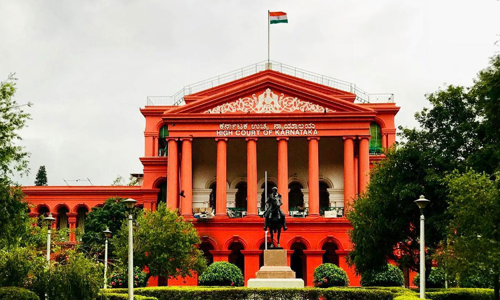
Karnataka High Court Orders FIR Against Police Sub-Inspector for Assaulting Advocate
The Karnataka High Court has ordered an FIR against a police sub-inspector for assaulting an advocate at a Bengaluru police station.
Citing CCTV footage, observed that the officer kicked the lawyer repeatedly after she allegedly ransacked the station in frustration over a two-hour wait to file a road rage complaint.
While the Court refused to quash the criminal case against the advocate, noting her conduct was unprofessional, it ruled that police retaliation with physical violence is inexcusable.
The judge emphasized that departmental inquiries are insufficient for such brutality, mandating a formal criminal investigation to hold the errant officer accountable for her actions.
[Nabonita Sen v. State by Station House Officer]
AnvishaaBookmark
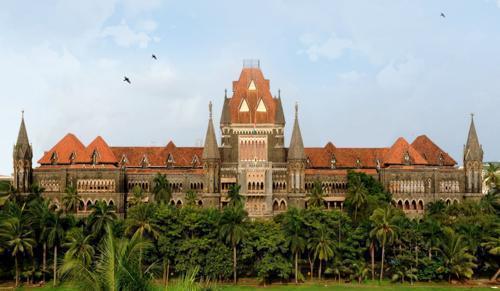
Bombay High Court Refers Issue of Single GST Notice for Multiple Years to Larger Bench
A three-judge bench of the Bombay High Court will now decide if the GST Department can issue a single consolidated show-cause notice (SCN) covering multiple financial years.
The Division Bench referred the issue following conflicting High Court rulings. Petitioners argue that the CGST Act follows a "year-wise" assessment scheme and clubbing years violates statutory limitation periods.
Conversely, the Revenue points to decisions from Delhi and Allahabad upholding consolidated notices, particularly in fraud cases.
The Court noted that prohibiting such notices might "re-write" the statute, but referred the matter to ensure legal certainty across sectors like banking and manufacturing.
[Rollmet LLP v. UOI]
AnvishaaBookmark
Bombay High Court: Appearing Without Vakalatnama is Serious Misconduct, Refers Lawyer to Bar Council
The Bombay High Court held that an advocate appearing in court without proper authority or vakalatnama amounts to serious professional misconduct.
The Court found that the lawyer had represented multiple parties without formal authorization and further aggravated the situation by making false statements and relying on incorrect citations.
It emphasised that such conduct undermines the integrity of the legal profession and misleads the court.
Consequently, the matter was referred to the Bar Council of Maharashtra and Goa for disciplinary action, with directions to complete the inquiry within a specified time frame.
[Pushpa v. State of Maharashtra]
S PavithraBookmark
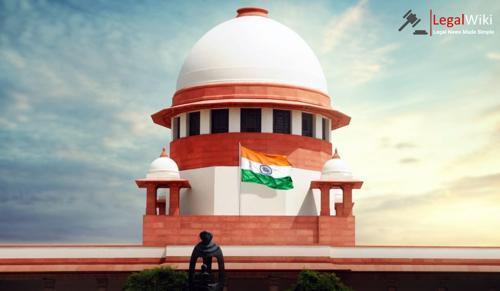
Supreme Court Rejects Plea to Credit Netaji with Independence, Warns Litigant
The Supreme Court dismissed a petition seeking to officially credit Subhash Chandra Bose and the INA for India's independence.
CJI Surya Kant and Justice Joymalya Bagchi criticized the petitioner for filing a nearly identical plea previously rejected in 2024.
The Bench warned that persistent frivolous filings would lead to a ban on the petitioner's entry into the Court. The plea sought to declare Netaji the "National Son" and declassify reports on British withdrawal.
However, the Court ruled that historical interpretations are beyond judicial determination, suggesting the litigation was aimed at gaining popularity rather than resolving legal issues.
[Pinakpani Mohanty v. UOI]
AnvishaaBookmark
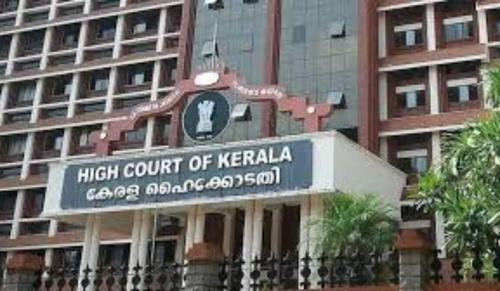
Parents Cannot Use Habeas Corpus to Control Adult Daughter’s Life Decisions
The Kerala High Court dismissed habeas corpus petitions filed by parents seeking custody of their adult daughters who had chosen to pursue a spiritual life.
The Court held that habeas corpus can be invoked only in cases of illegal detention and not merely because parents disagree with their child’s life choices.
It noted that the women were educated adults acting out of free will, with no evidence of coercion or unlawful confinement.
Emphasising personal autonomy, the Court ruled that an adult’s decision regarding faith and lifestyle falls within their private domain, and parental dissatisfaction cannot justify judicial intervention.
[Joju George & Ors. v. State of Kerala & Ors.]
Read Judgement / 13 minutes ago
S PavithraBookmark

Supreme Court Judge Justice Vikram Nath Says, AI Cannot Replace Human Experience in Adjudication
Artificial Intelligence serves as a tool to assist the judicial process but can never substitute the judicial mind, Supreme Court Justice, Justice Vikram Nath observed.
Speaking at the Karnataka State Judicial Officers’ Association conference, he emphasized that while AI helps in data classification and pattern identification, adjudication requires discernment and conscience.
The Court noted that algorithms cannot replace moral judgment or the ability to read between "competing hardships."
Justice Nath cautioned judicial officers to balance technological innovation with human responsibility, highlighting that the central figure in justice remains the judge, whose lived experiences and humility no machine can replicate.
AnvishaaBookmark
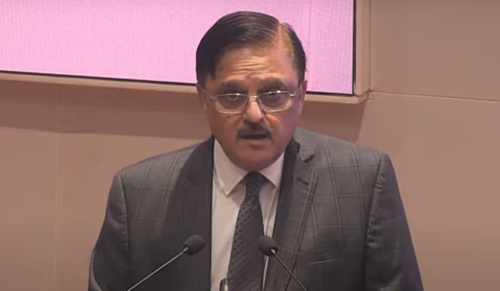
Scientific Temper Necessary to Protect Environment from Harmful Religious Practices: Justice AS Oka
Developing a scientific temper is essential for environmental preservation and does not inherently oppose religious faith, Former Supreme Court Judge Justice Abhay S Oka observed.
Speaking at a lecture series in Chennai, he noted that practices like pouring milk into rivers significantly harm marine life by depleting oxygen levels in the water.
The Court remarked that actions taken in the name of religion should be tested against scientific reasoning to determine their ecological impact.
Justice Oka further highlighted that the poor often bear the brunt of pollution caused by urban populations and stressed the need for better public support for environmental activists who challenge legal violations.
AnvishaaBookmark
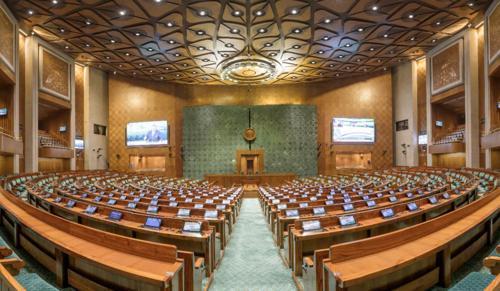
DMK MP Moves Bill to Implement Women’s Reservation Without Linking It to Delimitation
DMK Rajya Sabha MP P. Wilson introduced a private member’s Constitution Amendment Bill seeking immediate implementation of women’s reservation in Parliament and State Assemblies without linking it to delimitation or a future census.
The proposal aims to operationalise the quota within the existing strength of legislatures, avoiding delays caused by pending delimitation exercises.
It also reflects concerns that tying reservation to delimitation could postpone its implementation.
The Bill will now follow the parliamentary process, though private member bills rarely get passed without government support.
S PavithraBookmark
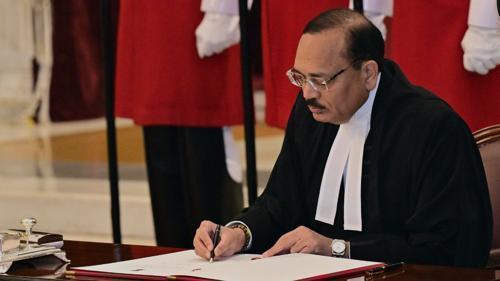
District Judiciary is Lifeblood of Legal System, Breathes Life Into Law: CJI Surya Kant
The district judiciary serves as the backbone of the justice delivery system and the primary point of contact for citizens, Chief Justice of India Surya Kant observed.
Inaugurating additional court buildings at the Madurai District Court campus, the CJI stated that while constitutional courts refine the law, the district judiciary operationalizes it in everyday life.
He characterized the higher judiciary as the "mind" of the legal system and the district courts as its "vital organs."
The CJI emphasized that investing in infrastructure is an administrative necessity that fosters decorum, enhances efficiency, and reduces backlogs, ultimately transforming the culture of dispute resolution for ordinary litigants.
AnvishaaBookmark
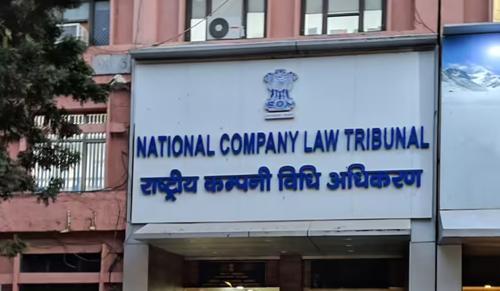
Supreme Court Expresses Concern Over NCLT Delays in Resolution Plan Approvals
The Supreme Court has flagged significant delays in the approval of resolution plans by the NCLT, terming the situation "very unfortunate."
The bench noted that such delays frustrate the Insolvency and Bankruptcy Code’s objective of time-bound resolution.
The Court was hearing a case where a plan remained pending for nearly two years despite approval by the Committee of Creditors.
Consequently, the Court directed the NCLT Principal Bench and the Insolvency and Bankruptcy Board of India to submit a nationwide report detailing the number of pending applications, the duration of pendency, and the specific reasons for these adjudicatory delays.
[AVJ Heightss Apartment Owners Association v. IIFL Finance Ltd. & Anr.]
AnvishaaBookmark
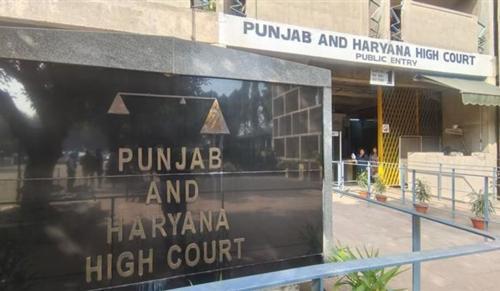
Arrest Begins When Liberty is Restrained: Punjab & Haryana High Court Orders Release in NDPS Case
The Punjab & Haryana High Court ordered the release of an accused in an NDPS case, holding that arrest begins when a person’s liberty is actually restrained not when it is formally recorded by police.
The Court found that the accused had been under continuous control of the authorities well before the official arrest time, and was produced before the Magistrate beyond the permissible 24-hour limit.
It ruled that such detention violates statutory provisions and Article 22(2) of the Constitution.
Emphasising substance over procedure, the Court held that police records cannot override factual custody, and declared the detention illegal.
[Anuj Kumar Singh v. UOI]
S PavithraBookmark

Madras High Court Issues Notice to Actor Vijay Over Discrepancies in Election Affidavits
The Madras High Court has sought a response from actor and Tamilaga Vettri Kazhagam chief Vijay following allegations of a ₹100 crore inconsistency in his election affidavits.
The Bench issued notices to the actor, the Election Commission of India, and the Income Tax Department.
The petitioner alleged that while Vijay’s affidavit for the Tiruchi East constituency declared movable assets worth ₹224 crore, the one filed for the Perambur constituency showed only ₹105 crore.
Orally remarking that such a significant gap constitutes an "irregularity," the Court granted one week for the respondents to file their instructions.
[V Vignesh v. Director General Income Tax]
AnvishaaBookmark
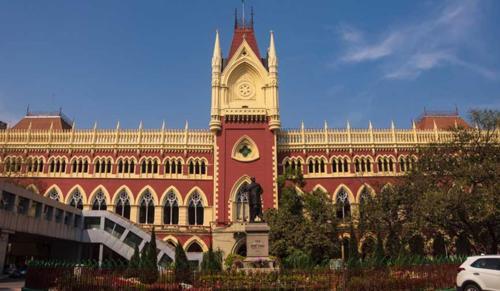
Age Bar Cannot Defeat Ongoing ART Process, Says Calcutta High Court
The Calcutta High Court directed authorities to grant a surrogacy eligibility certificate to a couple who crossed the prescribed age limit after initiating the assisted reproductive process.
The Court noted that the couple had applied within the permissible age and had already undergone significant medical steps, including embryo creation.
It held that they should not be penalised for delays beyond their control, including procedural and pandemic-related setbacks.
Emphasising a purposive interpretation of the Surrogacy (Regulation) Act, the Court ruled that strict application of age criteria in such cases would defeat the couple’s reproductive rights and the intent of the law.
[Sangita Raha & Anr. v. State of West Bengal & Ors.]
S PavithraBookmark
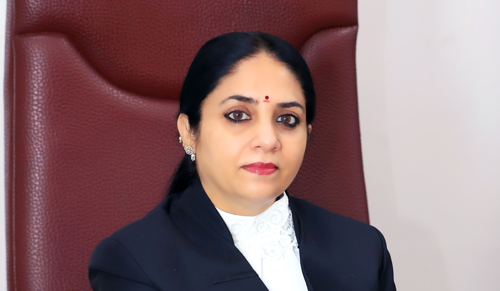
Delhi High Court Judge Recuses from Hearing Naresh Balyan’s Bail Plea in MCOCA Case
Justice Swarana Kanta Sharma of the Delhi High Court has recused herself from hearing the bail application of former AAP MLA Naresh Balyan.
Balyan, who was arrested in December 2024, faces charges under the Maharashtra Control of Organised Crime Act (MCOCA) for alleged links to a criminal syndicate.
The matter follows a previous hearing where the Court questioned the Delhi Police over the prolonged investigation and noted that key witnesses had retracted their statements.
Justice Sharma directed that the case be listed before a different bench on April 23. Balyan’s earlier bail plea was rejected by the trial court, citing stringent requirements under MCOCA.
AnvishaaBookmark