Advocates Rights
Supreme Court Earmarks SCBA Vice President Post for Women in 2026 Election
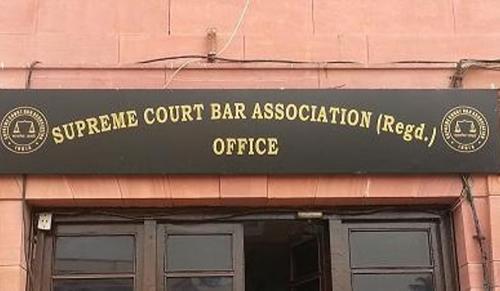
In a significant move toward gender inclusivity, the Supreme Court has earmarked the post of Vice President in the 2026 Supreme Court Bar Association (SCBA) elections for women advocates.
A bench led by CJI Surya Kant passed the order as a "progression" from previous years, where the posts of Treasurer and Secretary were reserved for women.
The SCBA, represented by Senior Advocate Vikas Singh, agreed to the measure, noting that the association has never had a woman President.
The Court further directed that the election schedule be notified by July 13, with results declared in August.
[Supreme Court Bar Association v. BD Kaushik]
AnvishaaBookmark
Supreme Court Warns Bar Associations of Suspension over Failure to Meet 30% Women’s Quota
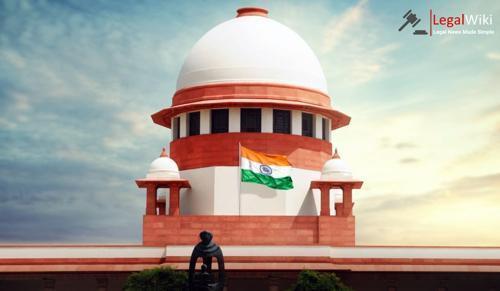
The Supreme Court issued a stern warning to bar associations nationwide to implement 30% reservation for women in their governing bodies or face judicial suspension and fresh elections.
The Bench emphasized that non-compliance will not be tolerated. The Court directed Registrars General of all High Courts to identify non-compliant or reluctant bodies.
Modifying the fallback mechanism, stating that if enough women do not contest, nominations to meet the quota will be made by High Court portfolio judges in consultation with stakeholders.
The move aims to ensure uniform representation of women lawyers at all levels, including district and taluka bar bodies.
[Deeksha K Amrutesh v. State of Karnataka]
AnvishaaBookmark
Karnataka High Court Orders FIR Against Police Sub-Inspector for Assaulting Advocate
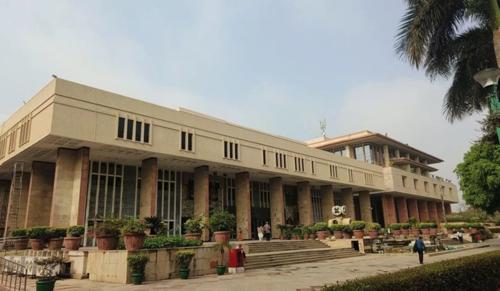
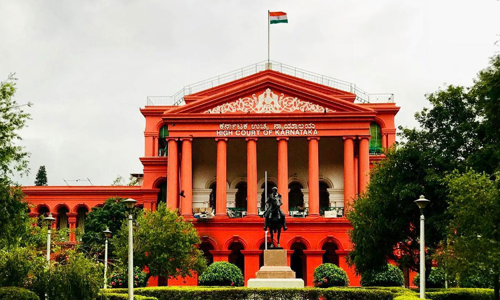
The Karnataka High Court has ordered an FIR against a police sub-inspector for assaulting an advocate at a Bengaluru police station.
Citing CCTV footage, observed that the officer kicked the lawyer repeatedly after she allegedly ransacked the station in frustration over a two-hour wait to file a road rage complaint.
While the Court refused to quash the criminal case against the advocate, noting her conduct was unprofessional, it ruled that police retaliation with physical violence is inexcusable.
The judge emphasized that departmental inquiries are insufficient for such brutality, mandating a formal criminal investigation to hold the errant officer accountable for her actions.
[Nabonita Sen v. State by Station House Officer]
AnvishaaBookmark
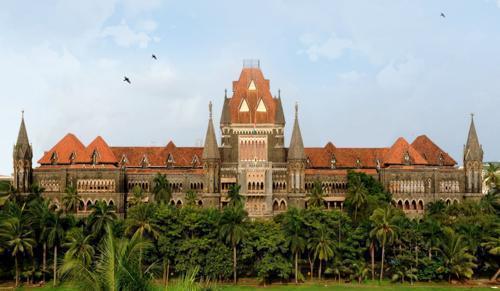
Bombay High Court: Appearing Without Vakalatnama is Serious Misconduct, Refers Lawyer to Bar Council
The Bombay High Court held that an advocate appearing in court without proper authority or vakalatnama amounts to serious professional misconduct.
The Court found that the lawyer had represented multiple parties without formal authorization and further aggravated the situation by making false statements and relying on incorrect citations.
It emphasised that such conduct undermines the integrity of the legal profession and misleads the court.
Consequently, the matter was referred to the Bar Council of Maharashtra and Goa for disciplinary action, with directions to complete the inquiry within a specified time frame.
[Pushpa v. State of Maharashtra]
S PavithraBookmark
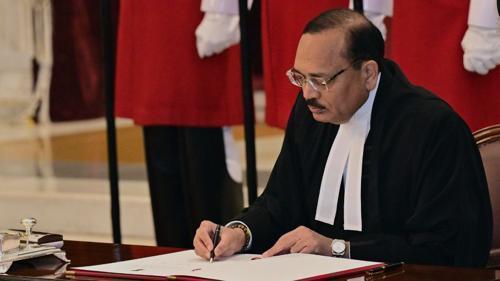
CJI Surya Kant Advises New AoRs: Draft Petitions Personally, Avoid AI Outsourcing
Chief Justice of India Surya Kant urged newly inducted Advocates-on-Record (AoRs) to personally draft their petitions rather than outsourcing them to Artificial Intelligence or external parties.
Speaking at an induction ceremony, the CJI emphasized that every pleading filed reflects the professional judgment and ethical responsibility of the advocate.
He cautioned that the role of an AoR is not a mechanical exercise but a primary point of accountability between litigants and the Court.
The CJI stressed that factual verification and sound legal framing are essential, warning against filing matters blindly based on third-party instructions. He noted that professional credibility, begins on day one.
AnvishaaBookmark
Supreme Court Refuses to Entertain Lawyer’s Plea Against Licence Suspension After 20 Years
The Supreme Court refused to entertain a plea filed by a lawyer challenging the suspension of his licence nearly 20 years after enrolment.
The action was based on allegations that he misrepresented his age to bypass the 45-year limit for becoming an advocate.
The Court expressed serious doubts about his eligibility, pointing to inconsistencies in records, including details related to his children and educational documents. It was not convinced by arguments citing his long years of practice.
The petitioner ultimately withdrew the plea, and the Court directed him to approach the Bar Council of India, which has been asked to decide the matter within four months.
[Jagmal Singh Mandhan v. Bar Council of Punjab & Haryana & Ors.]
S PavithraBookmark
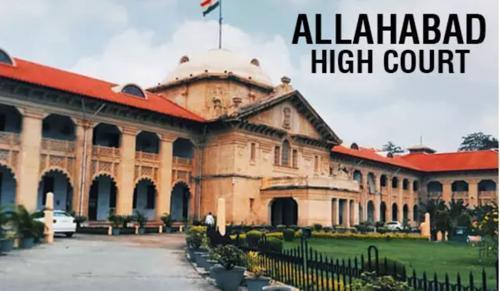
Right to Practise Law Restricted to Registered Advocates Not PoA Holders, Clarifies Allahabad High Court
10 days ago
S PavithraBookmark
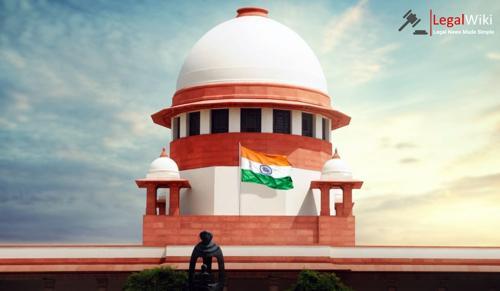
Supreme Court Mandates Reservation for Women in SCAORA Governing Body
The Supreme Court of India directed reservation of key posts for women lawyers in the Supreme Court Advocates-on-Record Association (SCAORA).
Invoking its powers under Article 142, the Court ordered that the posts of Secretary, Joint Treasurer, and two Executive Committee members be reserved for women in upcoming elections.
The move came in response to concerns over low representation of women in leadership roles. Notably, both sides agreed to the proposal.
The Court emphasised the need to ensure adequate representation of women in decision-making positions within the legal profession.
[Vivya Nagpal v. Supreme Court Advocates on Record Association]
S PavithraBookmark

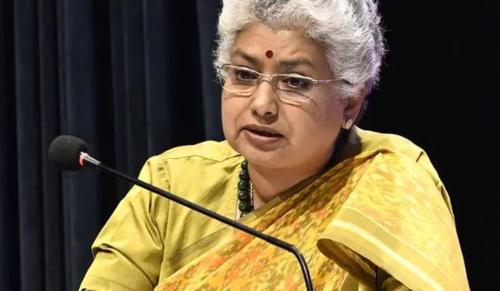
30 Percent of Law Officers Must be Women: Justice B V Nagarathna
Supreme Court Justice B V Nagarathna called for a 30 percent reservation for women as law officers at the Central and State levels.
She emphasized that institutional reform is essential to address the gender imbalance in litigation while speaking at the Dr. Rajendra Prasad Memorial Lecture at CNLU, Patna.
Justice Nagarathna noted that "dual roles" balancing professional demands with household responsibilities, often force women to drop out mid-career.
Increasing visibility through these appointments, she argued, creates a vital pipeline for future judicial elevations. She remains optimistic, noting that women now constitute over 50 percent of new judicial service entrants.
AnvishaaBookmark
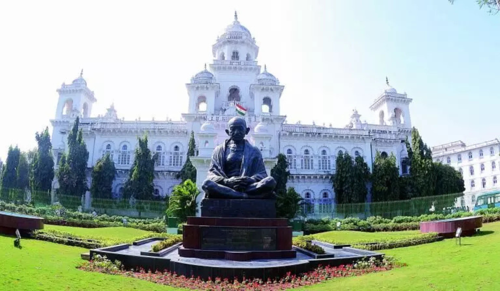
Telangana Assembly Passes Advocates Protection Bill, 2026
The Telangana Legislative Assembly has officially passed the Telangana Advocates Protection Bill, 2026, aimed at ensuring the professional safety and security of the legal community.
Following resolutions from the Bar Council of Telangana and extensive consultations with High Court bar associations, the new law addresses the rising instances of violence against practitioners.
Key features of the legislation include provisions for police protection, safeguards against false cases, and the establishment of a dedicated grievance redressal mechanism.
State Minister Sridhar Babu Duddilla emphasized that this move would bolster the confidence of advocates and protect them from professional hazards.
AnvishaaBookmark
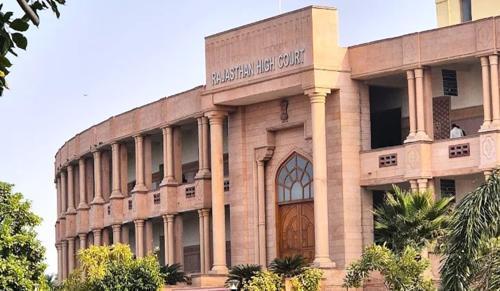
Rajasthan High Court Quashes Arbitrary Removal of Assistant Advocates by JDA
The Rajasthan High Court recently set aside the Jaipur Development Authority’s (JDA) decision to terminate several Assistant Advocates, ruling that lawyers cannot be treated like servants.
The Court observed that while the State has the authority to engage counsel of its choice, such engagements cannot be cancelled at the "whims" of authorities without following due procedure or providing valid reasons.
Since the petitioners' work was certified as satisfactory, their removal was deemed arbitrary and in violation of the principles of natural justice.
The Court directed the JDA to reinstate the advocates and frame a comprehensive policy governing their tenure and eligibility.
[Pratap Singh v. Jaipur Development Authority]
AnvishaaBookmark
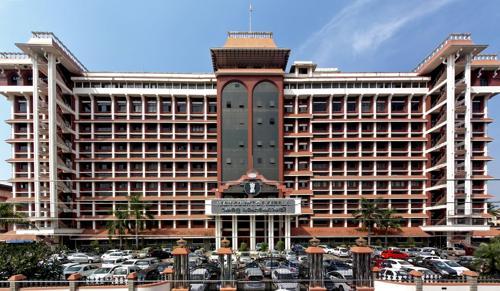
Kerala High Court Says Lawyers Can’t Hold Case Files ‘To Ransom’, Issues Notice in Misconduct Plea
The Kerala High Court recently dealt with a case where a client accused his former lawyer of refusing to return case files, which were essential for continuing a Motor Accident Claims Tribunal (MACT) case.
Despite repeated requests and even directions from the Tribunal, the documents were allegedly withheld, delaying the compensation claim. The Court took serious note of this, observing that case files cannot be treated like “ransom” to pressure clients.
It issued a notice to the advocate and others, highlighting concerns about professional misconduct and access to justice.
The Court will further examine the matter, including the alleged inaction by the Bar Council.
[Hashim H v. Bar Council of Kerala & Ors.]
S PavithraBookmark